Stop blaming your swim goggles – your sighting just sucks!
Poor goggles shouldn’t be an excuse for not looking where you’re going in the water, argues swim coach Helen Webster

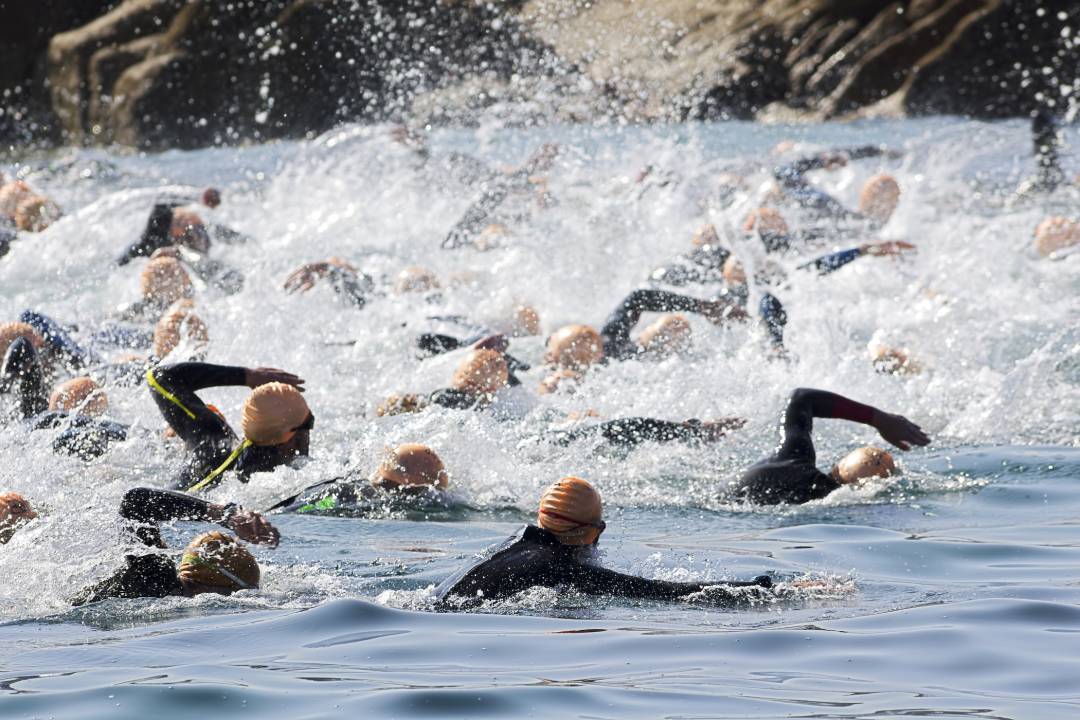
A good set of swim goggles can do a lot for you on race day, but poor goggles shouldn’t be an excuse for not looking where you’re going.
There are some fantastic open-water swimming goggles out there – in fact I’ve tested many of them for this website. But come race day, it never fails to amaze me how many people blame faulty goggles when it’s their open-water skills which are failing them.
Skills including sighting are key for open-water racing. Not only will they mean you are faster and more efficient, as you will be able to take the shortest route around the course, but it will also mean you’re a lot more pleasant to swim around as you won’t be bumping into folk.
However, I’ve lost count of the number of swimmers I see when I’m coaching or lifeguarding at events who blame their goggles when in fact, I can see their sighting and open-water awareness needs a whole lot of work.
How goggles fail
But first, let’s cover off the goggles problem. Of course things can go wrong and failing goggles will make seeing where you’re going tricky (plus be very, very annoying).
The key here is to fix the problem before race day rather than using it as an excuse – so here’s how!
1. Leaking
One of the most common complaints I hear, goggles leak when they don’t fit correctly or when the seals have degraded. So first, assuming you need some, it’s worth making sure that your goggles fit properly when you buy them.
I like the ‘suction test’ when trying goggles. Put them against your face and give them a gentle push. They should suck on to your face (even without the strap) and stay there for a second or two before falling off. If they do that and feel comfy, then there’s a good chance they’ll do so once wet and properly fitted with the strap.
If you’re struggling to find a good fit then look for goggles which come in a range of sizes such as Zoggs’ Predator range, or have some made-to-measure by The Magic5 who scan your face via an app and then send you a pair which will fit you perfectly without leaking!

Provided your goggles are new and fit you well, then there are a couple of other things which could be causing them to leak.
Putting them on carefully and adjusting the strap will help. Also many swimmers will get their swim cap caught under the edge of the gaskets, meaning they don’t get a secure seal. So run your fingers around the edge of your cap to make sure it isn’t caught.
Finally, having sun cream or moisturiser on your face can stop your goggles adhering to your skin – so that could be the problem if you’ve tried everything else!
2. Fogging
Goggles will often fog when you’ve had them a while, as most will come with an anti-fog coating applied which with times wears off, or becomes damaged.
You can replace this coating though by buying an anti-fog spray (just read the instructions carefully as with some you need to apply and then rinse, others are just spray and go).
A popular household alternatives to prevent fogging is baby shampoo. Just be sure to only apply a tiny bit and rinse extremely well afterwards – you don’t want to get it in your eyes. Many swimmers also swear by a bit of spit on the lenses before swimming, if you want to go truly old-school!
3. Damaged/dirty lenses
Key here is caring for your goggles so they don’t get scratched or grimy in the first place. A good practise is to rinse your goggles in clear water after every swim and keep them in the case they came with (or buy an aftermarket case).
If you’re going to try and clean your goggles be aware that touching the lenses can remove the anti-fog coating, so this will need to be applied again.
4. Poor lenses
There is an argument to say you get what you pay for with swimming goggles. Cheap ones may have distortion in the lenses which will make it difficult to see properly.
Many open-water goggles will have wider, curved lenses to improve peripheral vision too and this will help you see around you more clearly. Try a few pairs and make sure you can see ahead, to the sides and all around you without the frames obscuring your sight too much.

If you need glasses to see, then look for prescription goggles – swimming with contact lenses under your goggles isn’t recommended due to the risk of infection.
5. Wrong tint
Tinted lenses are great but throw in polarised, mirrored and light-reactive and choosing the correct pair for your swim can be confusing even for the best of us.
Think about where you are going to swim first. Do you need a bright tint and/or mirrored lenses to cope with bright glare – and would a darker tint help shield your eyes from the sun? Or are you swimming in lots of murky lakes under cloudy skies, in which case a dark tint may be too much and impede visibility?
If you are swimming in a mix of conditions or taking on a long swim (such as the 3.8km of an iron-distance at sunrise) then opting for a goggle which can cope with either strong glare or low ligjt may be advantageous.
I would go for a mid-tint in an amber hue, or a pair of goggles with lenses that change colour as the light intensifies such as the Huub Aphotic, Zoggs Predator Flex Reactor or Zone3 Venator-X.

Now fix your sighting…!
Goggles all sorted? Marvellous. With those excuses out of the way and crystal-clear visibility ahead, then it’s time to sort out your open-water skills (assuming of course you’re still not swimming in a straight line!).
In my open-water swim coaching business I work with countless swimmers who ask to learn crucial open-water skills including sighting, swimming in a straight line and swimming in a pack.
After all, you won’t know how to do something you’ve never been taught to do, so it’s understandable that pool swimmers can struggle when they first try open water. There isn’t the black line to follow or handy lane ropes marking the edges, plus you’ll be swimming a lot further than 25-metres.
If you don’t have these skills nailed though, two key things will go wrong as you swim. First, you won’t swim in a straight line around the course which means you will be adding time and distance to your swim.
Second, you won’t be tactical around the other swimmers in the water. This will mean you might get frustrated by them, miss out on drafting opportunities and make yourself unpopular by clubbing them with a stray arm as you swim.
Ready to fix things before your race? Here are the three key skills you need to get you started in open water.

1. Swimming straight
If you’re snaking or curving as you swim, then you will need to sight and correct your course more frequently than if you are swimming in a straight line.
Ask a friend to watch you swim and see what’s happening, or do a short swim without sighting and see where you end up (obviously at a quiet time!).
Snaking from side-to-side or veering off in one direction is often caused by crossing your arms over at the front and pushing the water to the side before you push it back. Widen your hands at the front if this is happening (in line with your shoulder) and when you breathe, make sure the arm on the opposite side isn’t crossing over as you rotate.
You could also try the Form Smart Swim goggles, which include a floating digital display in one lens. This includes a compass in open water to help you swim directly to a point without veering off course.
2. Sighting
It sounds complicated, but I prefer the term ‘glimpsing’ to sighting as it better describes the tiny peek forward you need to go to get a glimpse of your directional marker or of other swimmers around you.
We often describe this as ‘crocodile eyes’. Imagine how a crocodile peeks its eyes out of the water? You’re going to do the same – any higher and your legs will drop. Obviously you may need to lift higher in rough conditions, but best practise it to keep it small.
Ideally sight just before or after a breath so it becomes one seamless, fluid motion. You will need to sight more or less depending on water conditions (such as waves, currents etc pushing you off course) and the number of people around you.
Next, think about your peripheral vision. As you swim are there other people around you and are you trying to swim with everyone else rather than through them? Every time you turn to breathe is an opportunity to see around you.
Plus if you only breathe to one side, make sure you throw in a breath to the opposite side every few strokes to see who/what is on that side.

3. Swimming with others
Not strictly a skill to do with sighting, but swimming around other people in such a way that is clumsy or discourteous is definitely to be avoided (whatever you may have heard about triathlon!).
Bumping into others will slow you down and could really spoil the other swimmers’ race, especially if they are nervous in open water.
By being aware of others, positioning yourself correctly in the pack and using good sighting skills though, you will be able to identify faster swimmers ahead of you and sit on their feet or hip (without touching) to draft and get some free speed – and that’s definitely worth having on race day!
Lead image: Shutterstock/Gena Melendrez


 Helen Webster
Editor, 220 Triathlon
Helen Webster
Editor, 220 Triathlon