What gear do I need for bikepacking?
We examine the best bikepacking setups and the dos and don'ts of adventure travel...

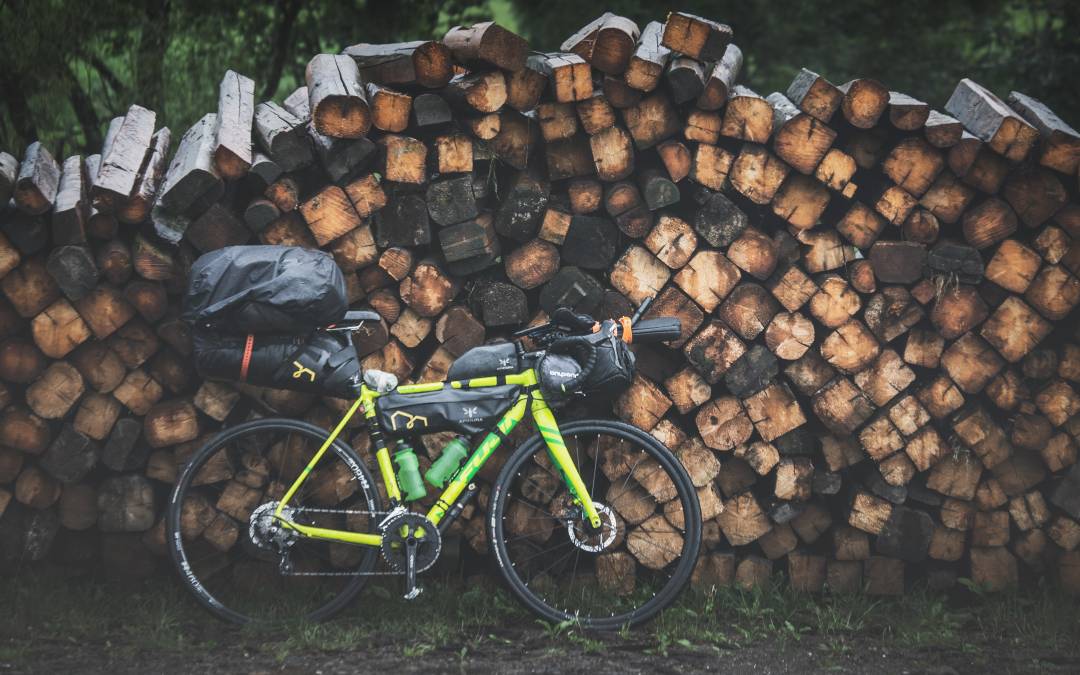
Bikepacking is known for its minimalism, meaning that your bike setup needs to be well thought-out and include only the necessities. After all, it’s manpower that will carry all your gear from point A to B.
The main essentials for any bikepacking trip are a reliable and sturdy bike and some durable bags to stuff your equipment into. The lighter the weight for all of this, the better.
However, there are of course lots of different pieces of gear you ‘could’ invest in to make your setup more practical, light-weight and aero, including equipment to provide warmth and shelter, cooking apparatus, and an aero cycling helmet.
Can you use your road bike for bikepacking?

The short answer is, yes you can use a road bike for bikepacking and touring adventures. You can use any bike, as long as it feels sturdy and dependable, and has enough mounts to attach all your gear. On the other hand, if you’re planning on doing lots of off-road riding then it’s a good idea to add thicker tyres to your bike or even opt for a gravel bike to allow for more versatility. Fully off-road bikepacking is best suited to mountain bikes.
Whatever bike you go for, it should be as lightweight as possible and have the ability to fit wider tyres for off-terrain pursuits. It could also be useful to have extra mount points to attach kit, a large space within the frame for attaching gear, and a more upright geometry and lower gears for comfort – so you can spin out the pedals for the long distance trips and not destroy your legs.
As popular as these are, it is worth bearing in mind that if you are intending to cycle in remote areas, your bike needs to be compatible with standard components that are easy to source on the road and in unfamiliar countries.
What makes a good bikepacking bag?

Other than your trusty steed, your bikepacking bags are the most important investment you’ll make for your trip and there are two main routes you can go down. Beginners and tourers tend to use panniers, these can be easily attached to pannier racks which can be screwed onto lugs on your front and back forks, or attached to the back hub and seatpost without the need of attaching to the forks like this Quick-Rack from Ortlieb.
Choose a waterproof and durable pannier design like these Ortlieb Back Roller panniers which I use and swear by. They can be securely fastened shut at the top and to the rack without too much movement against the bike when cycling. They’re also super quick and easy to clip on and off the bike, and are made from hardcore materials to withstand the worst of showers and tumbles.
Along with these, you can also attach a bar bag or roll in between your handlebars for quick access to essentials and valuables.
Most bikepackers tend to go for a more streamlined and minimalist format though, which is to attach bags onto the frame at different points, without the need for pannier racks. This carries the advantage of allowing a more lightweight and aerodynamic setup.
Bags for this would include a seat pack behind your saddle, a frame bag in the ‘triangle’ of your frame, a top tube bag that sits along the top of your bike, and a handlebar roll pack.
These bags can be fixed by straps to the bike and don’t necessary need mount points like pannier racks do; just bear in mind that you may need to rearrange the location of your bottles or hydration system to allow room for the bags. They’re also slower to whip off the bike than panniers and you’ll typically have less capacity for gear within.
Those with smaller bike frames may also find it difficult to fit all the kit they need onto the bike in this set-up (myself being the prime example here).
Our top 5 bikepacking bags:

- For a seat pack, why not go for the compact waterproof Vortex 2 (£65) from Altura. It’s available in 6L, 12L and 17L.
- Make the use of all that handy space within your frame with a frame bag like this ample one from Restrap (£107).
- Take a look at this slimline Adventure Top Tube Bag (£30) from Trek, ideal for stashing your phone and snacks on the road.
- We’ve tested this durable and waterproof Topeak 12L Frontloader handlebar bag before and loved its extreme weatherproofing and adjustability.
- For those needing extra storage, go for the pannier rack option with these 31L ELOPS panniers (£84.99) from Decathlon, which also double up as a rucksack.
What should I carry bikepacking?
You’ve got the bike and sourced some bags, but what do you put in them? Most important to think of is a means of shelter, of keeping warm, and cooking apparatus. You will need either a light-weight and compact tent or a bivvy bag, in which you will need a small sleeping mat (essential for preventing heat loss through the ground), and a sleeping bag.
If you’re bikepacking in winter, then we recommend you carry some cooking equipment with you, this could be a mini pressurised multi-fuel stove for that essential coffee and porridge hit in the morning. Along with these foundational items, consider what bike clothing you’ll need to bring for the conditions of your trip and small first-aid kit.
Meet our author
In the weeks leading up to her first Ironman, 220’s former editorial assistant, Kate, cycled the infamous LE JOG, bikepacked the length of France, and bikepacked along the French Med solo. She has since bikepacked across Europe solo, and recommends the sport to all and anyone looking for a life-changing adventure.


 Kate Milsom
Freelance sports journalist
Kate Milsom
Freelance sports journalist