What are the best bikes for triathlon? We test the top 7 for training and racing in 2026
Our expert bike testers at 220 have reviewed some of the top triathlon bikes available over the years. Here are 7 aero numbers that really impressed...


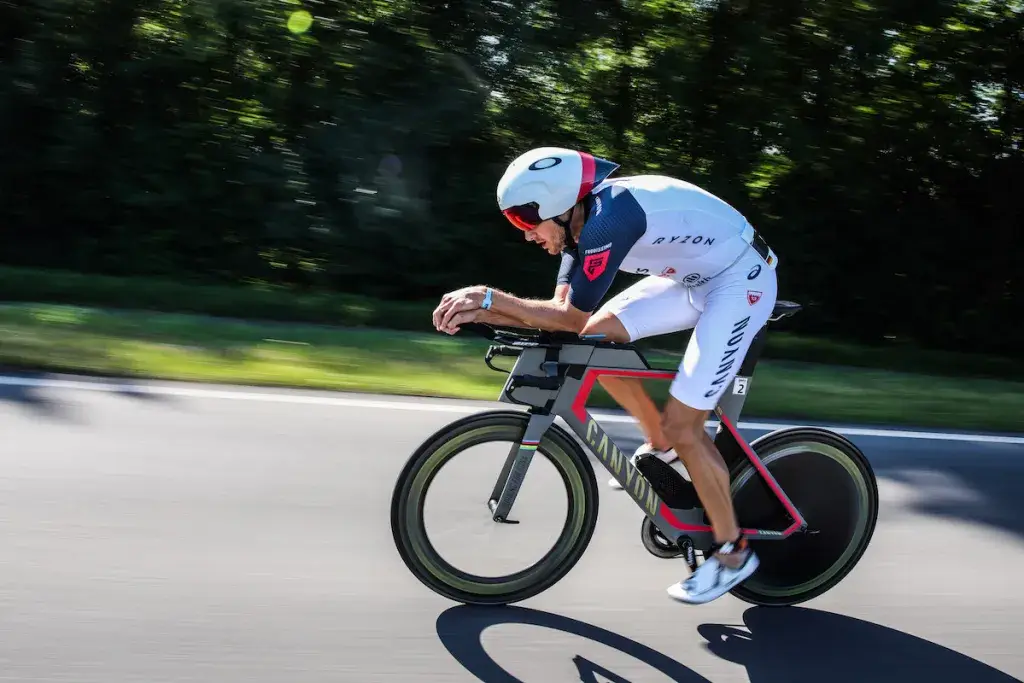
Triathlon bikes create a unique advantage in multisport racing that’s hard to match with any other type of bike. Built with speed front and centre, the right triathlon bike will allow you to go faster than the opposition over 90-180km compared to a road bike.
But what two-wheeled stallion should you be handing over cash for? And how did triathlon bikes even become a thing? Our experts take a look at the best triathlon bikes available in 2026 and why they could be worth your while…
Why you can trust 220 Triathlon
Our team of experts rigorously tests each product and provides honest, unbiased reviews to help you make informed decisions. For more details, see how we rate and test products.
Best triathlon bikes at a glance
If your pockets are deep enough, the Trek Concept SLR 9 (buy) is a thrillingly quick tri bike with a top notch spec and great handling.
The Giant Trinity Advanced Pro 2 (buy) offers great aerodynamics and a super slimline hydration system, all at an affordable price compared to its competitors.
The Factor Slick (buy) is a superbly smooth and comfortable bike with a good range of adjustability.
The Cube Aerium C:68X SLT (buy) is a good value, light and aero bike with a range of hydration and fuel storage that’s both a high and low-light.
The Orro Venturi Tri (buy) is a good climber and descender, with well-thought-out features and a decent price tag to boot.
The best triathlon bikes for 2026
Best overall triathlon bike

1. Trek Speed Concept SLR 9
220 Triathlon verdict
A truly top-of-the-range, cutting-edge triathlon superbike.
Pros
- Great handling
- Very fast
Cons
- High price tag
- Flat kit storage isn’t the best we’ve seen
| Specifications | Trek Speed Concept SLR 9 |
|---|---|
| Components | SRAM Red AXS, Bontrager Aeolus RSL wheels |
| Weight | 19.96lb / 8.6kg (size medium) |
| Sizing | S, M, L, XL (5'1" / 154cm to 6'6" / 198cm) |
Trek’s latest Speed Concept is one of the most impressive all-round tri packages we’ve seen. The brand claims its IsoSpeed system adds a huge 30% more compliance and on the road we can definitely vouch for the excellent comfort offered over many miles, leaving you fresher for the run.
The storage and hydration is all included, and it’s completely ready to race with deep Bontrager aero wheels and a highly adjustable integrated cockpit. If money is no object and you need to have one of the best triathlon bikes out there, the Speed Concept in this hero guise should certainly be on your wishlist.
Pop over to detailed Trek Speed Concept SLR 9 review for my full verdict.
Best for adjustability

2. Factor Slick
220 Triathlon Verdict
Frighteningly smooth, fast and comfortable triathlon bike at a premium price.
Pros
- Appreciatively fast
- Comfortable and adjustable
- Superb handling
- Very light
Cons
- Nutrition system could be refined
| Specifications | Factor Slick |
|---|---|
| Components | Toray Nippon graphite pitch-based carbon frame, slick wide stance carbon fork, SRAM Red AXS E1 12-speed gears, SRAM Red AXS hydraulic brakes |
| Weight | 8.8kg (58cm) |
| Sizing | 48cm-58cm |
Factor’s association with Beth Potter has already proven its performance pedigree, and the Slick marks the brand’s first true swing at a dedicated triathlon bike. It looks every inch the premium thoroughbred and, thankfully, rides like one too. Light for a fully loaded tri bike, the Slick accelerates eagerly and holds speed with ease, thanks to a stiff, beautifully finished carbon frame.
Stability is excellent even in crosswinds, while the revised geometry and huge saddle and cockpit adjustability make it easy to dial in a fast yet run-friendly position. The Vision Metron cockpit and SRAM Red AXS groupset feel suitably top-tier, and the Black Inc wheels add to the polished ride quality.
Hydration and nutrition storage are competent rather than class-leading, with capacity slightly behind key rivals, though usability is mostly solid. Minor quibbles aside, this is a fast, refined and highly adjustable machine that justifies its premium status — if your budget can stretch that far.
Read my full review of the Factor Slick for more.
Best for storage

3. Cube Aerium C:68X SLT
220 Triathlon Verdict
A rocket on a long-distance course providing clever, if complicated, in-built storage and hydration.
Pros
- Seems lighter and more aero than previous gen
- Highly customisable
- Decent value
- Handy in-built storage
Cons
- Hydration system isn’t that easy to use
- Integrated storage requires force to open
| Specifications | Cube Aerium C:68X SLT |
|---|---|
| Components | Shimano Dura-Ace Di2, Newmen Advanced SL R.80 Stream wheels, Cube Aerium C:68X Cockpit System, Cube Hydration and Storage system |
| Weight | 20lbs / 9.1kg (without hydration system) |
| Sizing | XS, S, ML, L (5'1" / 155cm to 7'2" / 220cm) |
Developed with Lucy Charles-Barclay, the Cube Aerium C:68X SLT is a top-of-the-range triathlon speed machine with a narrower front end and lower weight than the previous version.
The German brand has also crafted a clever integrated storage and hydration system, which will make you more self-sufficient during the bike leg if you can manage to use it in the heat of a race. Due to its lack of user-friendliness, I would prefer to carry a bottle and fill the internal storage compartment with snacks instead of fluid. Without the hydration accessories, the Cube weighs just over 20lbs / 9kg — very competitive for this kind of bike.
The Aerium C:68X SLT excels on untechnical, undulating terrain, as you’d hope from a tri bike, where it showcases its premium, aero kit and drag-efficient cockpit. This is extremely adjustable so most triathletes will be able to find their ideal position. Yes, it’s expensive but several of its rivals cost a couple of thousand dollars more.
Read my full Cube Aerium C:68X SLT review for more.
Best value

4. Giant Trinity Advanced Pro 2
220 Triathlon verdict
The bike of choice for many TT specialists, and for good reason.
Pros
- Affordable
- Highly regarded aerodynamically
Cons
- Rim brakes not as powerful as discs
- Hard to find them now
| Specifications | Giant Trinity Advanced Pro 2 |
|---|---|
| Components | Shimano Ultegra, Giant P-R2 wheelset |
| Weight | 21lb / 9.53kg |
| Sizing | XS, S, M, L (5'2" / 159cm to 6'3" to 191cm) |
I’ve reviewed the entry-level version of the legendary Giant Trinity, but have chosen this upgraded version as my recommendation due to the superior groupset, more advanced carbon fork and integrated hydration.
Giant has since released a disc-brake Trinity Advanced SL Triathlon bike available for $5,100 / £3,750 as a frameset or £10,499 (UK only) as a built bike with SRAM Red AXS and Cadex Tri wheels. Giant’s ‘Aerosystem’ shaping technology incorporates CFD and wind tunnel testing to ensure the frameset is aero-optimised, and on the road that will definitely be apparent as the Trinity is wickedly fast.
Even the hydration system is made to slice through wind, and the reversible base bars allow for lots of adjustment. Upgrade the wheels and this version of the Trinity is an absolute bullet at half the price of some rivals.
Highly-rated

5. Cervélo P-Series Ultegra
220 Triathlon verdict
A great versatile machine from triathlon’s most popular bike brand.
Pros
- Forgiving geometry
- Good storage
Cons
- Entry-level wheels will need upgrading
- Hydration can be tricky to access
| Specifications | Cervélo P-Series Ultegra |
|---|---|
| Components | Shimano Ultegra R8100 Di2, Reserve 52/63 wheels |
| Weight | 21lb / 9.53kg |
| Sizing | 48, 51, 54, 56, 58, 61 (5'0" / 152cm to 6'4" / 195cm) |
If your budget won’t stretch to Cervélo’s PX-Series, the P-Series is the sensible choice if you want to stick with the brand that’s been the most popular at the Ironman Worlds for years. Our test model came with mechanical Shimano Ultegra shifting (it’s electronic now, though), hydraulic disc brakes, top tube storage and even an aero bottle on the downtube.
The full carbon frame is aero as you’d expect, but the geometry and fit options offer day-long comfort, which is ideal for long-course debutants. Everything on the P-Series is dependable and ticks all the speed, comfort, storage and practicality boxes we’d want for triathlon.
For a more detailed verdict, read our full Cervélo P-Series Ultegra review.
Best for hills

6. Orro Venturi Tri
220 Triathlon verdict
Overall, a solid triathlon bike with thought-out features.
Pros
- Good value
- Climbs and descends well
Cons
- No integrated storage
- Only available in black
| Specifications | Orro Venturi Tri |
|---|---|
| Components | Shimano Ultegra Di2, Vision SC55 TLR wheels |
| Weight | 19.6lb / 8.89kg |
| Sizing | S, M, L, XL (5'4" / 165cm to 6'4" / 195cm) |
Orro’s Venturi Tri is well specced, coming with a Shimano Ultegra Di2 groupset (with a hint of Dura-Ace), Vision SC55 TLR wheels and Profile Design extensions and arm rests. While $7,319.99/£5,950 for our test model is far from cheap, it’s competitive in the current market and you can get a version with Shimano Di2 105 for $5,687.99/£4,499.
The bike boasts rounded leading edges and uses Sigmatex Spread Tow carbon fibre for the frame. The design includes a bayonet-style fork and cockpit that, for the most part, delivers decent adjustability. On that note, the seatpost offers ample fore-aft adjustment, while there’s 100mm of travel from the seatpost itself. You then get additional adjustment from the saddle’s rails.
The bike holds speed well and performs well in climbing and descending, with Shimano’s Ultegra Di2 groupset delivering seamless shifting. It’s easy to travel with, and there are mounting options for hydration and storage, though nothing integrated.
Read my full Orro Venturi Tri review for more

7. Argon 18 E119 Tri+ Disc
220 Triathlon verdict
Innovative and aggressive superbike with some impressive features. Score: 81%
Pros
- Stable ride
- Versatile cockpit
Cons
- A bit weighty
- Less storage than some competitors
| Specifications | Argon 18 E119 Tri+ Disc |
|---|---|
| Components | Shimano Ultegra Di2, DT Swiss ARC1400 Dicut wheels |
| Weight | 20.1lb / 9.11kg |
| Sizing | XS (47-50), S (51-53), M (54-56), L (57-59), XL (60-62) |
Argon 18 claims its latest E119 Tri+ cuts 17 watts-worth of drag compared to its predecessor, and even the disc brakes are aero optimised with the callipers located inside the seatstay, a world first. Clever downtube storage houses a full flat kit and there’s a roomy top tube box, too.
The cockpit takes some setting up as the bars put you in a very aggressive position, but this bike is a blast at high speeds and stable on descents. The weight (over 20lb/9kg) is noticeable compared to some rivals, but dial in the front end and the E119 absolutely flies on flat tarmac.
See my full Argon 18 E119 Tri+ Disc review for more.
Which triathlon bikes do professional triathletes ride?
A handful of big name brands are prominent in the list of bikes pro triathletes are riding in 2025. But Cube, Pinarello and Argon 18 also figure.

8. Trek Speed Concept SLR 9
Trek-sponsored Taylor Knibb, Marten Van Riel and Sam Long are all aboard the Speed Concept SLR 9, a UCI-legal frame that’s also raced in elite road cycling. Alex Yee is another Trek athlete who rides the Madone SLR 9 all-round road bike because he races shorter events. Our expert tester says it’s “one of the most impressive all-round tri packages I’ve seen.” Check out our full review.

9. Specialized Shiv
Having stepped up to T100 this year, Vincent Luis now rides the Specialized Shiv, as does Flora Duffy. Specialized also supplies its S-Works Tarmac SL8 road bike to short-course athletes including Georgia Taylor-Brown and Cassandre Beaugrand.

10. Giant Trinity Advanced SL
Giant finally updated its Trinity Advanced SL to disc brakes for 2025 and it’s Gustav Iden‘s bike of choice. Liv and Cadex are also part of the Giant family, with the former providing its women-specific Avow Advanced SL to Emma Pallant-Browne. Meanwhile, Kristian Blummenfelt rides the Cadex Tri. One of the most radical tri bikes around, it lacks a top tube and has an oversized down tube for storage.

11. Cube Aerium C:68X
The most notable athlete riding the German brand’s Aerium C:68X is Lucy Charles-Barclay. Her Cube is specced with Shimano Shimano Dura-Ace R9200 Di2 12-speed including 54/40T chainrings and DT Swiss ARC DICUT wheels. Our reviewer scored the Cube 84% in testing: “The Aerium C:68X SLT excels on untechnical, undulating terrain, as you’d hope from a tri bike, where it showcases its premium, aero kit and drag-efficient cockpit.” Read our full review here.

12. Argon 18 E119 Tri+
Jess Learmonth has made her debut in the T100 in 2025 on her usual Argon 18 E119 Tri+. The heavily integrated frame is built up with a SRAM Red AXS groupset and Evolve components. Our tester notes: “This bike is a blast at high speeds and stable on descents.” Read our full review here.

13. Pinarello Bolide F TR
Pinarello isn’t a household name in triathlon but the Italian brand’s Bolide F TR is piloted by Léo Bergère, who moved from Cervélo, and Cameron Wurf.
What features should you look for in a triathlon bike?
Certain characteristics are found on every tri bike, no matter what maker’s name appears on the frame, and differentiate them from road bikes.
Aerobars
Aerobars put you in a more aerodynamic riding position than conventional handlebars. While a road bike’s ‘drop’ bars may allow you to lower your head and flatten your back, aerobars also enable you to tuck your arms and elbows in. In this sort of aero tuck position, you present a smaller, narrower profile to the air you’re trying to push out of the way.
Frame
Without being bogged down by the UCI rules governing tube dimensions that road race and time trial frames must adhere to, tri-specific bikes are free to use almost any size and shape of tube they like. Hence the broader down tubes and head tubes with long trailing edges seen on many bikes. More radical designs do away with certain tubes altogether, such as Kristian Blummenfelt’s Cadex tri bike, which comes without a traditional top tube.
Seat-tube angle
The hallmark of a triathlon bike is a steep seat-tube angle. Whereas road bike seat tubes tend to sit on a spectrum between 72° and 75°, the seat tubes on tri bikes typically start at 75° and can go up beyond 80°.
The steeper angle moves the rider further forward, making it easier to ride in a tuck position on the aerobars, and opens their hip angle, allowing athletes to pedal harder.
Saddle
Given that both their bike and bars put triathletes in a different riding position to other types of cyclists, the next logical component to consider tailoring to their needs is the saddle. To that end, more stub-nosed, grooved and pronged saddles are appearing on tri-specific bikes to eliminate, or at least minimise, the discomfort that riding in a low-profile tuck can cause. The best triathlon bike saddles are intended to relieve pressure on the rider’s perineum by supporting their weight on their ischial tuberosities (sit bones) instead.
Storage
Getting through a long-distance bike leg means carrying fuel, tools and spares, so storage is a concern on a tri-specific bike. Stuffed jersey pockets and a pair of bottle cage mounts will do the job, but there are better ways to solve the problem. Drinking systems mounted between the aerobars or, better still, integrated into the frame, provide convenient, aerodynamic options. Meanwhile, carefully shaped containers such as top-tube boxes or storage integrated into the top tube allow for easy access to nutrition, while some triathlon bikes now also make space for tools and a flat kit in the frame itself.
Brakes
All modern triathlon are now specced with disc brakes. But on older rim-brake models it can often appear as though they don’t have any brake callipers. Aerodynamics is the reason for their apparent invisibility as bike designers look for ways to keep them out of the airflow. Hiding the front brake behind the fork or integrating it into the fork’s structure is a popular solution, as is mounting the rear brake behind the bottom bracket, underneath the chainstays.
Frequently Asked Questions on triathlon bikes
“For the same rider on all three bikes, a road bike without aerobars can generate as much as 20–25% more drag,” says Trek’s Carl Matson. “Sounds like a huge number and it is. Even if you can stay down in the drops for the entire ride, you’re presenting more frontal area and non-aero shapes to the wind due to the wide arm position.” Clip-on aerobars will help to reduce that number, but even with them, it’s still difficult to reproduce a triathlon bike’s riding position without a forward-angled seatpost and non-standard stem.
The specific nature of their design also makes triathlon bikes ill-suited in certain situations, such as descending in races with hilly or technical bike courses. Triathlon bikes fail to shine on such courses because the extra material required to make them aerodynamic adds weight, and their ‘pitched forwards’ riding position leads to awkward handling. Furthermore, all the extra components that make up a tri bike’s cockpit reduce the clearance for your knees and wrists when you want to get out of the saddle to climb or accelerate. Read our comparison of triathlon bikes vs road bikes for more detail.
We have two Americans to thank for the triathlon bike: Dan Empfield and Ray Browning. Empfield founded Quintana Roo in 1987 to build wetsuits specifically for triathletes. That same year the Scott DH aerobar began appearing on bikes at triathlons. But although the DH bar offered an aerodynamic advantage, it came at a cost, as the Quintana Roo company history explains: “The problem was that it wasn’t very comfortable; the slack seat-tube angle and the fixed quill stems of the bikes of this time meant there was little room for adjustment. To achieve a good aero position, riders were bending over almost completely double.” Empfield noticed that athletes using the DH bars would move their saddles forward to get more comfortable and this got him thinking about altering the typical road bike frame geometry with its 73–78° seat-tube angle.
Meanwhile Browning, a successful triathlete studying for a PhD in biomechanics at UCLA, had found that riders could pedal harder by bringing their hips forwards to effectively steepen the seat-tube angle. He also believed that the more open hip angle such a position created would allow riders to run better after riding.
Empfield and Browning joined forces to put their theories to the test. Empfield built the QR Superform, with 650c wheels, aerobars and, more importantly, an 80° seat tube. Browning rode it at 1989’s Ironman New Zealand to see if this ‘tri-specific’ geometry worked. It did. He finished the bike leg 30mins ahead of two-time Ironman World Champion Scott Tinley and went on to win, breaking the course record in the process.
Thanks to advances in materials, design methods and our understanding of low-speed aerodynamics, triathlon bikes have continued to be refined since that initial outing in 1989. But their purpose remains the same: to get you to T2 as fast as possible while preserving your ability to run. To maximise your speed on your existing bike, consider upgrading to one of the minutebest aero road helmets.
How we tested triathlon bikes
Every bike reviewed here has been tested with a substantial amount of riding, including long rides of several hours. Our testing and scoring takes into account key criteria such as fit (and how adjustable the bike is), comfort, stiffness, integrated storage and, of course, speed.
Other things we consider include how fresh we feel running off the bike after a ride, the quality of the finishing kit, how easy it may be to pack down and transport and value for money. More details on all of this are found above. Our ratings take all of the above into account. Anything over 90% is considered a genuine class leader, 80-89% is still one of the best you can buy, while 70-79% is represents a bike that is still a decent performer.
Meet our testers
Former 220 Triathlon magazine editor James Witts regularly contributes as a freelance sports writer with his reviews of bikes and multisport gear. Besides decades of testing experience, James has written four sports books. Former 220 Triathlon staff writer and current Road.cc editor Jack Sexty is an authority on cycling tech and is a prolific multisport kit reviewer.
Before investing in a pricy tri bike, make sure you’re not leaving any easy speed wins on the table. Read our tips on how to get more aero on a budget and brush up on Tom Bishop’s aero advice.
Recent updates
- 13 October 2025: we added more information about our testers
- 13 November 2025: we added imagery to the pro bike section and took out mention of the no longer available Orbea Ordu M10iLTD.
- 15 December 2025: we included more links to our articles on aero optimisation for triathlon, such as how to get more aero for cheap.
- 31 January 2025: we added a new review of the Factor Slick triathlon bike by tester James Witts.
- 03 March 2026: we updated the header image, strap, and title, along with all of our product links.
- May 2026: We updated our bike reviews and took out any models no longer available, we added updated specs tables.


 Jack Sexty
Editor at road.cc
Jack Sexty
Editor at road.cc With contributions from