Great Britain’s male triathletes could have their best ever Olympics at Los Angeles 2028
It’s early days in the qualification process for 2028, but Britain could be fielding its strongest men’s team yet where all three athletes are medal contenders.

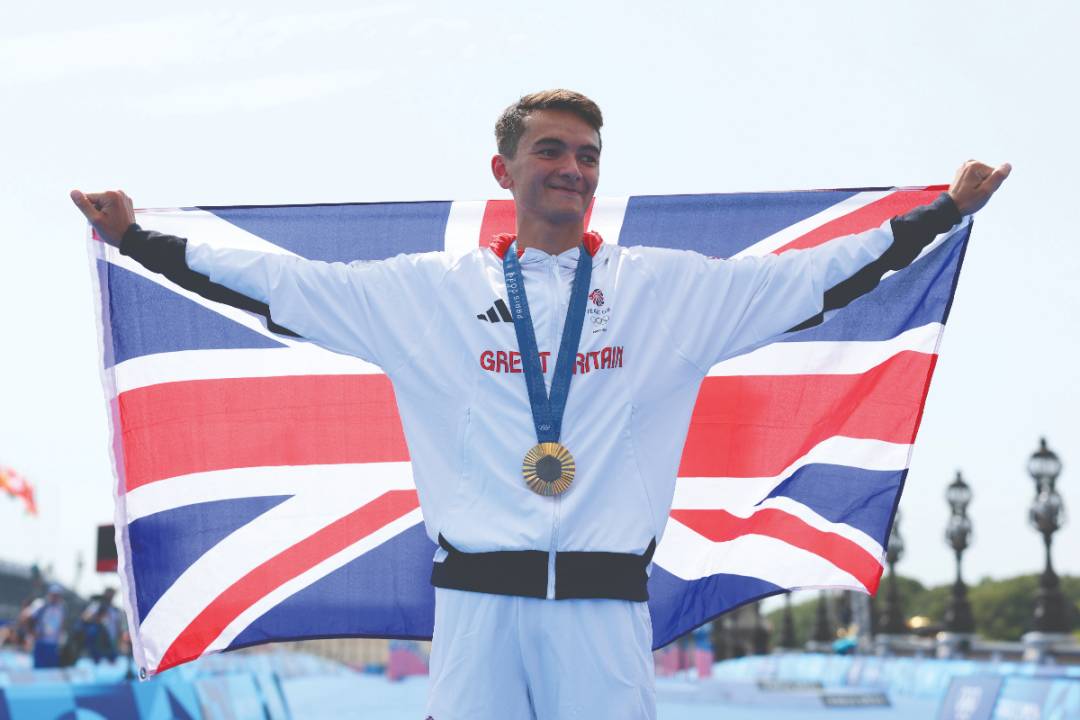
Britain is the most successful nation in Olympic triathlon history. After a slow start with no medals in the first three Games, the Brownlee brothers’ unforgettable gold and bronze in London 2012 kicked off a run that yielded 11 medals through Rio, Tokyo and Paris.
Despite this success, Team GB has failed to qualify a full complement of male triathletes for the individual event at the last two Olympics. In Tokyo, only Alex Yee and Jonny Brownlee lined up, while in Paris it was Yee and Sam Dickinson, with the latter not even completing the event as his primary remit was the mixed team relay.
As the qualifying period for the 2028 Games in Los Angeles begins, there are early signs that Britain might not just qualify three male athletes, but, for the first time, three medal contenders.
The defending champ
Yee needs little introduction. The reigning Olympic champion has been switching up his endurance endeavours with some marathon running, but should be fully focused on a return to standard distance racing for the event in Venice Beach in 2028.
Already the most decorated Olympic triathlete in history with four medals, Yee will be only 30 years old – three years younger than New Zealand’s Hamish Carter when he took gold in Athens 2004.
If the Brockley athlete is already a star of the sport, the exciting unknown is seeing how Oliver Conway develops. A mechanical engineering student at Nottingham University, Conway is the current under-23 world champion following last year’s success in Wollongong, Australia. Not 21 until June, like Yee he is a blisteringly fast runner, which will be a prerequisite for success on the flat Californian coastline in 2028.
Another two strong runners
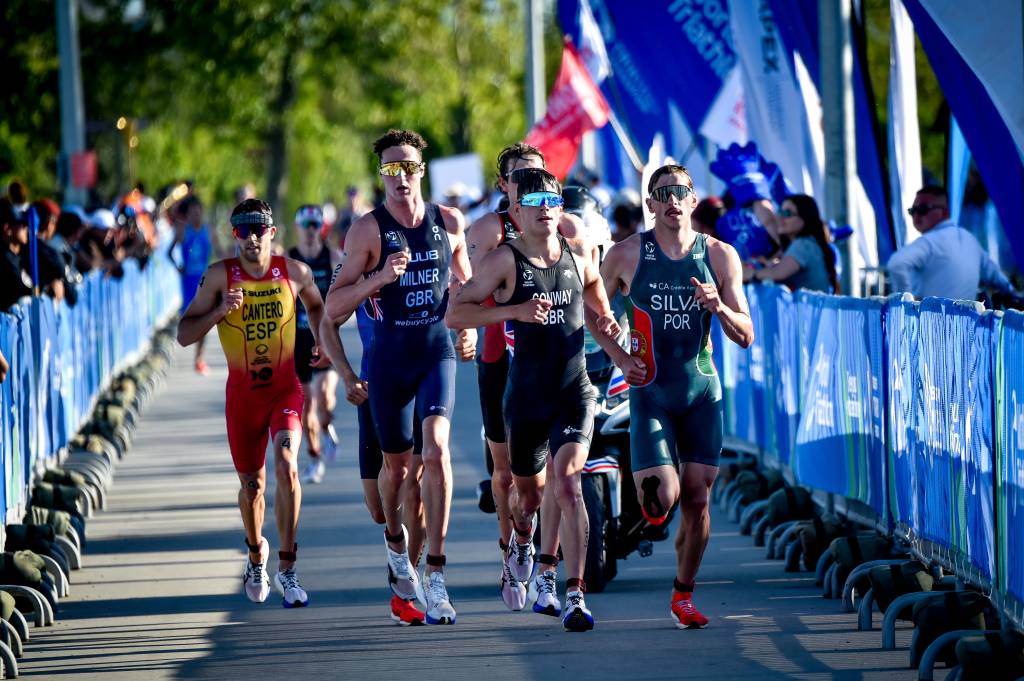
Conway also placed fifth in this year’s season-opening World Triathlon Championship Series race in Uzbekistan, where he produced the fastest split of 29:36 for the 10km run, with the only athlete close to that time being team-mate Hugo Milner.
Milner is the third name demanding attention. Despite being seven months younger than Yee, he only started the sport in 2021 and – similar to Beth Potter’s evolution on the women’s side – is developing his swim, and particularly bike, to be competitive.
Milner, from Derby, who excels at cross-country and took the national title again in February, has produced predictably hit-and-miss performances as he’s stepped up in level. But the potential has long been there – underlined when he ran 30secs into the whole field, including world title-winning Alex Yee – in the grand final in Torremolinos in 2024.
After a World Cup podium to start the year and a seventh place behind Conway in Samarkand, the signs are positive that he has taken another step forward.
Olympic qualification is regularly filled with jeopardy because any given athlete can only win one place for their nation.
As such, even if Yee won every WTCS (set to be T50 from next year) race he entered, it would still need other athletes to force their way into the top 30 in the rankings to earn the other slots.
Injury is a perennial hazard, as is the whim of the selectors – if an athlete isn’t considered good enough to be a medal contender in their own right, they can be sacrificed in favour of a pilot athlete (or domestique).
History has shown that pilot athletes rarely prove effective, and what a statement it would make if the GB men – as the GB women have at every Olympics since London 2012 – arrived in Los Angeles as a three-pronged medal threat.


 Tim Heming
Freelance triathlon journalist
Tim Heming
Freelance triathlon journalist