Three winter turbo trainer sessions recommended by a cycling coach
Short focussed sets are key to keeping things interesting and unlocking race success. Follow three such workouts below.

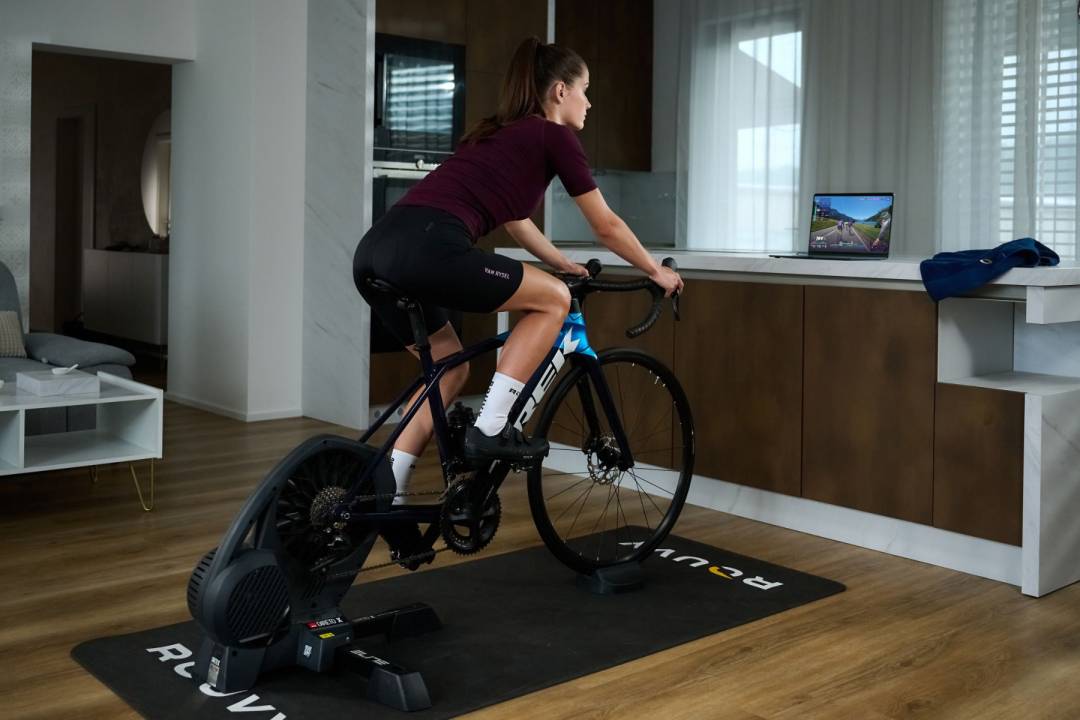
Like or loathe them, the best turbo trainers are brilliant year-round bike training tools, above all in winter.
At their worst, their appeal can be hard to understand. Once you’ve bolted your triathlon bike to it, you remove all the enjoyable aspects of cycling and leave yourself just with pain, suffering and, literally, a road to nowhere.
But in terms of time-efficient training, objectively measuring progress and pure convenience, the turbo (or rollers) is impossible to beat.
Choose your sessions wisely

The key to getting the most out of your turbo is knowing what sessions to do on it. The sessions to definitely not do are your long endurance rides.
We’ve all heard tales of triathletes who’ve ridden through the original Star Wars trilogy or who have logged all of their winter miles in their basement. Don’t do it.
Get some decent winter kit, fit some mudguards or hit the trails on a mountain bike.
Your bike-handling skills and your sanity will be far better for it come the spring.
Go short and sharp

The sessions to do on your turbo are structured interval workouts.
Without junctions, traffic and self-preservation to worry about, you can focus 100% on holding the right intensity for the right amount of time.
Time is broken into smaller chunks, so the workouts tend to be more digestible and it’s easier to stay motivated.
Should you be doing higher-intensity workouts during the winter though? Surely winter training is all about aerobic base work?
Well, if you’re a full-time athlete who can train for 25-30hrs a week, laying down a pure aerobic base is definitely worthwhile.
However, if you’re limited by work, family and the real world to 10-15hrs per week or less, just going slow isn’t training smart.
Get your longer steadier sessions in at the weekend but, during the working week, your best bet is shorter, more intense hits.
This is when the turbo is king and, as long as you factor in enough recovery and don’t overcook the frequency, will definitely optimise your limited training time.
Below I recommend three staple winter turbo trainer sessions and explain how to warm up before hand.
Warm-up
Prepare as follows before each of these demanding workouts.
Duration: 20mins
A decent warm-up prepares you both physically and mentally. Select a medium gear and a light resistance.
Focus on maintaining a smooth and even pedal stroke. If you don’t feel as though your legs are spinning freely, drop the gearing and resistance.
By the end, you should have a good sweat on but your legs shouldn’t feel at all fatigued.
| Mins | RPM (pedal revolutions per minute) | Mins | RPM |
| 0-4 | 90 | 12-15 | 90 |
| 4-6 | 95 | 15-16 | 95 |
| 6-8 | 100 | 16-17 | 100 |
| 8-9 | 100 | 17-17.5 | 125 |
| 9-10 | 105 | 17.5-18 | 130 |
| 10-12 | 110 | 18-20 | 90 |
1. High gear session

Winter is a great time to include some strength work in your training, but that doesn’t always have to mean heading to the gym.
This session is the perfect way to build some cycle-specific strength work into your training.
Perform the efforts in your race position to get maximum benefits and to really challenge the muscles of your core and glutes.
This workout will also deliver a VO2 and functional threshold-raising hit, but does require at least 48hrs recovery.
Warm-up
See above
Main set
4-6 x 5mins @ 60-65rpm.
Select a gear and resistance that just allows you to hold 60-65rpm; don’t worry about power or HR.
It’ll feel like cycling through treacle, but try to keep it smooth. Emphasise scraping through at the bottom of the stroke and avoid excessive tension or rocking in your upper body.
3mins easy spin recovery between intervals
Cool-down
10mins easy spin.
2. Leg speed session

This leg speed session will facilitate recovery, give your legs some zip back, and help to develop a smooth and efficient pedalling technique.
This session is also an ideal one to do on rollers.
Warm-up
See above
Main set
2 x 3mins @ 100rpm
2mins @ 105rpm for 1min at 110rpm
30secs @ 120rpm for 15secs at 130rpm
15secs spinning as fast as you can without bobbing in the saddle
2mins @ 90rpm
15secs spinning as fast as you can
15secs @ 130rpm for 30secs @ 120rpm
1min @ 110rpm for 2mins @ 105rpm
Cool-down
10mins easy spin.
3. Sweet-spot session

If you only do one turbo session regularly through the winter, do this one.
In terms of your cycling training zones, the so-called ‘sweet spot’ found at the upper end of Zone 3, tempo, and lower end of Zone 4, threshold, delivers good training gains, especially increases in Functional Threshold Power, which is key to triathlon cycling performance across all distances.
The ‘sweet’ thing about it is that recovery time from workouts at this intensity is minimal, so they’re easy to slot into your schedule and complement base work really well.
Warm-up
See above
Main set
2 x 20mins at ‘sweet spot’ (84-95% FTP or 94-95% Lactate Threshold Heart Rate). Select a gear and resistance that allows you to hold 90-100rpm.
You should have to concentrate to maintain the intensity, but it shouldn’t feel too hard.
Remember FTP or LTHR is the intensity you should be able to sustain for an hour and you’re working below that. 5mins easy spin recovery between the two efforts.
Cool-down
10mins easy spin.
These workouts fit well into our free three-month winter training plan if you’re targeting Olympic distance triathlon.


 Nik Cook
Freelance bike writer
Nik Cook
Freelance bike writer