Aero helmets for triathletes – should you go all in to cut drag?
Are time-trial helmets a time saver or money waster for triathlon? We weigh up their pros and cons.

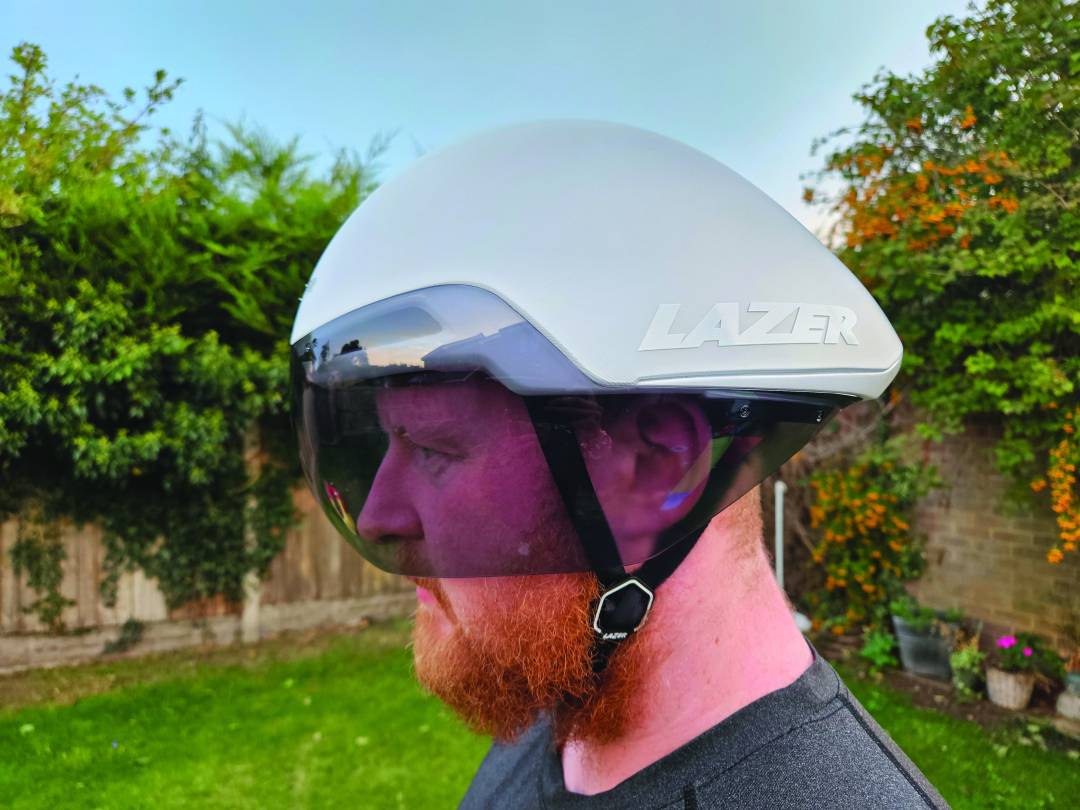
The best aero road helmets are so good these days that supersized aero helmets don’t get much of a look in, but this time-trial design does suit certain triathlons and triathletes.
Lids designed for improved aerodynamics had appeared in triathlon as far back as the mid ’80s, most notably helping Scott Tinley to Hawaii victory in 1985.
But despite the potential benefits aero helmets offered, they were only adopted by a relatively small handful of athletes.
The tipping point for aero helmets came with Greg Lemond’s 1989 Tour de France-winning time trial ride.
Wearing a Giro Aerohead and using clip-on tri-bars, he demonstrated the importance of aerodynamics by gaining 58secs on Laurent Fignon over the final 15mi/25km stage and taking the yellow jersey.
That moment marked the beginning of biking’s aero arms race.
What is an aero helmet?
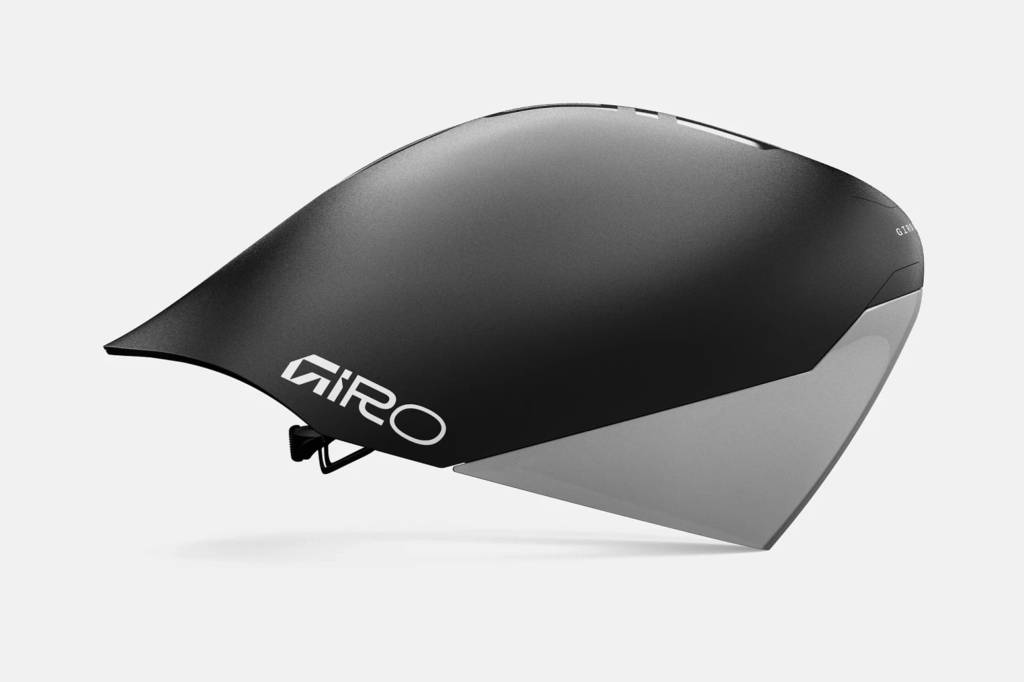
Sometimes called time-trial helmets, aero helmets are bulky and bulbous at the front and usually taper back into a tadpole-like tail or tear-drop shape.
Typically the outside is smooth featuring few vents if any.
Removable visors at the front of the helmet are also common.
Do I need an aero helmet?

Aero helmets are now popular with triathletes. But we don’t all need an aero helmet for triathlon.
They won’t benefit everyone and cost far more than the best budget bike helmets. These can protect your head just as well.
These days triathletes are increasingly adopting aero road helmets. The best aero road helmets are lighter and better ventilated yet competitively aerodynamic compared to all-out aero helmets.
How to decide whether to wear an aero helmet

All things being equal, a rider in a correctly fitted aero helmet will be faster than the same rider wearing a standard bike helmet.
An aero helmet optimised to a rider’s position can be worth 10–15 watts according to the aero experts at Drag2Zero.
Over the course of an Ironman bike leg that could result in time gains measurable in minutes.
For such a relatively inexpensive piece of kit, compared to a new aero wheelset or triathlon bike, an aero helmet is potentially the best bang for your buck in terms of aero gain.
There are caveats though. And the first is that the helmet has to be well fitted to the rider.
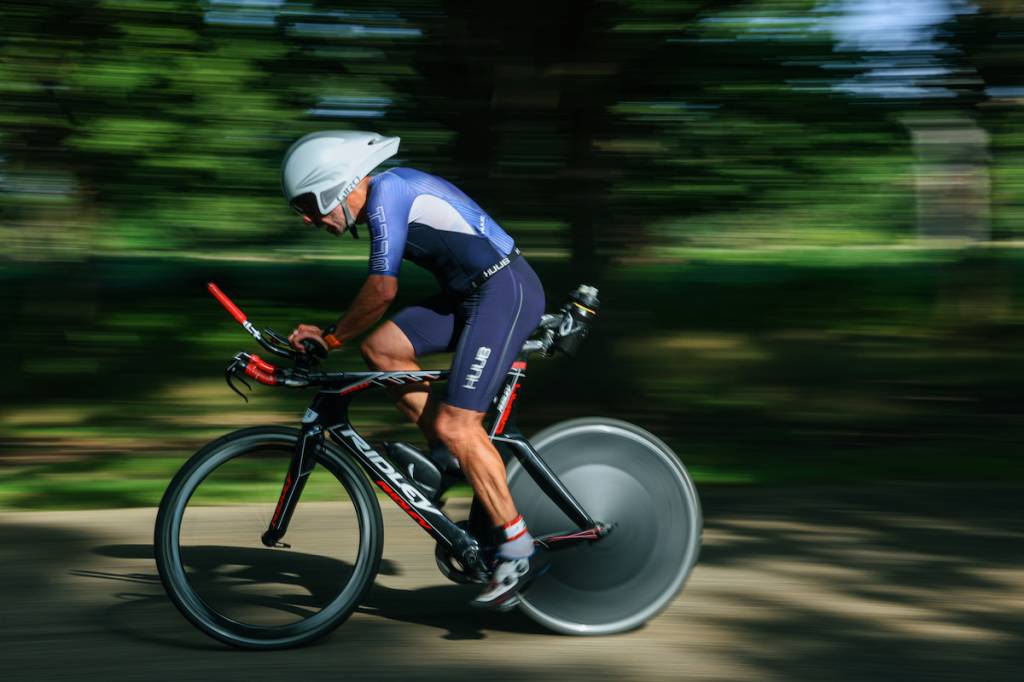
The tail of the helmet should transition smoothly to the rider’s back, with as small a gap as possible.
If this isn’t the case or you tend to move your head a lot as you ride, your flashy aero helmet could actually be slowing you down.
This especially applies to long-course triathletes whose head position may change due to fatigue and failing concentration during the bike leg.
Try a number of helmets, take side-on shots of you wearing it on the turbo, but remember to test yourself when you’re fatigued as well as when you’re fresh.
Many athletes will find a stubbier-tailed helmet or even an aero road helmet a better and more versatile option.
How much ventilation do you need?

The next factor to consider is overheating.
An aero helmet will always be hotter to ride in and, for an Ironman bike leg in hot conditions, overheating can easily cost you more time than the helmet will save.
Remember, Chrissie Wellington didn’t wear an aero helmet for any of her Kona triumphs and her bike splits weren’t too shabby.
How fast can you put it on and off?
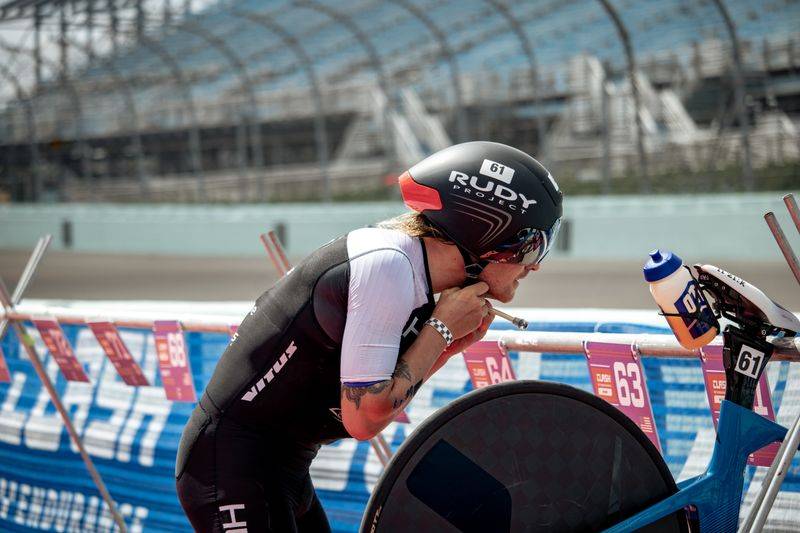
As a triathlete, you’ve also got to consider transition.
A fiddly visor, stiff earflaps or a tricky-to-access cradle adjustment dial can easily cost you a chunk of time. Things like these may not be such a big deal over a long-course race.
But for sprint and Olympic-distance events, these factors do need to be offset against the diminished aero time gains for the shorter bike legs.
Are you used to wearing it?
Finally, don’t just save your aero helmet for race day.
Like all race kit, it’s only by training in it that you can be 100% confident that it’s right for you. Is it comfortable? Do you overheat in it? These are questions you can only answer after hours spent on the road.
If you feel self-conscious wearing an aero helmet, enter some cycling time trials; they’re one of the only events where you’ll get funny looks for not wearing headgear that looks like it’s come from Battle of the Planets.
Features to look for in an aero helmet

Wind tunnel data isn’t the only thing to consider when it comes to picking an aero lid…
Shell
Designed to slide along the road if you crash and slip through the air as you ride, the shell is what gives a helmet its aerodynamic profile.
The shape will generally be a teardrop, but there’s considerable variation when it comes to tail length.
Most manufactures opt for a smooth surface but some use golf ball-like dimples, claiming they create even more zip.
Tail

One of the key determining factors as to how well a helmet will perform for any given rider is the shape and length of its tail.
Long tails can be very aerodynamic provided they stay flat against your back but, if you drop your head or don’t ride with a flat back, any gains can easily turn into losses.
A stubbier tail or tail-free helmet could be a better choice.
Foam
The expanded polystyrene (EPS) foam is what absorbs the impact energy of a crash and is designed to be sacrificial.
This is why you should diligently check your helmet after a crash, or if you drop it, even if there’s no visible damage to the shell.
Vents
On an aero helmet, vents are always going to be a compromise between cooling and aerodynamics.
By sucking in air they generate turbulence, and therefore drag, but without any ventilation you’re likely to overheat.
Visor
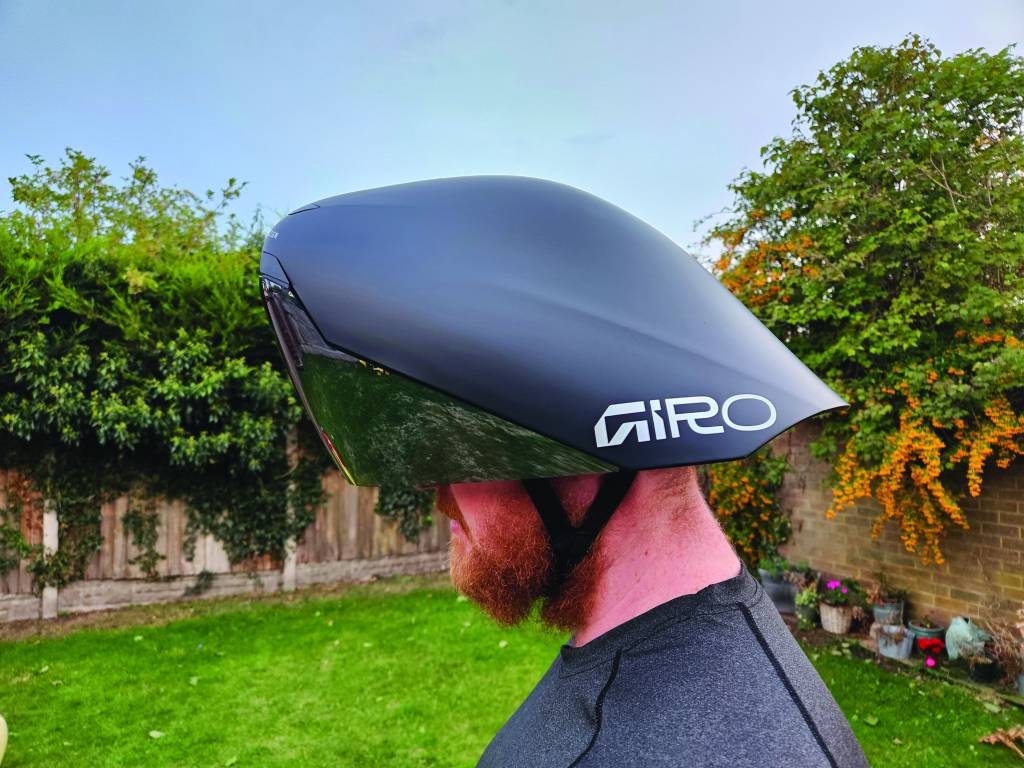
Logic says that a visor smooths out the frontal profile of your helmet and face and should therefore decrease drag.
However, independent wind tunnel testing on some designs has found they’re faster with the visor removed.
You’ve also got to factor in potential overheating and fogging issues but, on the other hand, they look cool.
Cradle and straps
Like a conventional road bike helmet, the cradle secures the helmet to your head and is usually adjusted using a ratchet, dial or a similar mechanism.
Straps tend to be fairly standard too but, if you’re in the pursuit of marginal gains, trim the ends down once they’ve been correctly adjusted.
For more cheap or free drag-reduction tips, learn how to get more aero on a budget.


 Jack Evans