I’m former rugby league pro and I completed six Ironman events in a year to help men’s mental health
Former Leeds Rhinos prop Luke Ambler tragically lost his brother-in-law to suicide, which led him to found a charity and use triathlon for good

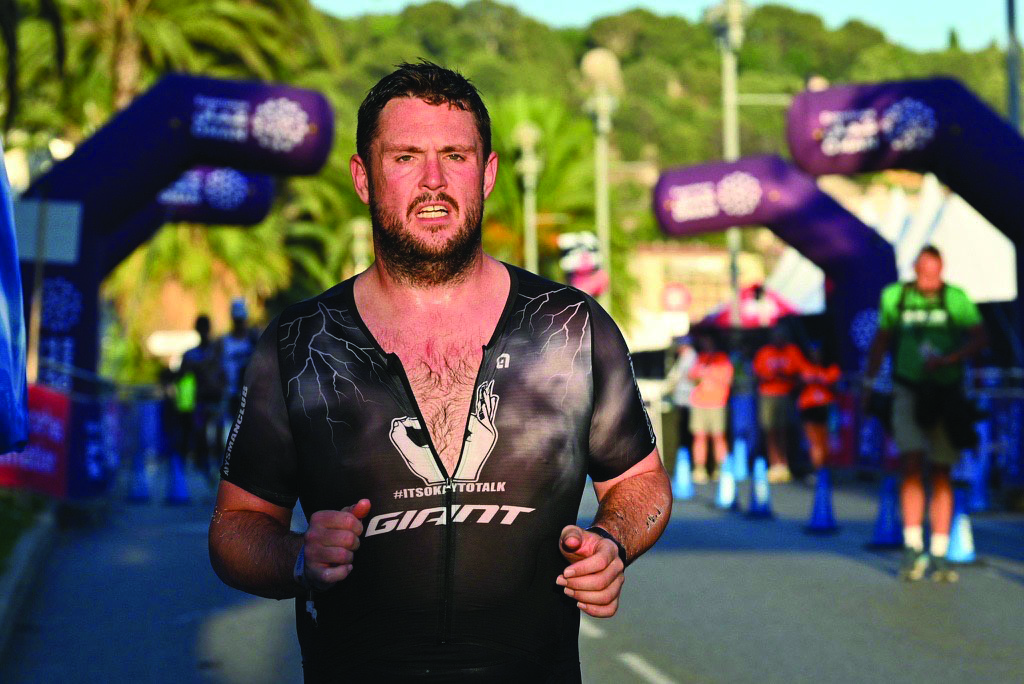
Rugby League was an opportunity to express myself when I was young. Give a big kid a rugby ball and he can run through people, so it became my career.
I played in the Super League for Salford City Reds and Leeds Rhinos, and went on to represent Ireland at international level.
In April 2016, tragically and with no warning signs, my 23-year-old brother-in-law Andrew took his own life.
Luke Ambler
Luke Ambler, 35, is a former professional rugby league player turned mental health campaigner from Halifax. After his brother-in-law, Andy Roberts, died by suicide in 2016, Luke co-founded Andy’s Man Club, a volunteer-led UK charity offering peer-to-peer support for men. It has gone from strength to strength launching hundreds of talking groups all over the UK.
It left the family devastated, the community shattered, and a lot of questions unanswered.
It also spurred a mission to stop other guys going through what Andy went through.
Telling my son, Alfie, that his favourite person in the world had died – and the screech Alfie let out as a six-year-old – will stay with me forever.
I thought maybe I could use my platform as a prop forward in rugby – a masculine job – to get guys to open up and talk.
A talking group for men
That’s what we did. Andy’s Man Club is a talking group for men. It started as one group in Halifax and nine men turned up.
Looking back it seems small, but to talk at a deep level about what was going on inside was one of the most powerful nights of my life.
A week later 15 men turned up and we realised we couldn’t keep this isolated in Halifax.
Now we have 320 groups in the UK from as far north as Aberdeen to as far south as Plymouth and we have 6,200 men using the service every week.
Just normal guys from all walks of life who have got a lot going on and want to connect.
Triathlon: Mission Possible

Triathlon started for me when one of our charity ambassadors, Jonny Mason, said he wanted to do all five Ironman events in the UK for the charity.
I had to do it with him. We call it Mission Possible. The idea is that most people, when they are in the depths of despair, don’t think it’s possible to overcome what they’re going through.
But it is. People don’t need to do an Ironman but if they read this and think they need to get help, reach out.
There are lots of resources, and it will be okay. You just have to push through what you once thought was impossible.
I was supposed to drive to Weymouth to do the 70.3 before Ironman Wales the following weekend, but instead the wonderful people of Ironman chose to help us put even more of a spotlight on the charity with an invite to Nice for the men’s Ironman World Championship.
The swim in Nice was my first event ever without a wetsuit. Let’s just say it was interesting for someone who even trains in buoyancy shorts.
Around 70km on the bike in Nice I got hit hard. Maybe heatstroke, maybe just the sun, but from that point it became an all-out war.
The run was pure survival. I started it already battered, but this mission is about inspiring others to keep going and I had to live that myself.
At the finish line, I broke down overwhelmed and the pain disappeared in a heartbeat. My family were there to hand me my medal and the joy, love and gratitude filled me up instantly.
A team effort
No-one does long-distance triathlon alone. My family, friends, the Andy’s Man Club family carried me the whole way, right to the very end.
I was done. I needed bed. The only thought in my head was: ‘How on earth do I get through next week in Wales?’ Ironman Wales was emotional. In Nice I was crying.
Here I was elated. I’m just looking forward to spending some time with my family before the final part of the challenge – to cycle across Italy!
Triathlon is good for the community, but also the time in isolation where you are swimming, biking and running to learn about yourself.
We’ve all got flaws, but it’s important to say: ‘I’m cool with who I am because I’m going to be spending a lot of time out there, and I need to learn to like myself.’
We know the charity works because we have tens of thousands of people emailing in saying “this club saved my life”, or “thank you for giving me back my dad”, or “my husband is a far better man again.”
It’s making healthier and happier and better husbands, uncles, brothers, fathers and members of society.


 220 Triathlon Team
Journalists, reviewers, coaches and athletes
220 Triathlon Team
Journalists, reviewers, coaches and athletes