Top winter cycling gear to keep you warm and dry on the bike
Winter weather brings with it a lot of decisions on kit, but layering and versatility is really the name of the game. Here, we put a mix of 12 items to the test to see if they deserve a place in your wardrobe…

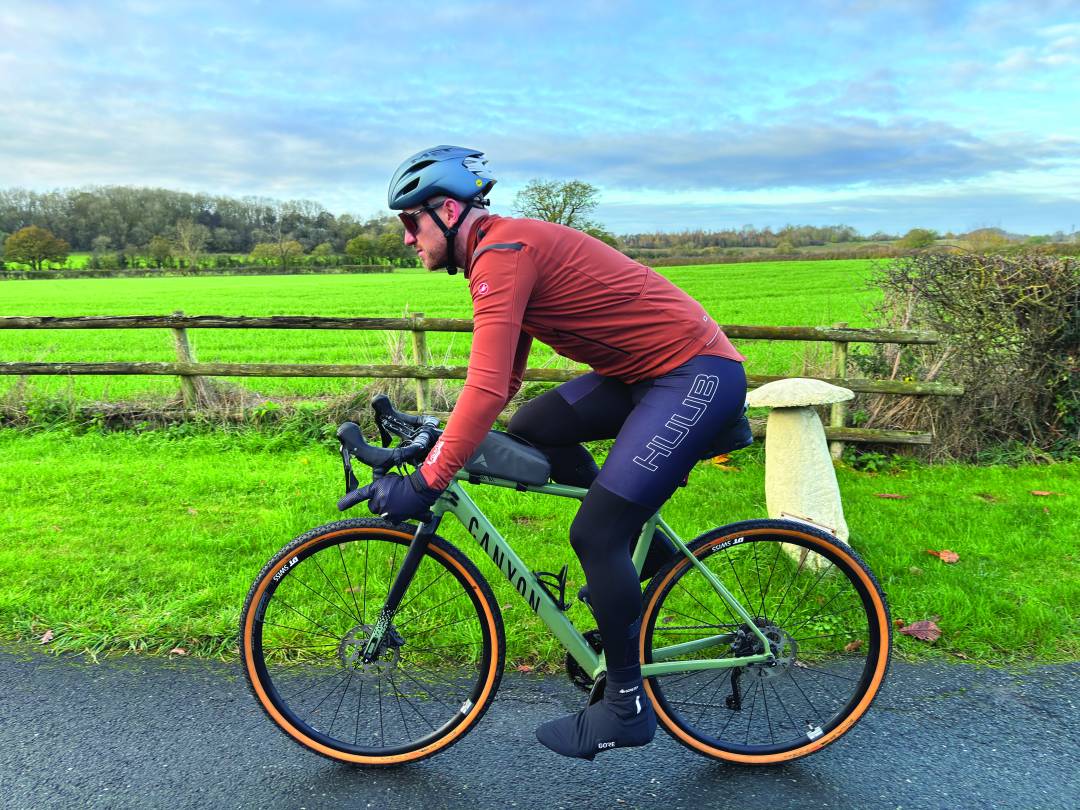
Whether you like it or not, we’re definitely in the depths of winter now. Inevitably, this means you’ll probably take a lot of your training indoors, but the joy of being outside on two wheels doesn’t have to be banished entirely until spring. You just need the right bike kit to handle the elements.
The key here is layering. Opt for a thick winter jacket and chances are, unless you’re genuinely riding in subzero conditions, you’ll overheat. But layer up with base layers, long sleeve jerseys, gilets and wind or water-repellent jackets, and you can customise your outfit to suit the specific conditions you’re riding in.
Add in some high-performance bib tights and decent wintry bike gloves, plus accessories such as shoe covers, a hat and arm warmers, and you’ll be well primed to carry on cycling until the warm weather arrives again.
To help you do exactly that, we’ve tested a selection of kit that’s versatile and will excellently feed into a layering system. In this article, you’ll find bib tights, long sleeve jerseys, insulated gilets, gloves, a couple of accessories and bike jackets.
While we often cover either waterproof, packable jackets or thermal options, this time we’ve chosen to test two new options that don’t quite fit into either category. Instead, they’re designed to act almost as a ‘soft shell’, but we think they’re an excellent choice for mostly fair weather riders.
If you do want to see a selection of properly waterproof or thermal jackets, though, head to our roundup of the best cycling jackets.
Otherwise, have a think about what you’re missing from your layering system, consider what conditions you’ll actually be riding in 90% of the time and then browse these recommendations to see if anything fits the bill.
There’s some great kit out there and it doesn’t always require a second mortgage, either. Happy riding!
Why you can trust 220 Triathlon
Our team of experts rigorously tests each product and provides honest, unbiased reviews to help you make informed decisions. For more details, see how we rate and test products.
Best bike kit for cold winter riding

1. Castelli Perfetto Ros 3 cycling softshell jacket
220 Triathlon Verdict
This is the jacket I’d grab for all but the rainiest of rides. Superb tech and a fantastic fit. Score: 85%
Pros
- Offers wind and weather resistance
- Close, aero fit
- Ample storage
Cons
- Not super shower-proof
- A zipped pocket would be useful
- £280
Castelli positions this bike jacket as a versatile option for most riding conditions, and in practice it largely delivers. Drawing on Polartec’s AirCore fabric, it aims to strike a balance between wind protection, weather resistance and breathability, and it generally succeeds. The jacket blocks the wind effectively, aided by a subtle external storm flap along the zip, and feels well suited to cool, changeable rides.
Water resistance is limited rather than absolute. The outer fabric wets out quickly, suggesting the absence of a DWR coating, but moisture doesn’t pass through the material itself. Instead, light ingress is more likely at the zip and seams, which is acceptable given this isn’t designed as a fully waterproof shell and pairs well with a lightweight outer in heavy rain.
The fit is close and aerodynamic with plenty of stretch, allowing easy layering without flapping. Venting is excellent thanks to mesh-backed front openings and a two-way zip, making temperature regulation straightforward. Storage is generous, though a zipped rear pocket would have been welcome.

2. Sportful Fiandre Shift Jacket
220 Triathlon Verdict
Less features than the Castelli, but cheaper and still an excellent, versatile layer. Score: 80%
Pros
- Wind and weather resistance
- Close, comfy fit
- Stable rear pockets
Cons
- Lacks good rainproofing
- No vents for temp regulation
- £210
At first glance, the Fiandre Shift Jacket feels closely related to the Castelli model tested alongside it (see above), and that’s no coincidence.
Both use the same Polartec AirCore fabric, developed exclusively within their shared parent company. The key difference is price, with the Fiandre coming in significantly cheaper, raising the question of whether it sacrifices performance.
In use, the core fabric delivers similar results: strong wind protection, good breathability and enough water resistance to cope with light rain. However, there’s no DWR coating, no taped seams and a non-waterproof zip, meaning this isn’t a jacket for prolonged wet rides.
That said, the same limitations apply to its more expensive sibling, making the value proposition here compelling if you already rely on a separate waterproof shell.
Unlike the Castelli, the Fiandre Shift lacks dedicated vents, relying instead on a two-way zip for temperature control, which is effective but fiddly with gloves. The fit is close yet comfortable, with long sleeves, secure cuffs and three stable rear pockets. Bright colour options add welcome visibility.

3. Huub Alchemy Long Sleeve Jersey
220 Triathlon Verdict
Very limited thermal properties, but a versatile option for year-round use. Score: 75%
Pros
- Good for layering
- True to size and stretchy
- Three pockets and one zipped
Cons
- No brushed or insulated fabric
- No adequate wind protection
- Pockets can sag
- £99.95
Even if Huub describes it as such, this is very much a thermal cycling jersey in name only. The material itself feels like a standard jersey material and it’s rather thin. It’s made of 90% polyester and 10% spandex, while there’s no brushed back or full-length storm flap behind the zip (though you do get some protection at the top) to help stop wind coming through.
In fact, wind cuts right through the fabric. On the flip side, breathability and moisture wicking are both impressive, which can often not be the case with thicker winter-weight jerseys.
Clearly, it’s not your classic style of long-sleeve jersey for cold weather, but it does work from a layering perspective. It means that there’s no risk of overheating on milder days, while you can pair it with other layers as temperatures change.
For example, with a windproof or insulated gilet when the wind gets colder and then a jacket over the top when the weather worsens still. It’s all about those layers, again.
The fit feels largely true to size and is in line with my usual choice for cycling jerseys. The sleeves and torso are long and the whole garment fits closely, yet has an excellent amount of stretch. As a result, if you wanted to pair it with a base layer, you shouldn’t have any trouble doing so.
You get three jersey pockets on the rear, plus a zipped one that proved large enough for my iPhone 15, but the zip pull is small and fiddly, making it difficult to operate when wearing gloves or with cold hands. Plus, if you have anything weighty in these pockets, you do get a reasonable amount of sag. Green, black and navy also available.

4. Le Col Pro Aqua Zero Long Sleeve Jersey
220 Triathlon Verdict
Warm, cosy and breathable – a top tier winter jersey. Plenty of colour options too. Score: 89%
Pros
- Luxury thermal brushed fabric
- Comfy, aero close fit
- Good breathability
Cons
- Not windproof
- £180
If you’re after a genuine winter long sleeve jersey then here’s something for you. Le Col’s Pro Aqua Zero screams luxury as soon as you pull it on. The thermal brushed back fabric is super comfortable and it really just feels like a warm embrace.
It’s designed to have a “close race fit” and it gets the balance right in my eyes. This only enhances comfort, but must also help with aerodynamics, with zero flapping fabric catching the wind during my testing.
The sleeves are nice and long, while the cuffs fit closely to keep cold air out. Le Col recommends this jersey for temperatures between 5–15ºC (40-60ºF)and I’m not inclined to disagree with them, but you could absolutely layer up and use this jersey as your base in conditions tumbling below zero.
The brand also reckons the fabric blocks wind well. I’d disagree on that, as I did notice cold air passing through the material and zip, but on the flip side breathability is very good. And you could always chuck on a gilet or lightweight jacket to get that wind protection.
As the name suggests, the Pro Aqua Zero comes with a water repellent treatment. This is fine for light rain showers, but for anything more it’s not really sufficient. I don’t think you’d really expect it to be, though, and I think the water resistance is best utilised as a second layer of defence next to the skin under a gilet or lightweight jacket.
Rounding out the package, you get a wide range of colours and sizes, and three roomy yet supportive open pockets, plus a weather resistant zipped one for valuables like a smartphone (though I wouldn’t rely on it in heavy rain, just in case).

5. Huub Peaks Thermal Bib Tights
220 Triathlon Verdict
Not the right pick if foul weather is on the horizon, but otherwise a comfy, supportive option. Score: 78%
Pros
- Compressive not restrictive
- Highly comfortable and supportive
- Mesh back panel and substantial chammy
Cons
- Ankle cuffs hard to pull on
- Not weather-resistant
- £119.95
Huub may be best known for its wetsuits, but the brand also produces some very capable cycling kit and has built solid experience in this area over a number of years.
On test here are the Peaks Cycling Thermal Bib Tights, which oddly felt reminiscent of a wetsuit when pulling them on. The fit is tight and compressive, similar to the sensation of drawing a neoprene suit up to your waist. It wasn’t overly restrictive, though you may want to size up if you’re between sizes, and it offered plenty of support for the lower limbs.
The ankle cuffs proved more of a challenge, with very little give, so it’s best to be seated when pulling them on or off unless your balance is exceptional. Leg length was ideal for me (I’m 6ft 1in tall), and silicone grippers at the cuffs help keep everything in place.
Comfort levels are high thanks to seamless straps that eliminate irritation and a perforated mesh back panel that aids breathability. The chamois pad feels substantial and well suited to everything from short rides to long stints in the saddle, while a thicker panel over the groin helps block cold air.
The main fabric kept me comfortable down to around 5ºC/40ºF, but I’d want more insulation below that. They’re neither windproof nor water resistant, so they’re not my first choice in poor conditions. Reflective strips on the backs of the legs boost visibility, and the bold Huub logos add a distinctive touch without feeling over the top.

6. Madison DTE Thermal Bib Tights with EIT Pad
220 Triathlon Verdict
Held back by several flaws, but a reasonably wallet-friendly option for mild, short rides. Score: 60%
Pros
- Excellent seamless straps
- Breathable mesh back
Cons
- Only protects down to 7ºC
- Not weather-resistant and DWR ineffective
- Little short for 6ft+
- £99.99
I find that bib tights tend to fall into two categories. First, there are the all-singing, all-dancing options that keep the weather out and the warmth in but can feel stuffy on milder winter days. Then there are the simpler designs that provide some warmth but struggle when it gets truly cold or damp. The Madison bib tights definitely fit into the latter category.
They add warmth and are fine for rides down to around 7ºC (45ºF), but on colder, breezier, or damp days they quickly show their limits. They’re not very wind resistant (except for the crotch patch), and while Madison claims a DWR coating, my testing suggested it was largely ineffective.
The fit is acceptable, but I would have preferred more compression and slightly longer legs. At 6ft 1in, my ankles were exposed, highlighting the thermal limitations. Shorter riders may find the length adequate, though warmth could still be an issue. The shape also loosens after several washes, which reduces performance on long rides.
On comfort, the Elastic Interface dual-density chamois felt a step below many competitors, though the seamless straps and breathable mesh back were excellent.

7. MAAP Low Insulated Vest
220 Triathlon Verdict
Excellent fabrics help make this an impressively versatile piece of kit. Score: 87%
Pros
- Provides wind and shower protection
- Adds warmth without overheating
Cons
- High price tag for a gilet
- £160
While bike gilets are typically valued for wind protection, they can also provide extra insulation, and the Flow Insulated Vest strikes a good balance. Lightweight Teijin Octa insulation on the front and shoulders adds warmth without causing overheating.
Maap suggests a temperature range of 6–16ºC (43-60ºF), which feels accurate. The main ripstop panels on the front and upper back block wind effectively, while light rain beads on the surface.
Sides and lower back use lighter ripstop fabric, allowing airflow and boosting breathability. Additional features include a two-way zip and a wide hem gripper.

8. Le Col Pro Insulated Gilet
220 Triathlon Verdict
Big fan of the insulation, but I’d be expecting perfection at this price. Score: 74%
Pros
- Insulative materials provide warmth
- Good windproofing
Cons
- High price tag
- Sizing runs large
- £160
Le Col’s gilet aims to perform similarly but differs in fit and insulation. The size large I usually wear felt baggy, catching the wind and reducing thermal efficiency, so sizing carefully is essential.
Polartec Alpha Active insulation on the upper half provides genuine warmth without overkill. Windproofing is solid, though the internal flap behind the zip only extends two-thirds of the way down.

9. Van Rysel 900 Winter Cycling Gloves
220 Triathlon Verdict
By no means the finished article, but solid performance for the price. Score: 73%
Pros
- Good value for money
- Reasonable dexterity and padded palms
Cons
- Water-repellency is limited
- Inconsistent touchscreen compatability
- Weak velcro straps
- £29.99
These budget-friendly gloves feature a water-repellent coating that offers limited protection. Recommended for use down to 3ºC (37ºF), they provide reasonable dexterity, palm padding, and touchscreen compatibility, though performance is inconsistent.
Velcro adjustments feel weak, and the gloves can be tricky to handle with cold or gloved hands.

10. Madison DTE Waterproof Primaloft Thermal Gloves
220 Triathlon Verdict
Warm, weatherproof and very reasonably priced. There’s a lot to like. Score: 88%
Pros
- Warm insulation and high comfort
- Soft, insulative lining
- Waterproof and taped seams
- Impressive dexterity and Velcro tab
Cons
- Hard to find any!
- £49.99
Despite the modest price, these gloves offer Primaloft insulation, waterproof fabrics, and taped seams. Sizing is true to size, the lining feels soft, and overall comfort is high.
Light palm padding and an easy-to-use Velcro tab add practicality. Dexterity is impressive for the price, making most tasks simple, including touchscreen use.
They are reliably windproof, and water resistance is strong thanks to a DWR coating on the back of the palms combined with the membrane. Fingers stayed warm down to around 5°C (41°F).

11. Sportful Fiandre 2 Armwarmers
220 Triathlon Verdict
Cheaper options around, but you can’t say these aren’t warm and comfortable. Score: 83%
Pros
- Adds warmth and packs down small
- Comfy brushed inner fabric
- Easy to remove and stays in place
Cons
- There are cheaper options
- £35
Arm warmers are perfect for variable weather, offering warmth while packing small. The Fiandre 2 features brushed inner fabric for comfort and decent insulation for temperatures between 5–15ºC (40-60ºF).
They feel like a long-sleeve thermal jersey but are easy to remove when needed. An elasticated fit keeps them securely in place despite the lack of silicone grippers.

12. Gore Sleet Insulated Overshoes
220 Triathlon Verdict
They’re not flawless, but they’re pleasingly warm and hold up well in poor weather. Score: 82%
Pros
- Warm and insulative overshoes
- Protects from wind and rain
- Accurate cleat alignment
- 90% recycled materials
Cons
- Minor ingress at zip
- High price
- £89.99
These overshoes are warm and effective, with Primaloft insulation made from 90% recycled polyester and a Gore-Tex membrane paired with DWR coating to block wind and rain.
They are tricky to put on, so sizing up may help, and cleat alignment is accurate. The zip area is a weak point, so expect minor water ingress in heavy downpours.
Fpr more cycling kit recommendations, check out our favourite aero bike helmets for fast racing.


 Rob Slade