Can budget aerobars beat mid-range extensions? We test the BBB Aeromax and Profile Design SubSonic Ergo 39a
With aerobars, where do price and performance intersect? We test mid-market and entry-level options to find out.

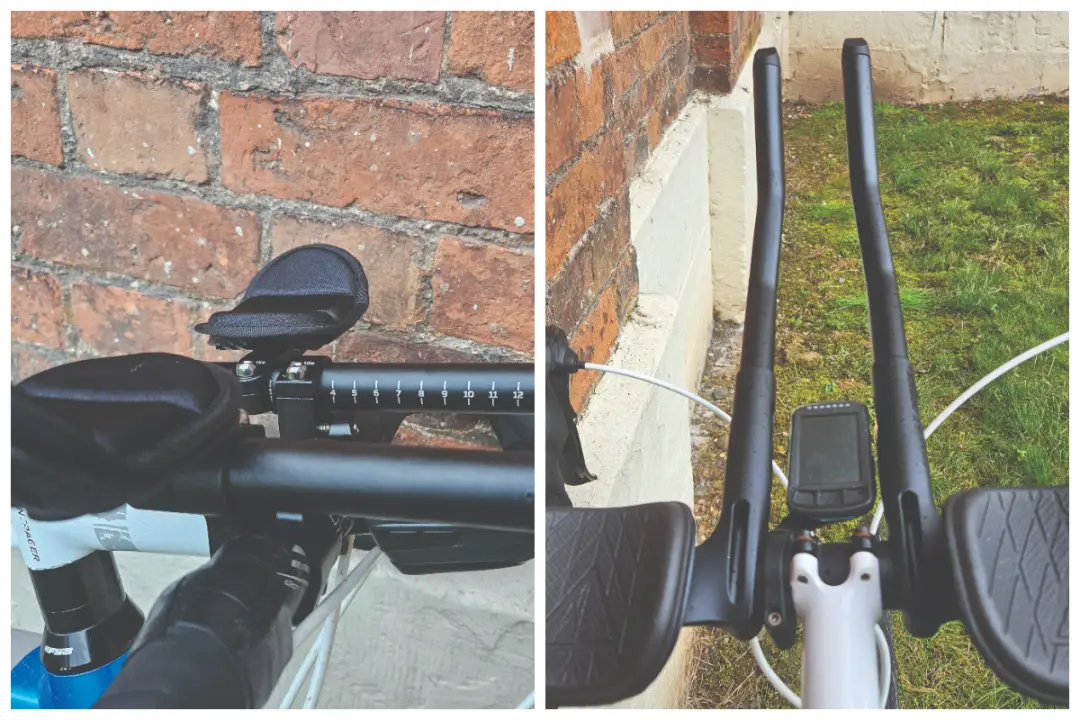
The best clip-on aerobars can revolutionise your road bike, turning it into a go-fast machine by allowing you to sustainably hold an efficient position.
In terms of money spent per watt saved, they can be very economical too.
Equally, you can spend a couple of hundred dollars or pounds on lighter, more adjustable and supportive aerobars. And carbon aero extensions will cost much more.
To find out where the balance of price and performance sits, we’ve compared the mid-range, $250 / £189.99 Profile Design SubSonic Ergo 39a to the entry-level, £79.99 (US pricing N/A) BBB Aeromax.
Both have been reviewed by Jack Sexty, former 220 Triathlon staffer and current road.cc editor, on his road bike as you are likely to deploy them yourself.
Besides the crucially important adjustability, we’ll analyse their design and features, ease of fitment, weight, comfort and value for money.
Design, features and fitting

Profile Design markets the SubSonic Ergo 39a as low-stack aerobars. The clamp is flush with the extension, permitting a lower front end than their competitors.
The brand’s risers are compatible with the clamp to increase stack by up to 70mm without changing the pad to grip angle.
In addition, this brings the benefit of easy fitment. You only need a 5mm Allen key to tighten down the clamps and a 4mm bit to secure the extensions.
Another unusual aspect of the SubSonic Ergo is the sheath. It secures the alloy extensions once you’ve secured the clamp to your road bike handlebars or base bar on your triathlon bike. This lends them a cleaner aesthetic than some rivals.
The ’39a’ part of the name refers to the 39-degree angle of the J-bend extensions which have an 87mm rise.
The BBB Aeromax also have a simple, effective design, requiring only 10 minutes to install with a 5mm hex wrench.
Like the SubSonic Ergo 39a, their extensions have an aerodynamic J-bend shape to facilitate the ‘praying mantis’ position in vogue with pro triathletes.
Profile Design SubSonic Ergo 39a vs BBB Aeromax specs
As you can see from the spec comparison table below, the two aerobars are made from the same kind of alloy, known for its good strength-to-weight ratio, and are the same shape.
The BBB Aeromax are a couple of ounces lighter, but such a weight difference would only come into play on hilly triathlon bike legs.
Both are compatible with the now standard 31.8mm clamping diameter on road bike handlebars and triathlon bike base bars.
However, BBB advises that the Aeromax is not compatible with carbon bars. Profile Design makes no such warning.
Unfortunately BBB doesn’t give much information on the Aeromax’s room for maneouvre. So on paper, the SubSonic Ergo looks more adjustable. In practice, Jack’s testing bore this out.
| Profile Design SubSonic Ergo 39a | BBB Aeromax | |
| Price | $250 / £189.99 | £79.99 (Europe only) |
| Material | 6061-T6 Aluminum | 6061 T6 Aluminum |
| Weight | 20.8oz / 590g | 18oz / 512g |
| Extension shape | 39° angled J-bend | J-Bend |
| Handlebar clamp diameter | 31.8mm (26.0mm with shims) | 31.8mm and 25.4mm |
| Compatibility | Carbon and alloy bars | Alloy bars only |
| Aerobar length | 340mm | 350mm |
| Stack Height | 40mm (can be increased by up to 70mm with risers) | Unspecified |
| Armrest Width | 142mm to 272mm in 18.5mm steps | Unspecified |
| Armrest fore/aft | -85mm to 17.5mm in 7.5mm steps | Unspecified |
Adjustability and comfort

Profile Design’s SubSonic Ergo 39a have the edge in terms of adjustability. The brand claims 80 different armrest positions are possible and that in combination the risers and bar offer 1200 configurations.
While we can’t vouch for those numbers, the SubSonic Ergo 39a are an excellent choice if you have a particular triathlon bike fit.
They allow you to get lower and narrower than most aerobars for an aggressive racing position.
You can also configure a more relaxed set-up for longer triathlon distances, for example.
The excellent comfort and ergonomics of the SubSonic Ergo 39a will also be welcome on longer bike legs. Ample padding from the armrests is nice to have to.
BBB has made the Aeromax adjustable too, with the separate armrests and bar clamp increasing the fore and aft range.
Although the padding of the armrests is better than on BBB’s cheaper aerobars, it can’t match Profile Design’s comfort. Jack noted that he’d like more cushioning for longer triathlons.
And although he’d like more armrest width and depth, he praised the angle and ergonomics of the extensions.
For more information, we have a detailed explainer on how to fit aerobars.
Price and value for money

Costing half as much as the SubSonic Ergo 39a while giving away little performance, the BBB Aeromax are better value.
They’re also good value outright, being more adjustable and aerodynamic than similarly priced options.
Jack also argues that their superior armrest comfort justifies the extra expenditure over the £64.99 BBB Aerolight.
Compared to the wider aerobar market, the SubSonic Ergo 39a are also competively priced. Their range of adjustability and high comfort level is impressive around the $250-mark.
Verdict: Profile Design SubSonic Ergo 39a vs BBB Aeromax
The winner in Jack’s eyes are the Profile Design SubSonic Ergo 39a, “unique aero bars with some very clever features” scoring 4.5 stars and 90%.
While they’re not the most affordable production aerobars, the aerodynamic advantage they can give you approaches that of much pricier custom extensions.
Nonetheless, the BBB Aeromax ran them close despite undercutting them by half on price.
The “affordable entry-level aerobars with impressive adjustability” earned a 4.5-star score of 87%.
If you’re shopping for one of your first aerobars, especially if you just race one tri distance, you won’t go wrong with them.
How we tested these clip-on aerobars
Jack Sexty attached each set of extensions to his road bike, as you would do if you bought them, to evaluate how easy they are to fit and the range of adjustment they offer.
While doing so, he also got a feel for their build quality and likely durability.
Then he went on several rides of differing durations and intensities, replicating the experience of riding them in different triathlon bike leg distances. From this he could judge the support and comfort of the arm rests, for example.
For more details, see how we rate and test products.
To further optimise your cycling equipment for triathlon, pick one of the best aero road helmets.


 Jack Sexty
Editor at road.cc
Jack Sexty
Editor at road.cc