The triathlon industry is trying to become more sustainable – but we can all do more
This Earth Day we take a look at what we can all do to become more eco-friendly in our multisport activities and gear purchases


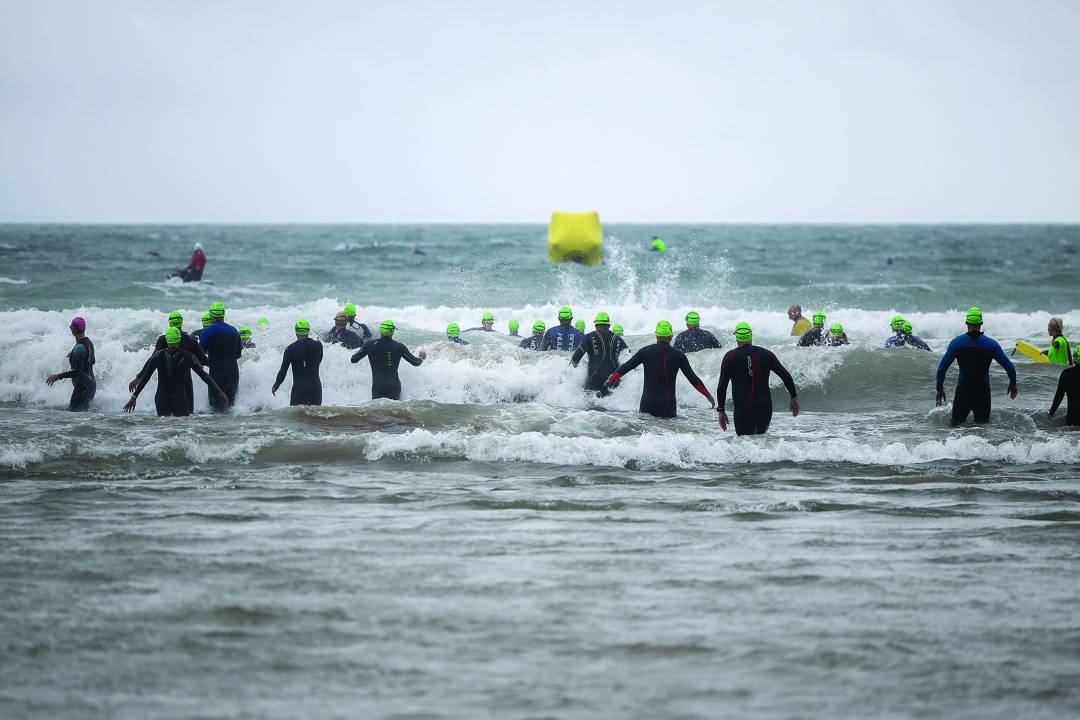
Most triathlon brands these days are aware of the need to make their gear more sustainable, but we all have a part to play and it’s not as straightforward as you might think.
As 220 columnist Tim Heming has outlined, triathlon relies on mass participation to make money. After all, not many of us will go and do a casual swim-bike-run at the weekends without it being an actual organised event.
This is a good thing though – competition motivated us to train, while racing alongside others is not only fun but gives a focal point to our training. It also allows us to go our three sports in some beautiful locations.
You guessed it though, there’s a downside coming – and it’s this. While we might consider the environment in our brand and kit choices, the carbon cost of thousands of triathletes travelling to events is the real kicker.
The separate sports that make up triathlon, particularly cycling with its grossly polluting WorldTour, suffer from the same dichotomy. When practised locally for leisure and as means of transport, swimming, running and cycling can be carbon neutral. But when it comes to competing, especially if we are travelling long distances, this couldn’t be further from the truth.
There are ways to make this less so though, and I’ll come on to these in the list below.
Another contradiction lies at the heart of brands’ efforts to make the production of new stuff less environmentally damaging. No matter how high the percentage of recycled materials is in a product, buying it will still be worse for the planet than not.
But making your existing gear last longer, buying second hand and not automatically upgrading to the latest season’s kit can make triathlon much more sustainable (as well as easier on your pocket). Triathletes are less likely to be forking out for fast fashion, or items only worn once too – so we’re not the worst offenders in a world of over-consumption.
Buying new kit is sometimes unavoidable too and let’s be honest – we train hard and it’s sometimes a nice reward to have some snazzy kit for race day. In these cases it’s worthwhile seeking out more environmentally-conscious brands. Also contact local tri clubs and sports clubs and see if your second-hand kit can be donated rather than lying in a drawer.
Could you help others take up the sport by making it accessible through your old gear? Win-win!
There’s plenty more we can all do, so don’t be downhearted. From purchasing more sustainably-sourced kit to reducing your waste and flying to races less regularly, it’s time for me to give you a rundown of how we can improve triathlon’s sustainability…
1. Travel (more) sustainably

Given a couple of return flights to Europe from the UK could generate a tonne of CO2, travelling to races could eclipse any carbon savings you make through eco kit choices.
A tonne of CO2 is only a tenth of the typical UK citizen’s yearly carbon emissions. But it’s roughly half what we need to reduce our output to by 2030 to prevent the world from heating by more than 35 degrees Fahrenheit / 1.5 degrees centigrade, according to an Oxfam study.
As a result, it would be responsible (although still highly polluting) to make any foreign triathlon trips count towards your annual carbon budget for holidays and not add more flights on top. Train travel is far less polluting than aviation, but hauling your triathlon bike in its bike box is impractical or impossible on many continental trains.
With the conflict in the Middle East rumbling on, the viability and cost of air travel may be a factor for 2026 racing as well. This makes it even more sensible to combine racing with an annual (or bi-annual) holiday.
If you do want to race overseas, then make the trip count. Rather than flying in and out for a race, plan your annual holiday around the race. Explore the country you are visiting and spend money in the local economy then cut out flights for the rest of the year if you can. Also, look at the sustainability of the race you are taking part in. Do you they make the environment a priority?
No-fly racing has been catching on in ultra-endurance cycling, one of the more environmentally focused strands of the sport. The extremes some competitors take this to (riding to events or taking complicated public-transport trips) are probably unfeasible for most people, but it’s hard to argue with the logic. The beautiful places where you can race triathlons won’t stay that way unless we stop flying so much.
2. Ask how eco-friendly your race is
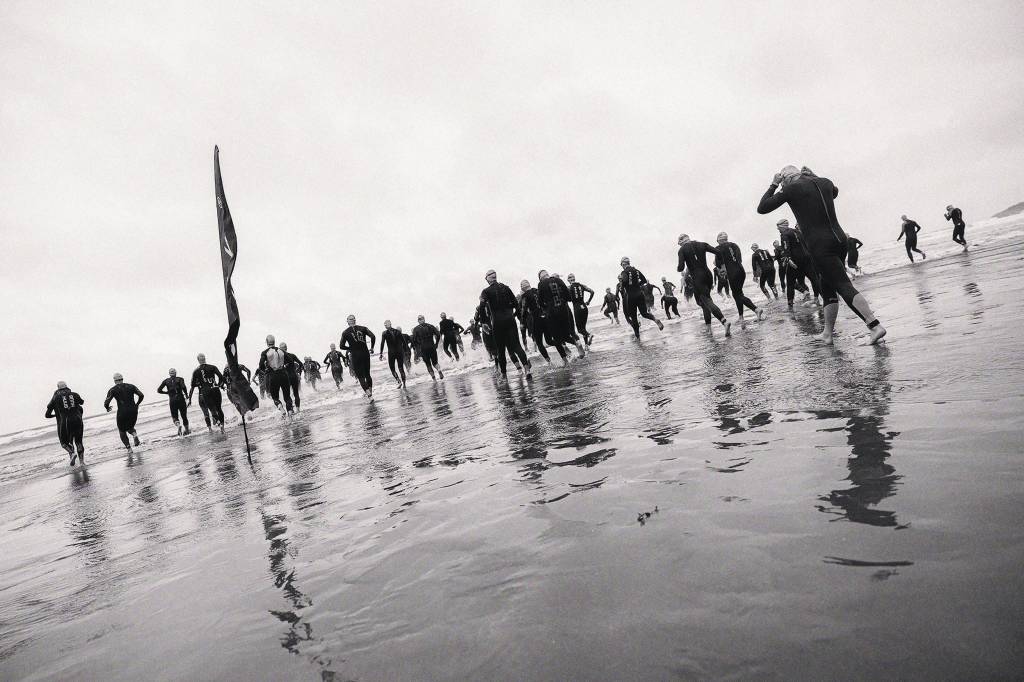
There are some UK races who put a real focus on the environment. Croyde Ocean Triathlon is a great example and you can check out their environmental focus for a look at what they’re doing. The race states: “After the success of making Croyde Ocean Triathlon the first plastic free event in the UK in 2018, we have since focused on reducing the carbon footprint of the event. In 2023 the event was taken over by environmental charity Earth Action North Devon and we will be working hard to make this event the most sustainable sports event in the UK.”
When booking your race, ask organisers what their policy is on plastic, as well as how they are working with local communities to reduce waste and to leave the area in better shape than when they arrived. Large influxes of triathletes are great for tourism in an area, but are they leaving it cleaner than when they arrived?
Therefore, from an ecological perspective, the sole solution for the sustainable triathlete is to race domestically. For Brits would that be such a bad thing? Judging from our list of the best triathlons in the UK, perhaps not.
3. Choose sustainable brands
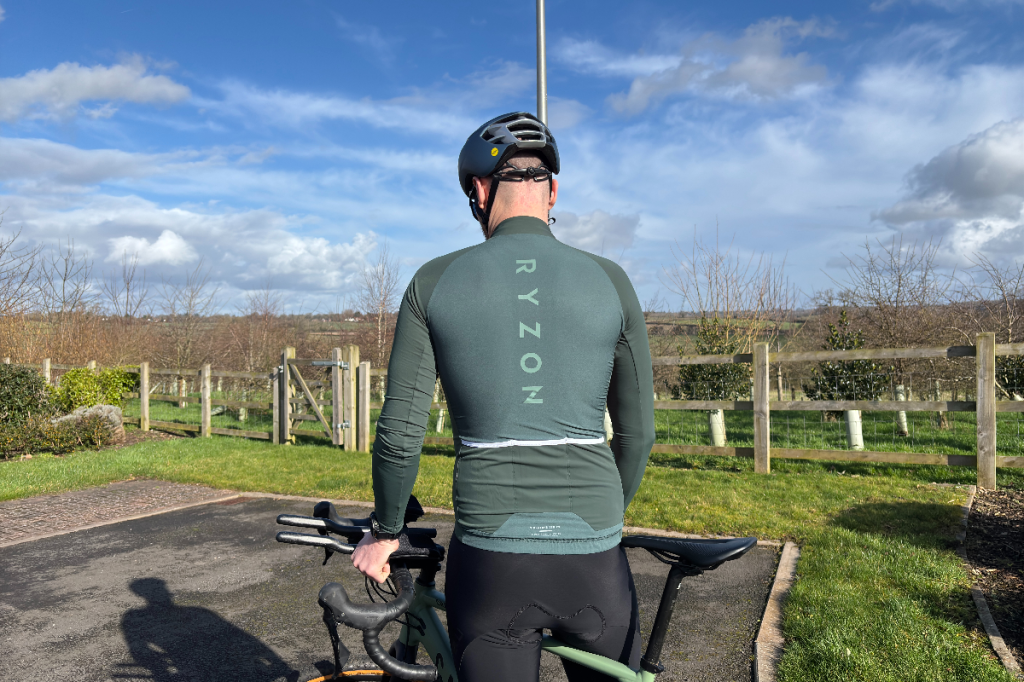
While several manufacturers of triathlon clothing use a modest amount of recycled materials in their products, Ryzon and Born Bound seem to be making a more concerted effort.
Unusually for the endurance sports industry, Ryzon’s factory is in Portugal, which reduces carbon emissions of importing kit for sale in Europe, and it has a large collection of 100% recycled products.
As Rapha and Albion also do, Ryzon has a repair service. If a product develops a fault, you can send it back to be fixed. Often, the default for companies is to send out a completely new replacement in this scenario.
For its part, Born Bound says it responsibly sources its yarns and fabrics in Europe and they meet the Bluesign and OEKO-TEX standards.
To receive Bluesign certification, materials must be made from chemicals and processes that are safe for the environment and people, and emissions from them must be totally clean.
OEKO-TEX certifications require materials to pass tests for harmful substances and to have been made in sustainable and socially responsible conditions. Cycling clothing company MAAP meets both standards as well.
Born Bound also says it strives to ship its products in packaging that has either been used before, is reusable, or you can easily recycle.
All of the above brands trend towards the top of the market. But arguably their competition would be more expensive if they took more responsibility.
4. Go plant-based

Being traditionally made from non-biodegradable and non-compostable neoprene, which originally comes from fossil fuels, wetsuits are another potentially environmentally damaging item in the triathlete’s kit locker.
Plus, the human cost of producing neoprene is devastating for the people living around the factories, a topic explored in the documentary film The Big Sea.
Progress is being made though. A new material called Yamamoto B-prene is said to offer the same performance as traditional neoprene. When placed in landfill, it will biodegrade by 30% in 522 days – hardly a fast pace but better than staying there intact forever.
Several brands are also offering a take-back scheme for old wetsuits. While they can’t be recycled into new ones due to the quality of stretch in recycled neoprene not being up to the job, they can be used to make other products such as rubber flooring for kids’ play parks.
If you own a neoprene wetsuit though, the best thing you can do is to make it last as long as possible. Rinse it after each use, store it out of direct sunlight and fix any small nicks or tears before they become a bigger problem.
Plant-based alternatives to neoprene are coming. Zone3 says it is the first triathlon brand to make wetsuits from Yulex, a natural rubber from the Havea tree.
The brand claims it can cut a wetsuit’s CO2 emissions by 80% by using plant-based rubber. 220 Triathlon editor Helen Webster tested a Yulex wetsuit in 2023 and was impressed.
5. Reduce waste

Staying on the wetsuit theme, because they can be financially and environmentally costly, prolonging their life is a win-win.
It’s possible to repair holes and cuts in your wetsuit yourself, and careful wetsuit storage should reduce their likelihood of occurring.
Likewise, looking after your bike properly reduces your cycling component bill and the amount of hard-to-recycle waste you produce. Chainrings, cassettes and chains are usually destined to become scrap metal once they’re worn out. But keeping your drivetrain clean and appropriately lubricated, you should save watts and money.
Running shoes are not something you should wear until they’re falling apart. You can, however, minimise your injury risk and consumption of raw materials by buying a new pair comprising recycled materials.
Brooks says it aims to eliminate carbon emissions from its value chain by 2040. In 2023, a quarter of the raw materials used in its shoes and clothing were recycled or bio-based (ie, not made from fossil fuels), according to the brand.
Meanwhile Saucony has pledged to include recycled, organic or renewable materials in all of what it produces by 2030.
Lead image: Credit : Croyde Ocean Triathlon


 Jack Evans
With contributions from