What is vVO2 and how is it beneficial for triathlon?
vVO2 is an exercise physiological term few have heard of, but many could benefit from. Here’s all you need to know…

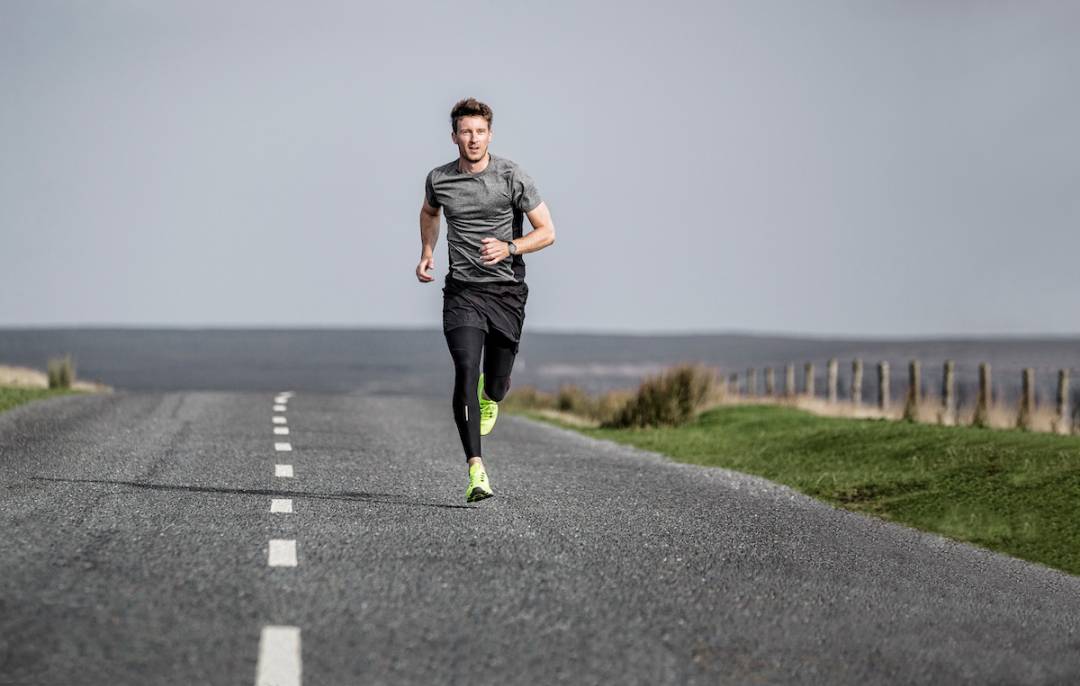
Having a high VO2 max is one of the most quoted markers of endurance performance. Since VO2 denotes volume of oxygen, VO2 max refers to the maximum volume of oxygen an individual can process. An even more interesting marker of performance is vVO2.
A high VO2 max is a good thing because it means you can transport more energy to your muscles when exercising.
Another strong marker of performance in running is your velocity at VO2 max, or vVO2. This is where biomechanical efficiency – in this context, how bones, muscles, tendons and ligaments interact to produce movement – interacts with physiological ability.
The outcome is the speed you can travel at when you’re operating at your VO2 max.
What is vVO2?

Back in the 90s, a French physiologist called Veronique Billat developed a very simple test to determine an athlete’s vVO2: a 6min maximum effort run where overall distance travelled is captured and average speed calculated. E.g. athlete A travels 1,500m in 6mins.
The equation is 1,500 divided by 6, which gives 250m travelled per minute or 96s per 400m. Using this information, coaches and athletes could then set training velocities for sessions aimed at developing VO2 max and vVO2 max.
Billat also developed sessions she felt would be beneficial to improving vVO2 max, focussing on how to accumulate time spent at that specific speed. What she came up with is beautifully simple and easy to apply.
There are two sessions in particular that are great for triathlon performance. Session one is perfect for preparing for hte triathlon season, when you’re looking to develop speed capacity and efficiency.
Session two is an evolution of this, working more on specifics, so a great pre- and mid- season session. Here we go…
Key vV02 sessions for triathlon

Session 1: 30/30
After a good warm-up, undertake 12-18min of 30s at your vVO2max speed followed by 30s of easy jogging. This is to be done continuously with no stopping.
My advice with this is to not worry too much about getting your speeds perfect. Focus on running fast but in control, using the same technique you would for a 3-5km running race but with perfect run form.
Once you feel the pace beginning to drop off, or your form start to become messy, stop the session. You can analyse your speeds later if you’re using a triathlon watch and use the information to guide future sessions.
You can then take the session one of two ways – do more reps or increase the speed of your recovery jog.
Session 2: 60/30
The basics of this session are the same as session one – a fast block of running at your vVO2 max speed followed by an easier block of running to allow partial but not total recovery.
The difference here is that the fast blocks are now longer – up to 60s – and the recovery block either stays the same pace as before or gets slightly faster as your fitness improves.
The overall session duration doesn’t change but the amount of time spent at vVO2 max increases due to the longer rep length. Again, I’d advise running to feel on your reps and analyse the detail after the session.
You should also re-test yourself every four to six weeks with the 6min maximum effort to track progress and to update your vVO2 max speeds.
If you start this type of session in January it works really well as a progression right through to March/April so you can start your season in the best possible shape.
Read more on VO2 max and key performance markers that you should track during your triathlon training.


 Ben Bright
Triathlon coach
Ben Bright
Triathlon coach