What are the best wetsuits for open water swimming? We test our favourite 8 for training and racing
Open water swimming wetsuits are designed for longer swims outdoors. But are they worth buying? We put a selection to the test...


There’s a new breed of swim wetsuits out there – these aren’t dedicated triathlon wetsuits, but instead they focus on open-water swimmers. Are they for you? To help you make that purchase, 220 Triathlon editor Helen Webster puts seven wetsuits to the test.
First up, a little bit of an explanation… You might be wondering why we’ve included a group test just for ‘open-water wetsuits’ this year. After all, aren’t all swimming wetsuits for the open water? Well yes, they are, but the difference comes in the features and spec.
Why you should trust 220 Triathlon
Our team of experts rigorously tests each product and provides honest, unbiased reviews to help you make informed decisions. For more details, see how we rate and test products.
Best open water wetsuits at a glance
The Blue Seventy Fusion (buy) is a well-fitting, warm, and buoyant wetsuit that’s pretty fast through the water and to take off.
The Gill Pursuit (buy) is a warm and durable swimming wetsuit at an affordable price-point.
The Orca Zeal High Vis (buy) provides high buoyancy and warmth, along with a striking design for visibility.
The Explorer Ultra FS (buy) fits nicely into the market as a premium open-water suit for long swims and serious open-water training, which still won’t break the bank.
The Yonda Spook (buy) is a high-quality wetsuit with lots of flexibility for different strokes.
The Zoot Kona 2.0 (buy) suit is a bright, buoyant, and supple wetsuit suitable for tri racing and lake swims.
Best swimming wetsuits for open water in 2026
Best for long distance

1. Zoggs Explorer Ultra FS
220 Triathlon verdict
The Explorer Ultra FS fits nicely into the market as a premium open-water suit for long swims and serious open-water training, which still won’t break the bank. Score: 90%
Pros
- Good flexibility and fit
- Clever design with visibility on arms
Cons
- Premium price point
| Specifications | Zoggs Explorer Ultra FS |
|---|---|
| Sizing | XS-2XL |
| Features | Yamamoto 38 neoprene, YKK zip, customisable cuff length |
| Buoyancy | 1.5-2.5mm |
The 11-strong new wetsuit range from Aussie swim brand Zoggs has something for every swimmer – with six suits designed for triathletes, four for open-water swimmers and adventurers and one for swimrun. The Explorer Ultra FS is the top-end suit in the open-water category and straight out of the box I loved that striking design – the map topography is a clever idea, while the bright yellow does a superb job of increasing visibility.
I tried a size large and the overall fit and flexibility was good with nice stretch through the shoulders. The suit uses 38 Yamamoto in 1.5mm to 2.5mm thicknesses, which felt premium, while double-faced areas on the armpits and inner thighs are designed to give the suit durability over long swims.
Overall I was impressed by the suit and the price point (the Explorer Tour at $200/£180 and Explorer Pro at $250/£230 are also available).
Best for all strokes

2. Yonda Spook
220 Triathlon verdict
The standard 3mm core and 2mm Yamamoto 38 cell skin legs provided enough lift without feeling excessive and, overall, the suit felt durable. Score: 86%
Pros
- High-quality wetsuit
- Flexible and suited to different strokes
Cons
- None to add!
| Specifications | Yonda Spook |
|---|---|
| Sizing | S-3XL |
| Features | Yamamoto neoprene, hi-viz arms, tear-resistant material, taped seams |
| Buoyancy | 1.5-3.5mm |
The Spook has appeared in 220 before and like all British brand Yonda’s suits, has performed well. This is the first time it has sat within a category just for open-water suits, though – and the first time I’ve tried it. First impressions were good. Our ‘SS’ size suit (short and shapely!) fit well and it was good to see Yonda recognise the need for more diverse sizing across women’s wetsuits, with a very impressive 13 options available – plus the team at Yonda were very helpful.
It felt like a high-quality build, with Yamamoto neoprene cleverly placed to enable swimmers to do both front crawl and breaststroke. I’m a front crawl swimmer and body position was good, and there was still a good level of flexibility. Those aqua blue arms look funky and give an extra element of visibility in lowly-lit waters, plus a bright green option is also available. The 1.5mm LSQ Green Nano jersey-like material kept me warm, with no water ingress.
Recommended

3. Huub Lurz Open Water
220 Triathlon verdict
Once in the water though, the suit gave a good balance of buoyancy and flexibility and we loved the freedom through the arms and shoulders. Price will be a factor, though! Score: 88%
Pros
- High-quality wetsuit for racing
- Structured fit with good flexibility
Cons
- Expensive – an investment buy for serious racers
- Tricky to put on
| Specifications | Huub Lurz Open Water |
|---|---|
| Sizing | XXS to XL |
| Features | Yamamoto neoprene, shorter reverse zip, Arms Neutral technology, FINA approved |
| Buoyancy | 3:5 ratio |
Huub are well-known for working with elite athletes on their wetsuits and while the name ‘Lurz’ may not be as familiar as a Brownlee, it refers to Thomas Lurz, the German double Olympian who took silver in the 10km open-water swim in the 2012 Olympics in London (among too many other successes to list here!).
That noted then, it’s apparent that this is a suit with speed demons in mind and the $849 / £649.99 price tag reflects that – this is a wetsuit for marginal gains on race day, not for messing about on the beach.
The suit has 3:5 buoyancy with a more structured feel around the hips and bum which, coupled with a shorter zip (to allow more reach, possible as quick removal isn’t a priority!) made it a bit of an effort to wriggle in to – though admittedly, I’m a curvy distance swimmer and not a svelte racing snake! Sizing here is from XXS to XL and it’s available in men’s and women’s versions. Price will be a factor, though!
Best wetsuit for warmth

4. Orca Zeal High Vis
220 Triathlon verdict
This is a very buoyant suit which I wouldn’t usually choose as a ‘floaty’ swimmer anyway, but it did reduce fatigue over very long swims. Score: 95%
Pros
- Comfortable and buoyant
- Warm with good visibility
Cons
- Hard to find any!
| Specifications | Orca Zeal High Vis |
|---|---|
| Sizing | XS to XL |
| Features | Yamamoto neoprene, Restube Ready clip, bright orange arms |
| Buoyancy | 5mm in legs |
We’ve got a real range of price points in this article – and sitting towards the top end is the Zeal High-Vis from tri and swim brand Orca. I have to say, though, this suit feels worth every penny, with all of Orca’s wetsuit experience brought to a good-looking and functional suit.
First up a note on visibility – those bright orange arms and legs are a superb idea for safety and unrivalled in this test. Plus you get a Restube Ready clip on the lower back, which allows you to carry a Restube (an inflatable) for safety. As well as the safety features, you get a combination of 5mm legs/core for warmth and buoyancy and Orca’s superb ‘batwing’ rear closure, which includes an extra layer of neoprene to prevent cold trickles down the back and zip.
Sizing is from XS to XL and it’s worth noting this range also includes a thermal option for winter, a ‘Perform’ version (if you need more flexibility and buoyancy, like me!) and high-vis accessories.
Best budget wetsuit

5. Gill Pursuit
220 Triathlon verdict
Tri wetsuits are notoriously fragile though, which this suit is not… So if you need a hardy, budget suit, here it is! Score: 73%
Pros
- Warm and suitable for winter swims
- Affordable option
Cons
- Lacks flexibility and buoyancy
- Fabric is thin in places
| Specifications | Gill Pursuit |
|---|---|
| Sizing | women's 8-18; men's S-2XL |
| Features | Uncoated neoprene, glued and blind-stitched seams, inner taping |
| Buoyancy | 4-3mm |
The Pursuit from marine specialists Gill is aimed – as the name suggests – at those wanting to enjoy the water for outdoor pursuits, whether that be stand-up paddleboarding, kayaking, or outdoor swimming. Available in both men’s and women’s sizing, with women’s, as tested here, in 8-18, the suit is constructed with warmth in mind and as such features a mix of 4mm and 3mm uncoated neoprene.
For added cold-reduction it features glued and blind-stitched construction with critical taping on the inside to keep the warmth in and cold water out. The benefits of this are that this is certainly a warm wetsuit and one that served me well for dips over the coldest months of the year.
What you gain in warmth you lose in hydrodynamics and flexibility, though, as there’s none of the swim-specific technology we’re used to in swimming wetsuits such as hydrophobic-coated neoprene, buoyancy profiles, or thinner fabric in areas which need more stretch.
- Read my full Gill Pursuit review for more detail
Best for a range of sizes

6. Lomo Nuotare
220 Triathlon verdict
Some water ingress and a generous fit. A good option for shorter or less chilly swims. Score: 75%
Pros
- Super-flexible and easy to put on
- Comfortable to swim in
Cons
- Sizing can be an issue
- Water ingress so not ideal for winter swims
| Specifications | Lomo Nuotare |
|---|---|
| Sizing | Women's sizes: 6 – 32 | Men's sizes: S-4XL |
| Features | Neoprene, glued seams, internally blind-stitched seams, YKK zipper with pull cord |
| Buoyancy | 4mm / 3mm / 2mm |
The Lomo Prime wetsuit has long been our pick to recommend to swimmers who fall outside of the usual size range of wetsuit brands. And here, the new Nuotare makes wetsuit wearing even more accessible. Borrowing the same fit as the Prime and coming in an impressive 16 sizes (for women), the suit can accommodate swimmers of most heights and weights.
So what makes the Nuotare different? Put simply, it has lost the smoothskin coating found on most swimming wetsuits and replaced it with a super-flexible stretchy outer material that makes it ridiculously easy to pull on and very comfortable to swim in. Sizing is generous, with this UK14 tester finding smaller sizes too big (sizes start at XXS).
Other swimmers told us they tried a few sizes before getting the perfect fit, but that Lomo was very helpful and quick to replace suits. Once in the water the suit did behave differently to a normal swimming/triathlon one as, without the smoothskin, the suit did allow water to creep in. So a good option for shorter or less chilly swims, with great size options.
Best for racing
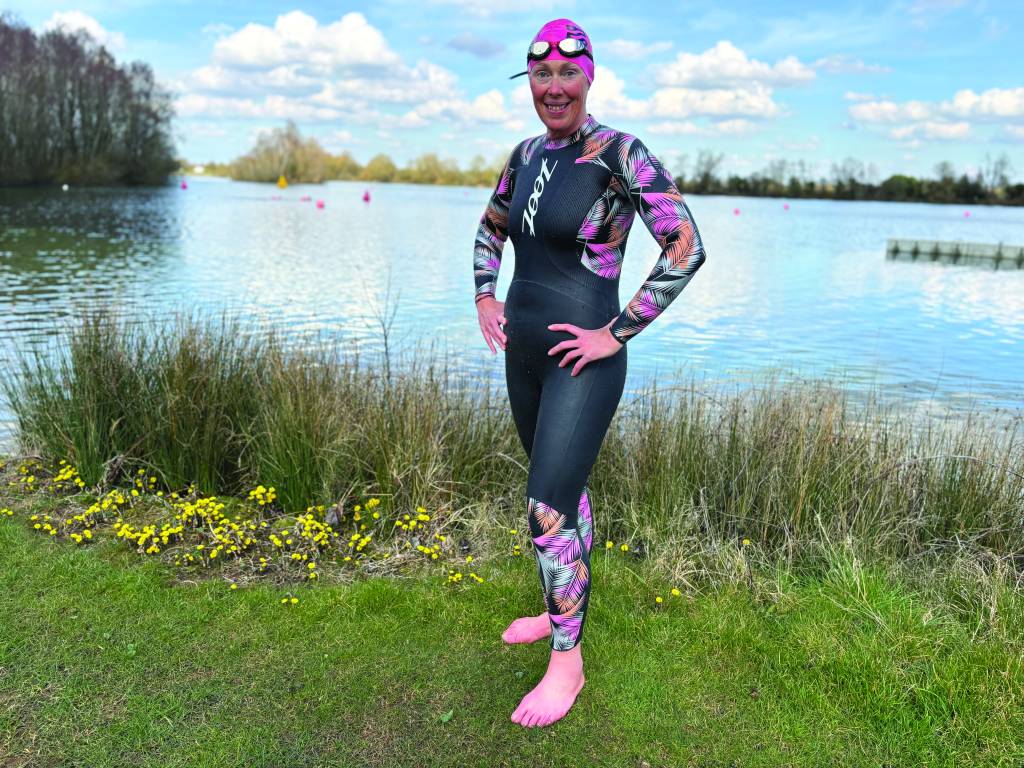
7. Zoot Kona 2.0
220 Triathlon Verdict
A bright, buoyant and supple wetsuit suitable for tri racing and lake swims. Score: 87%
Pros
- Vibrant design aids visibility
- Good insulation and leg buoyancy
- Comfortable and flexible on chest and arms
Cons
- Excessive buoyancy in the sea
- Tricky to take off
| Specifications | Zoot Kona 2.0 |
|---|---|
| Sizing | XS, S, ST, M, L, XL |
| Features | Smooth nylon liner, gender-specific geometry, AQUAlift buoyancy profile, Yamamoto 38 |
| Buoyancy | 2mm / 3mm/4mm / 5mm, high buoyancy |
With its lively hue and high grade Yamamoto neoprene, which is warm, buoyant and supple, the Zoot Kona 2.0 can serve well as an open water wetsuit. Comfort over long-distance swims is great thanks to the flexible Glideflex chest panels, plush neck and long arms.
It’s also sufficiently insulated for 10–12°C water temperatures you might encounter in open water. While its 5mm neoprene thickness in the legs is very supportive, and can keep your hips high, it may prove too floaty in salty water. Its slow removal speed isn’t such a big problem when you’re undressing after a swim as it is in transition.
Best overall
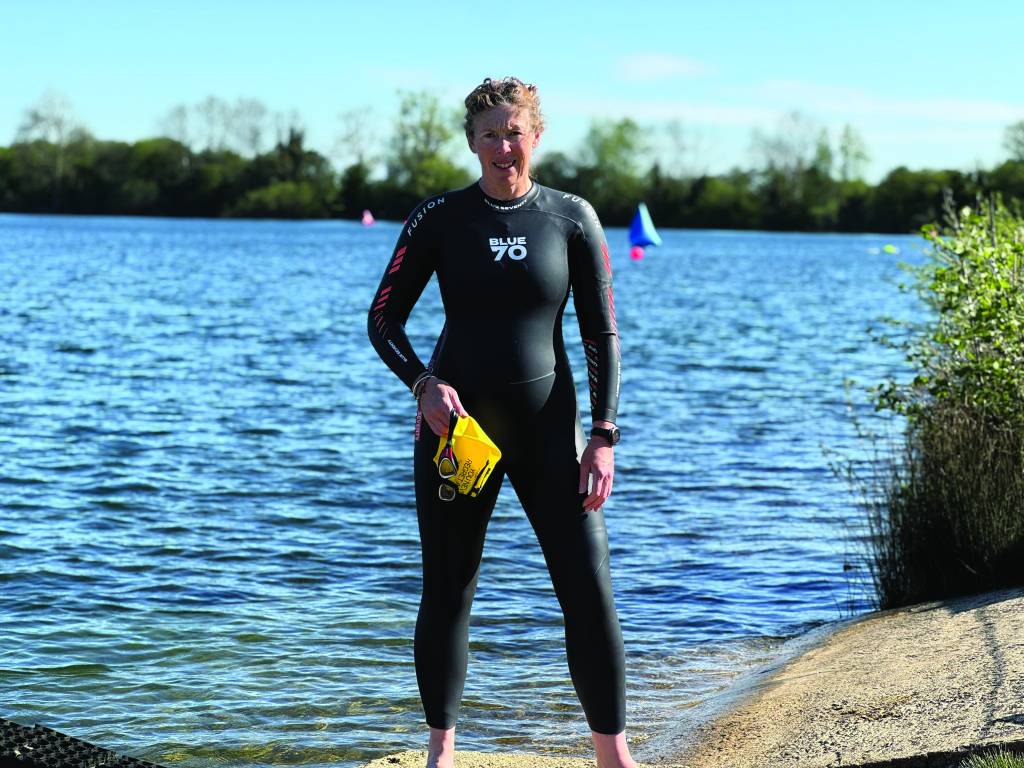
8. Blueseventy Fusion
220 Triathlon Verdict
A well fitting, warm and buoyant wetsuit that’s pretty fast through the water and to take off. Score: 91%
Pros
- No breathing restriction
- Floaty leg material
- Well insulated
- Excellent comfort
Cons
- Material is baggy behind the knee
| Specifications | Blueseventy Fusion |
|---|---|
| Sizing | Women: XS-XL | Men: XS-XXL |
| Features | Low neckline, quick transition cuffs, SCS coating, 39-cell Yamamoto neoprene |
| Buoyancy | 5mm legs, high buoyancy |
The latest version of the Blueseventy Fusion is another triathlon wetsuit capable of performing in open water. Its 39-cell Yamamoto neoprene provides enough comfort and warmth for extended swims in chilly water and should withstand the rigours of open water swimming.
Meanwhile its 5mm neoprene thickness in the upper leg will appeal to swimmers needing more floatation. Fit is generally good too, especially for taller swimmers, making the suit easy to pull on and off, as is flexibility in key areas like the shoulders.
- Read my full Blueseventy Fusion review for more
The best open water wetsuits compared
| Specifications | Zoggs Explorer Ultra FS | Yonda Spook | Huub Lurz Open Water | Orca Zeal High Vis | Gill Pursuit | Lomo Nuotare | Zoot Kona 2.0 | Blueseventy Fusion |
|---|---|---|---|---|---|---|---|---|
| Star rating |
★★★★★
|
★★★★★
|
★★★★★
|
★★★★★
|
★★★★★
|
★★★★★
|
★★★★★
|
★★★★★
|
| Sizing | XS-2XL | S-3XL | XS-XL | XS-XL | Women's 8-18; men's S-2XL | Women's sizes: 6 – 32 | Men's sizes: S-4XL | XS, S, ST, M, L, XL | Women: XS-XL | Men: XS-XXL |
| Buoyancy | 1.5-2.5mm | 1.5-3.5mm | 3:5 ratio | 5mm in legs | 4-3mm | 4mm / 3mm / 2mm | 2mm / 3mm/4mm / 5mm, high buoyancy | 5mm legs, high buoyancy |
| Features | Yamamoto 38 neoprene, YKK zip, customisable cuff length | Yamamoto neoprene, hi-viz arms, tear-resistant material, taped seams | Yamamoto neoprene, shorter reverse zip, Arms Neutral technology, FINA approved | Yamamoto neoprene, Restube Ready clip, bright orange arms | Uncoated neoprene, glued and blind-stitched seams, inner taping | Neoprene, glued seams, internally blind-stitched seams, YKK zipper with pull cord | Smooth nylon liner, gender-specific geometry, AQUAlift buoyancy profile, Yamamoto 38 | Low neckline, quick transition cuffs, SCS coating, 39-cell Yamamoto neoprene |
| Buy Now | Buy Now | Buy Now | Buy Now | Buy Now | Buy Now |
Frequently Asked Questions about open water wetsuits
Other features may include more of a focus on visibility, so brightly-coloured arms, as well as more thermal options for warmth – open-water swim events often aren’t subject to the same rules on water temperatures as triathlons and can be held all year round. On the flip side, these suits won’t usually include race-specific features such as quick-release zippers and cuffs/ankles engineered for fast removal and will usually be a bit sturdier, which means no sub-1mm paper-thin neoprene.
Some suits (such as the Zone3 and Gill tested here) have features that allow them to be used across more than just swimming, reinforced knees for example, which mean you can use them for watersports including stand-up paddleboarding and bodyboarding or surfing.
Of course, this will be at a trade-off of speed and flexibility, but if you’re only targeting short triathlon swims and need a suit that is a bit more versatile, then why not? There is one suit in this test that is a little different. The Huub Lurz is designed for those who want to target a fast open-water race and, as such, is designed with real speed in the water as the focus. So not one to buy for messing around on the beach in!
So do you actually need one, though? Well, there are some very good suits in this guide and unless you’re hunting marginal speed gains, there’s no reason you couldn’t use one of them in a triathlon. Alternatively, going for a ‘train heavy, race light’ approach (to steal the analogy from cycling!) could mean you use one of these suits in training and save your precious race-day wetsuit for events when speed is of the essence. When the water is warmer, wetsuits are not allowed in triathlon swim legs. Find a suitable triathlon onesie in our guide to the best tri-suits.
Put simply, the new breed of open-water swimming wetsuits are designed for those wanting to do longer swims, or to swim outdoors without necessarily competing in a triathlon. See our best triathlon wetsuits for all budgets for more inspiration. They will often be a little warmer and slightly more robust, as these suits will need to keep athletes warm over long swims (say a 10km swim event or similar) and they will also need to last over many more kilometres of training potentially, whereas a triathlon wetsuit will often be designed more with race-day speed in mind.
Under an open water wetsuit, most triathletes and swimmers wear either a swimsuit, tri suit, or swim jammers, depending on the type of session or race. A tri suit is often the best option for triathlons because it’s designed to be worn throughout the swim, bike, and run without changing. For training swims, a regular one-piece swimsuit or fitted swim shorts work well and help prevent chafing. Avoid loose clothing or cotton garments, as they absorb water, create drag, and can feel uncomfortable inside the wetsuit. In colder conditions, some athletes also add a swim-specific base layer or neoprene shorts for extra warmth, but comfort, flexibility, and freedom of movement should always come first.
How we tested and reviewed the open water wetsuits
Our expert reviewer and open-water swimming coach tested these suits in the UK in both lakes and the sea. The latter especially allowing us to access how the suits dealt with colder seawater temps, dealing with waves and currents to judge how each wetsuit performed while open-swimming (and water ingress).
Each was tested for comfort, performance, buoyancy, durability, hydrodynamics, zipper, removal speed, budget and the visual design. Any wetsuit that scored 90% and above is a market-leading product, while those scoring between 80-90% are also deemed to be impressive. Wetsuits scoring between 70-80% offer good performance, as long as the highlighted flaws aren’t much of an issue for you. Products scoring below 70% can still be worth considering if the price is right, but don’t come highly recommended.
Recent updates:
- May 2026: We added schema tables for all our specs tables, updated product reviews, updated our best table, updated the header image and title, and added a comparison table and FAQ section.


 Helen Webster
Editor, 220 Triathlon
Helen Webster
Editor, 220 Triathlon