Best bike power meters for triathletes in 2026
These are the power meters you should buy for triathlon training and racing, according to our rigourous testing.

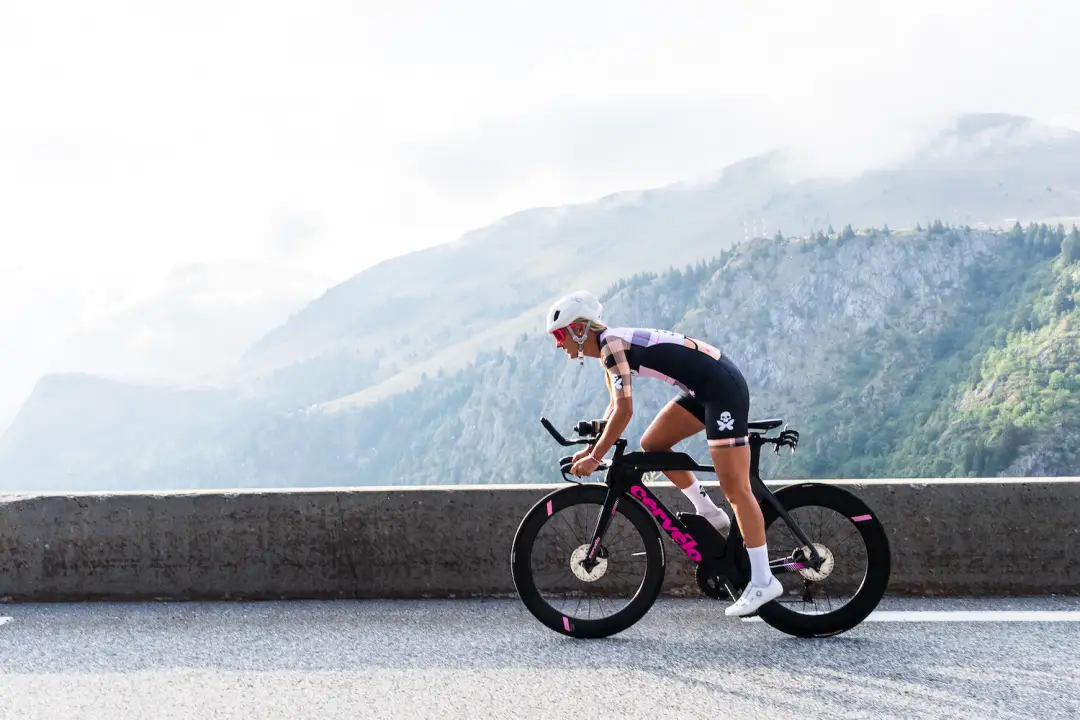
Put simply, the power you put into riding a triathlon or road bike is what you get back. And monitoring that power via one of the market’s best power meters has many benefits for triathletes…
Here, we’ve put a handful of popular options to the test to see which might suit you best.
At a glance: best power meters for triathletes
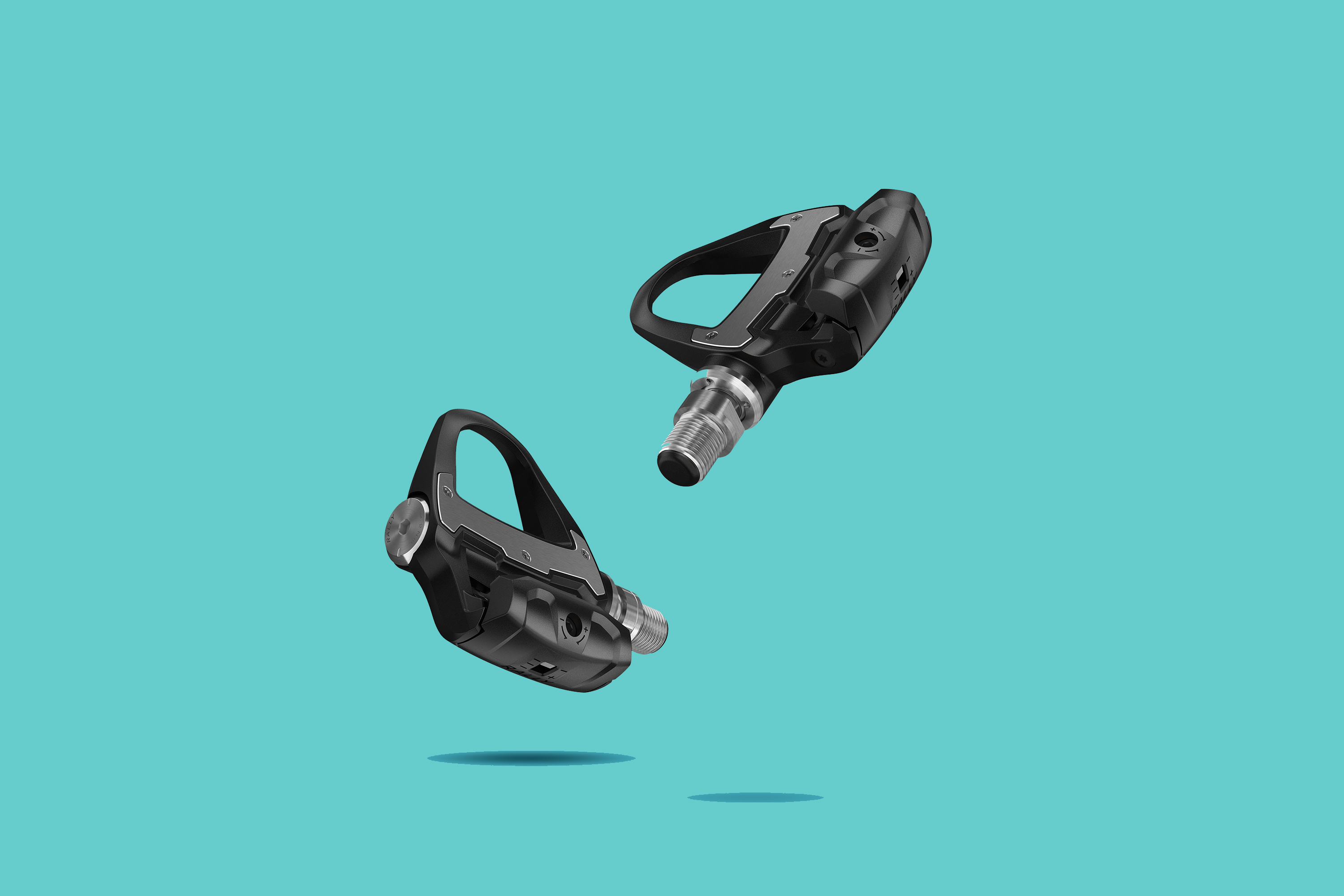
The Garmin Rally RS200 (buy) is an extremely accurate power meter and is pedal-based, which is ideal for triathlon.
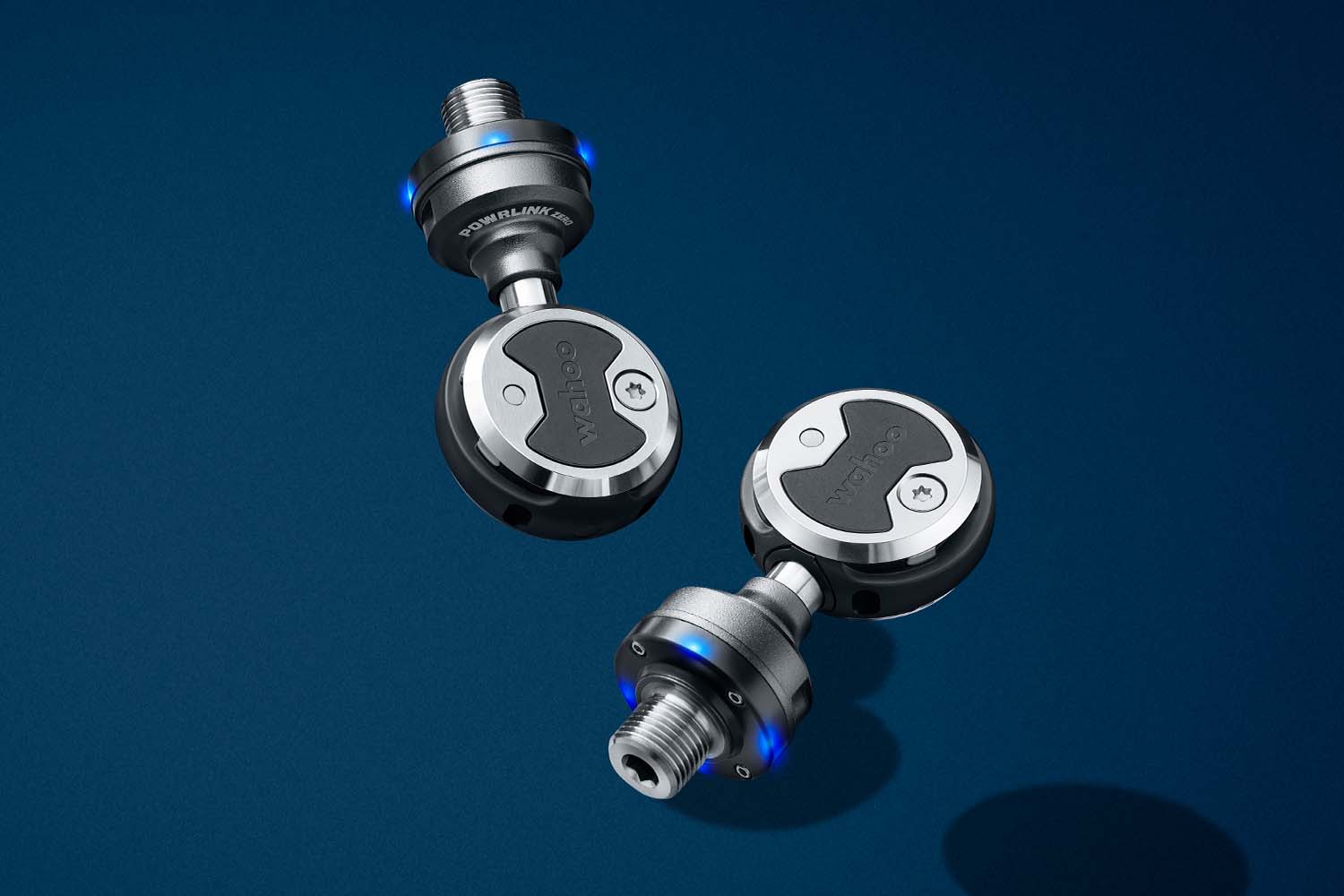
The Wahoo Speedplay Powrlink Zero (buy) replicate the feel, entry mechanism and low stack height of standard Speedplays while adding accurate watt recording.
If you’re due a crankset upgrade and replacement, the Stages Power LR (buy) includes accurate power measurement for little cost or weight.
Meet our tester
Current road.cc editor Jack Sexty, and former 220 Triathlon staffer, is an experienced triathlon gear tester and knows his cycling tech, including power meters, back to front.
Best power meter for triathletes
1.Garmin Rally RS200
220 Triathlon verdict
A huge outlay but, as you’d expect from Garmin, they proved highly accurate and reliable.Score: 87%
Pros
- Accuracy
- Easy to switch between bikes
- App compatibility
Cons
- Price
| Price | $1,099.99 / £929.99 |
| Type | Pedal |
| Battery | CR1/3N or 2L76, up to 120 hours |
| Accuracy | +/-1% |
| Weight | 11.28oz/320g |
Garmin claims its dual-sided Rally power pedals are accurate to +/-1%, something we’ve found to be correct compared to other reliable power meters many times, having had them on long-term test.
They’re powered by coin cell batteries. Despite using them in treacherous conditions we’ve never experienced significant damage or water ingress.
Our test pair are compatible with Shimano SPD-SL cleats (other versions are available). They weigh just 320g for the pair, comparable with other lightweight road pedals.
You can link to most third-party apps, analyse loads of data with Garmin’s Cycling Dynamics. Calibration is quick and easy via Bluetooth or ANT+.
That’s still a huge outlay, but if you invest then Garmin’s offering is arguably more aesthetically pleasing. You can swap the pedal bodies for mountain bike versions if you also ride trails.
Read my full Garmin Rally RS200 review here.
Review by Jack Sexty
Best power meter for Speedplay users
2.Wahoo Speedplay Powrlink Zero Dual-Sided Pedals
220 Triathlon verdict
Pricey and specialist, but accurate and appealing for Speedplay fans. Score: 79%
Pros
- Accurate power readings
- Dual-sided entry
Cons
- Not the easiest to clip into
- Complicated to set up
| Price | $999.99 / £849.99 |
| Type | Pedal |
| Battery | Rechargeable |
| Accuracy | +/-1% |
| Weight | 4.87oz/138g |
Wahoo’s Powrlink Zero takes the Speedplay Zero design, which allows you to clip in on both sides, and adds power that is claimed to be accurate to the tune of +/-1%. They’re rechargeable and weigh 138g without cleats.
The cleat set-up is a faff compared to other systems. But an advantage of the Speedplay system is the ability to adjust float easily via a single screw.
After attaching to our bike, pairing with the Wahoo app and calibrating, we found clipping in tough to begin with. It wouldn’t be our preference for training rides.
We appreciated the low 13mm stack height that makes you feel connected to the bike, and the power meter itself was tracking very accurately in testing against a Quarq dual-sided crank.
Wahoo claims ‘temperature compensation’ technology ensures accuracy isn’t compromised in very hot or cold weather. While we’d struggle to justify splashing out over more affordable options, Speedplay afficionados won’t be disappointed.
Read my full Wahoo Speedplay Powrlink Zero review here.
Review by Jack Sexty
Best power meter crankset
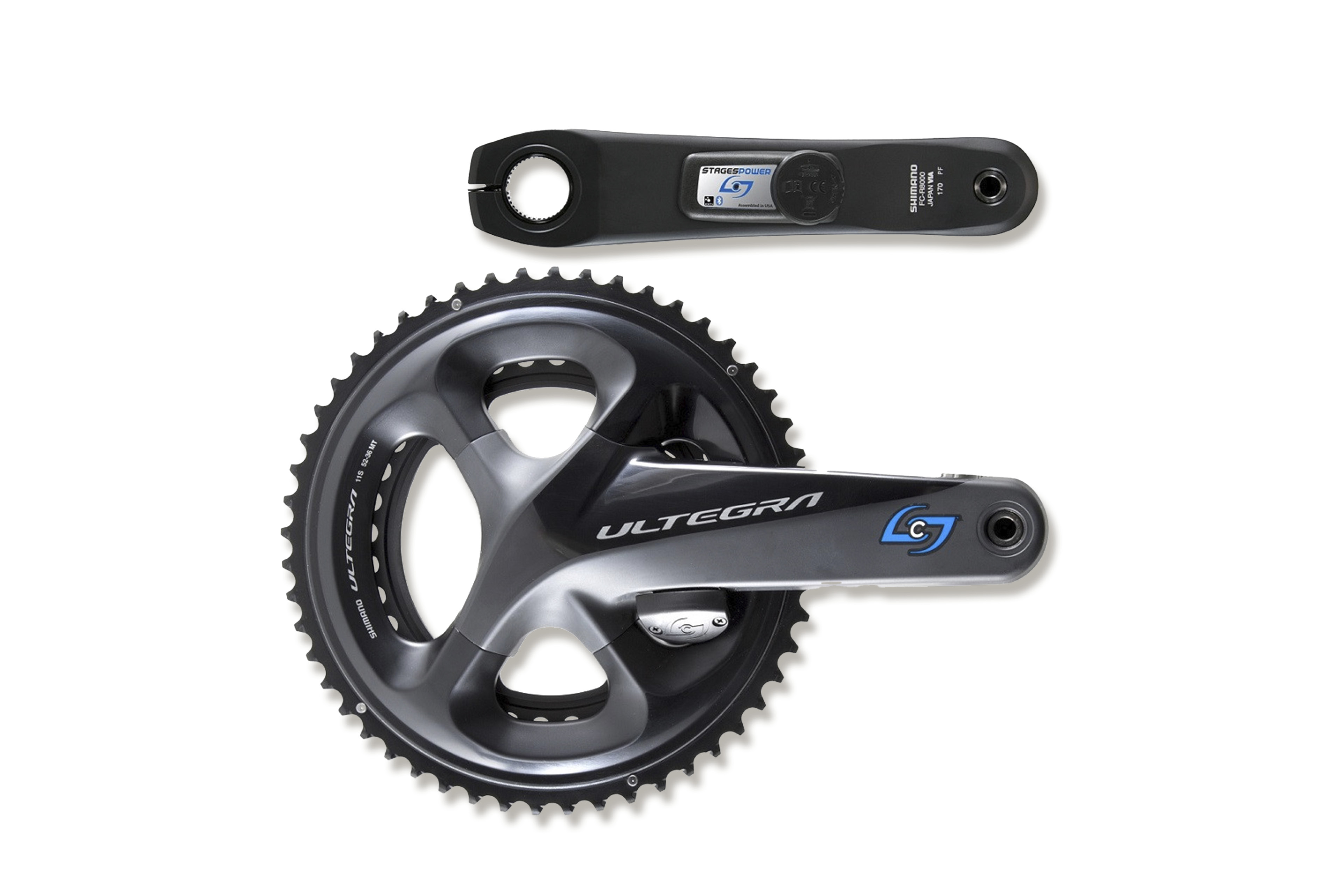
3.Stages Power LR
220 Triathlon verdict
A great fit-and-forget option, but not as transferrable as pedals, so less practical for triathletes. Score: 89%
Pros
- Huge range of choice
- Accuracy
- Decent value
Cons
- Not easy to switch between bikes
| Price | $789.99 / £715 |
| Type | Crank |
| Battery | Coin cell, 150-200 hours |
| Accuracy | +/-1.5% |
| Weight | 0.7oz/20g (on to crank arm) |
Stages offers its power cranks in numerous single and double-sided guises, with my double-sided test unit fitted to a previous generation Shimano Ultegra crankset.
Assuming your old chainrings are the same size, set-up involves removing your crankset and simply sliding in this replacement: a quick, painless task requiring minimal tools.
There’s an app to calibrate and check battery life, and connection to GPS devices is quick via Bluetooth or ANT+.
Stages claims individual unit calibration ensures ‘real measurement and not just an estimation’, with accuracy all but guaranteed at +/-1.5%. Against our Assioma and Garmin pedals, the Stages tracked within 1% of the former and between 1.5-2% of the latter, with no unusual peaks or troughs.
As cranksets can’t move between bikes easily, they might be less practical than power pedals for triathletes, but if you’re due a crankset upgrade and want to add power, Stages’ offering is precise and not too expensive.

4.Favero Assioma Duo-Shi
220 Triathlon verdict
Accurate and affordable, but we slightly prefer the Keo-compatible option. Score: 92%
Pros
- Value
- Decent accuracy
- Easy to charge
Cons
- Increased stance width
| Price | $589 / £545 |
| Type | Pedal |
| Battery | Rechargeable, 50 hours |
| Accuracy | +/-1% |
| Weight | 5.5oz/157g |
Assioma power pedals have proved very popular since launching in 2017, but fans of Shimano’s pedal and cleat system were excluded until 2021, when Favero answered them with the DUO-Shi.
Instead of full pedals, you get pedal axles with power sensors embedded in, that can be retrofitted onto existing PD-series Shimano pedals.
We fitted ours to Shimano Ultegra PD-R8000 pedals, and you just need an Allen key to fit to your bike before pairing with the Assioma app to calibrate and perform firmware updates.
Accuracy was around +/-1% of our baseline, while they’ve proved very reliable in testing and recharging via USB cables is simple.
A stumbling block for some could be the increased stance width the DUO-Shi will induce, as these axles put your feet apart an extra 9mm compared to the standard DUO.
If you don’t mind this, or even prefer a wider stance, Favero’s system is excellent and priced fairly (though the quoted cost doesn’t include customs), so comes highly recommended.
The Italian brand has now replaced the DUO-Shi with the Assioma Pro RS-2, dual-sided power meter pedals which are compatible with SPD-SL, ie Shimano, cleats.
Also consider
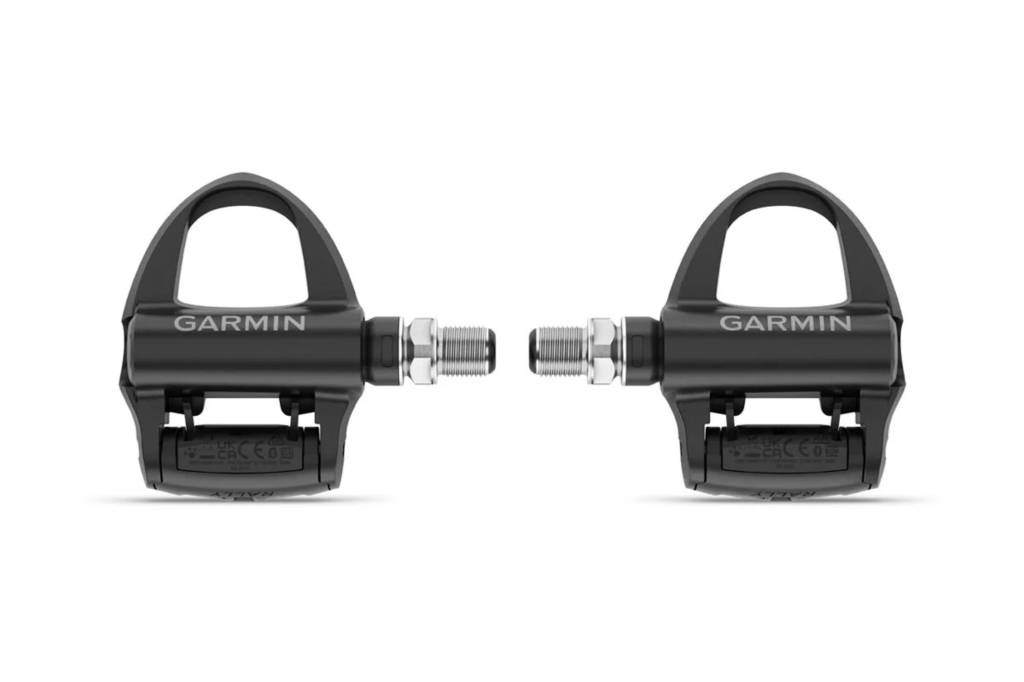
5. Garmin Rally RS210
| Price | $1,199.99 / £929.99 |
| Type | Pedal |
| Battery | Rechargeable, up to 90 hours |
| Accuracy | +/-1% |
| Weight | 11oz/311g |
The Garmin Rally RS210 are the updated version of the brand’s power-meter pedals and are now rechargeable with more easily swappable pedal bodies.
Claimed battery life is impressive for a rechargeable power meter and weight is decent.
But the price looks steep even if you want to move the power-measuring spindle between road and off-road pedal bodies.
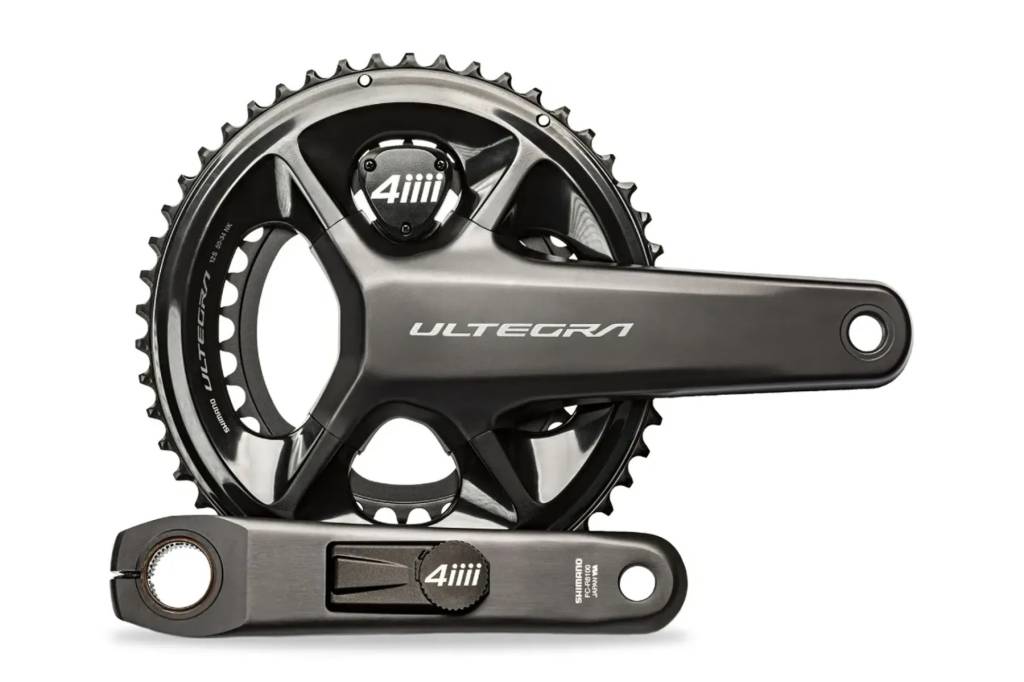
6. 4iiii Precision 3+ Pro power meter crankset
| Price | $979.99 / £875 (Ultegra crankset) |
| Type | Crank-based |
| Battery | Coin cell, up to 550 hours |
| Accuracy | +/-1% |
| Weight | 25oz/721g (power measuring pods only, 1oz/29g) |
The 4iiii Precision 3+ Pro power meter offers accurate, dual-sided watt measurement on Shimano cranks.
If you don’t mind the limited swappability or compatibility, the Precision 3+ Pro looks a solid training and racing tool.
You can either buy a crankset with the power-measuring pods pre-installed or send your existing compatible cranks (Shimano R8100 Ultegra and Dura-Ace) to 4iiii for it to install.
The brand also makes power meters compatible with different cranks as well as cheaper single-sided options.
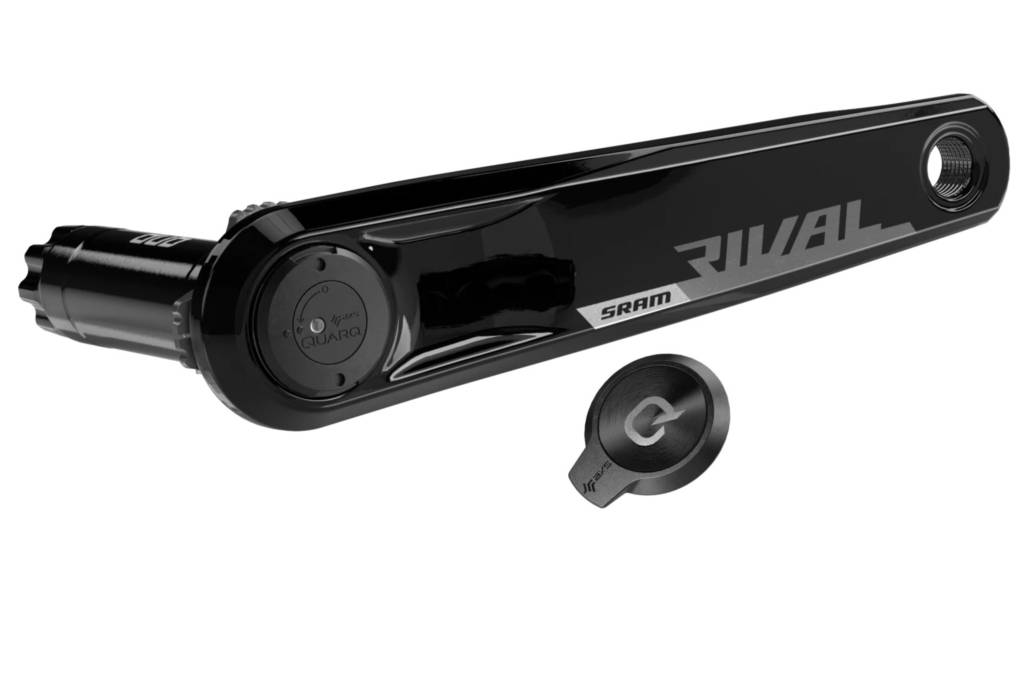
7. SRAM Rival AXS power meter upgrade
| Price | $290/£243 |
| Type | Spindle-based, left-sided only |
| Battery | Coin cell, up to 400 hours |
| Accuracy | +/-3% |
| Weight | 1.41oz/40g (power measuring spindle only) |
The SRAM Rival AXS power meter upgrade enables you to add watt tracking to your existing SRAM DUB-compatible cranks.
For a reasonable price, you get single-sided power measurement backed by highly reputable Quarq technology.
As long as your left/right power balance is pretty even, the fact it only measures your left side won’t be a major issue.
The crank arm supplies with the spindle is available in 160mm to 175mm lengths and comes with a user-replaceable lithium AAA battery.
How we tested
Former 220 Triathlon writer and current road.cc editor Jack Sexty is a highly experienced gear reviewer and tested these power meters over a series of rides.
He looked at accuracy by comparing a power meter’s data against a trusted baseline: either the reputable Quarq unit or Favero and Garmin’s pedal systems, both accurate to +/-1%.
If the readings closely tracked the baseline, as these generally did, he interpreted that as an indication of accuracy and reliability.
He also assessed value, weight, and ease of assembly and removal, keeping in mind that you may want to swap them between bikes.
What is a power meter?

A power meter is a device that will, not surprisingly, measure the power output that you are generating as you pedal. Expressed in watts, cycling power equals cadence multiplied by torque (the rotational force you apply to the pedals).
These little sensors come in several different forms, including crank-based power meters, pedal-based power meters and those that are mounted in the hubs of your wheels.
Crank or pedal-based power meters are usually available in both single-sided guises and double-sided guises. The former is typically cheaper, but can sometimes provide less accurate power readings because it takes the reading from one side and then doubles it.
Double-sided options, on the other hand, are typically more accurate and sometimes also provide additional metrics such as pedal stroke and cycling dynamics, including the power balance across both legs.
Features to look for in a power meter
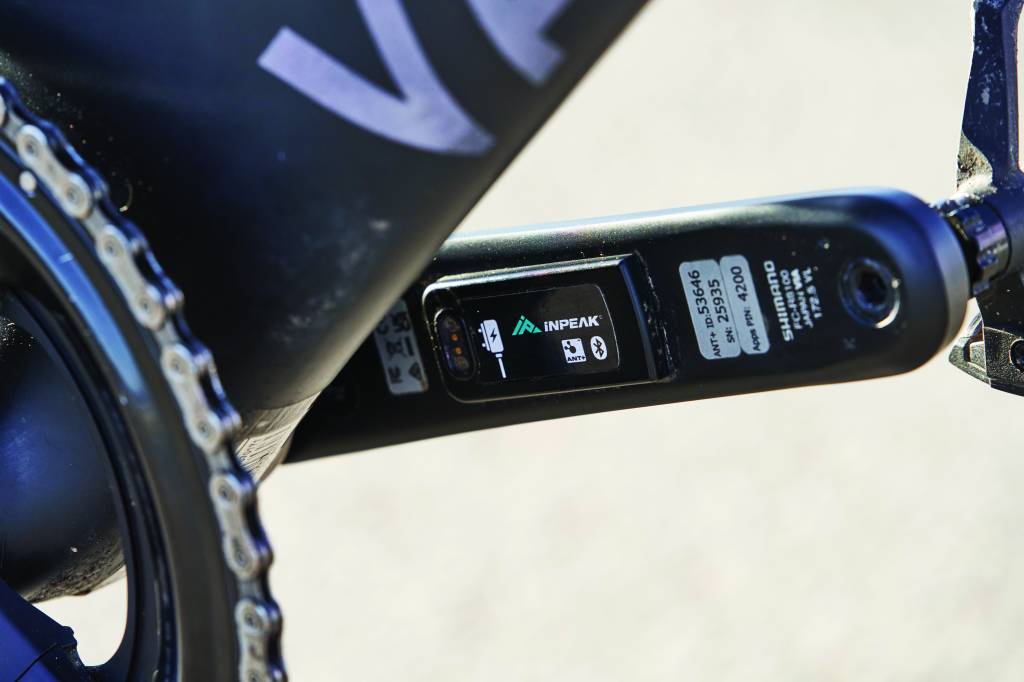
When shopping for a power meter, consider the following factors.
Accuracy
Power meter accuracy refers to deviation from true power, usually expressed as +/-X% accuracy. The best power meters are accurate to +/-1% meaning that if you’re riding at 200 watts they could express between 198W and 202W.
Clearly the more accurate the better, but this does raise the cost. A power meter that’s accurate to +/-3% is still acceptable as long as it is consistently this far from off your true output.
Precision
This brings us on to precision, a scientific way of saying consistency.
Now, no power meter will be totally consistent. They’re suspectible to changes in temperature and barometric pressure, and being moved between bikes.
Regularly calibrating your power meter will limit inconsistency as will investing in a higher quality unit. Its readings will only occasionally and briefly fluctuate before settling down.
Weight
Pedal-based power meters are generally the lightest dual-sided power meters because they integrate into a crucial component of the bike.
The lightest of all are single-sided, crank-based power meters which add as little as an ounce on to the crank arm.
Battery
Another benefit of pedal power systems is that they’re usually rechargeable, with the exception of older Garmin Rally models. They’ll usually last 50 hours.
Spindle-based power meters and power meter cranksets usually use coin cell batteries. This extends their run time to 150-200 hours.
Practicality
As a triathlete, you may have a triathlon bike along with a training bike. If you want to consistently record power on both, the transferability of pedal power meters is perfect.
This could prevent you from using your favourite pedal system. Time, for example, doesn’t offer power meaurement. But Favero now makes Shimano- and Look-compatible power meter pedals.
The advantage of a more fixed power measurement, such as crank or spindle, is that these power meters are often included on higher-end bikes. And you can use whichever pedals you like.
What are the benefits of power meters?
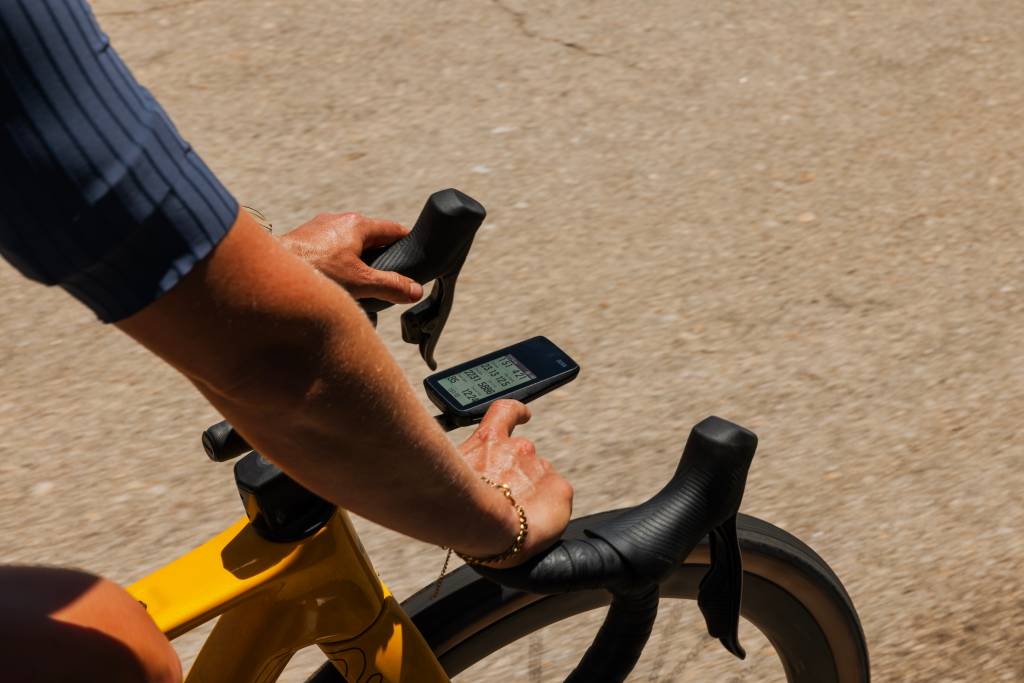
The biggest benefit of knowing how to use a power meter is pacing. When using a power meter paired with a bike computer, you can monitor your output and make sure you don’t push too hard, which could otherwise negatively affect your run performance.
Another benefit is the ability to spot early signs of fatigue. By assessing actual work done, rather than inaccurate metrics like average speed or feel, you can catch signs that your body isn’t quite on it.
And unlike heart rate, which can be affected by things such as nerves, weather or cardiac drift, power is unaffected by external variables.
Power measurement is essential for the cycling parts of some triathlon training plans. After calculating your Functional Threshold Power, you can set training zones so you can ride at the right intensity.
Heart rate is still a valuable measurment and we’ve also reviewed the best heart rate monitors.
Recent updates
- 11 November 2025: we advised which features you should look for when buying a power meter, removed products no longer for sale and added more information about our tester.


 Jack Sexty
Editor at road.cc
Jack Sexty
Editor at road.cc