How to master the Kona swim according to the previous course record holder
Previous Hawaii swim course record holder Jan Sibbersen gives his top tips to deliver your best performance during the 2.4 mile swim on race day.

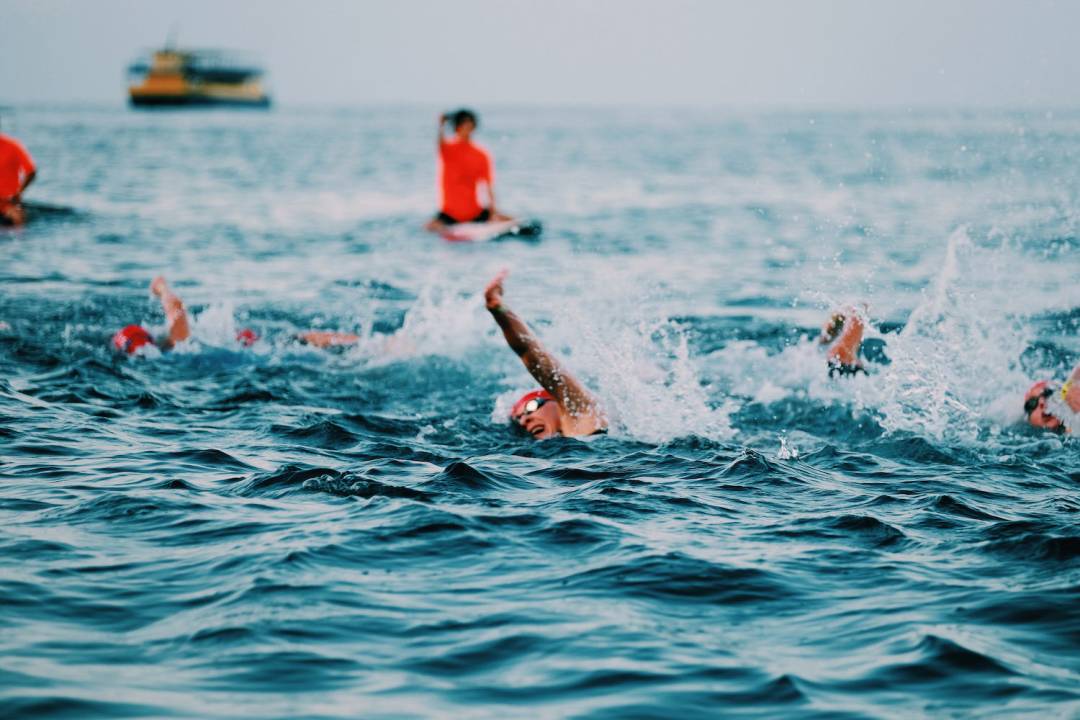
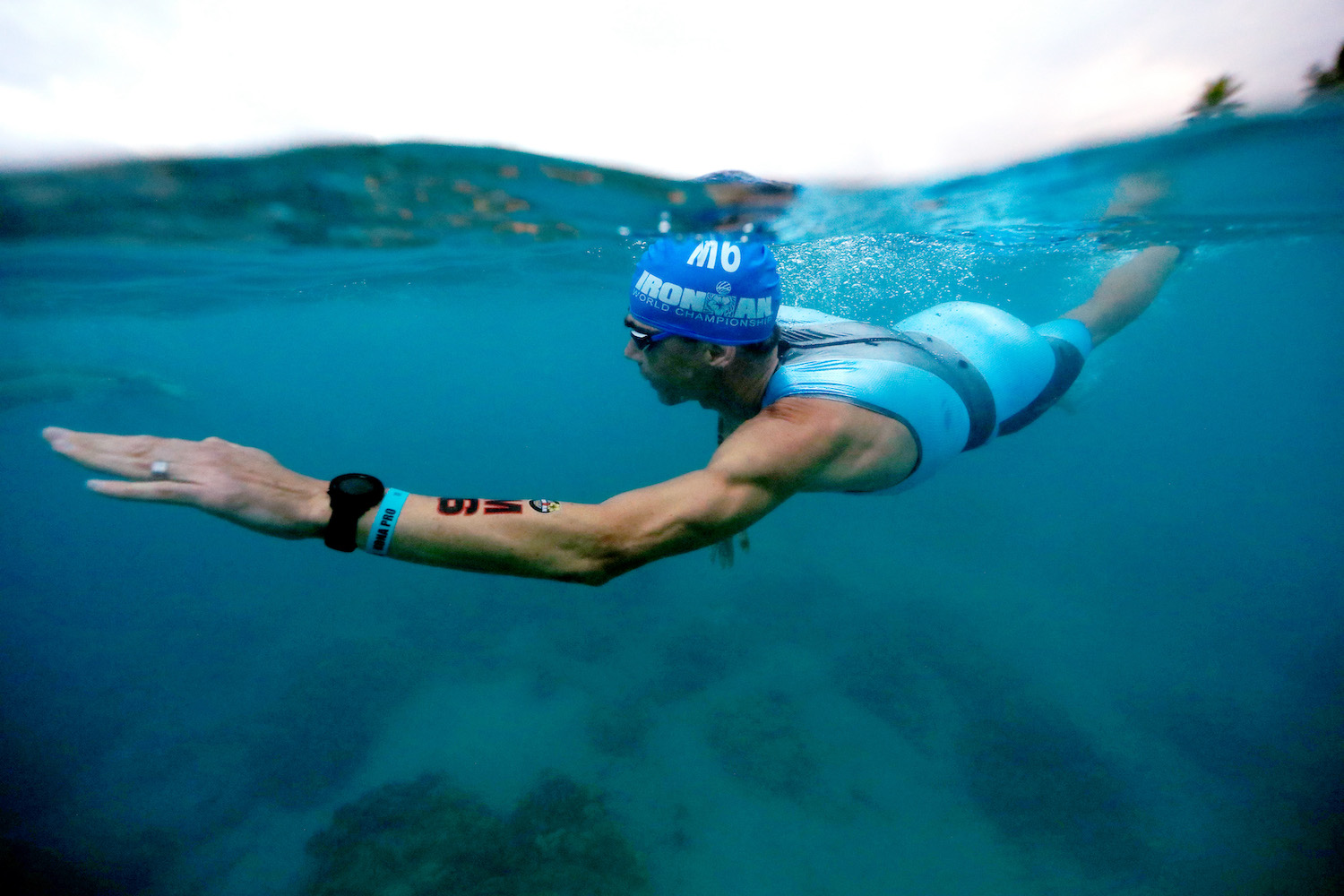
The Kona swim at the Ironman World Championship is as legendary as it is daunting. Battling the Pacific’s rolling swells, unpredictable currents, and the chaos of hundreds of athletes requires more than just swim strength, it demands strategy. Mastering this 2.4-mile (3.8km) open-water test sets the tone for the entire race.
Jan Sibbersen knows better than anyone how to produce a fast swim in Hawaii. After a decade on the German national swim team and being first out of the water at the Ironman World Championship for four consecutive years from 2001, Sibbersen returned as a 43-year-old age-grouper in 2018 to set the swim course record – 46min 29sec for the 2.4 mile out-and-back course. Sibbersen’s record was only surpassed in 2024 by Australian age-group triathlete Sam Askey-Doran with a time of 45:43.
As founder and managing director of swim brand Sailfish, Sibbersen has joined up with three-time Ironman world champion Craig Alexander to share their top tips for conquering the Kona swim…
How to tackle the Ironman World Championship swim in Kona
1. Check your equipment
Especially making sure your goggles are comfortable, don’t leak or fog up. Nowhere is this more important than the championship swim. The last thing you want on race day is to be worrying about a looming goggle mishap. Your vision is so important in the swim where you’ll likely have to contend with errant elbows, chop, and waves, in order to plan out the best line ahead to the next buoy. Don’t make things harder for yourself, invest in a reliable pair of swimming goggles.
2. Check the currents
If the tide’s running out you want to be in the deeper water to the right and hug the line of the buoys. Be sure to research the movement of the tides on race and and the location of any typical currents. You should have plenty of open water experience at this point, but the Pacific can be brutal so try to get to Kona a few days ahead of the race to get comfortable swimming in the island’s waters.
3. Break it into segments

It’s common to break up the effort into segments mentally for the bike leg and the marathon, but less so for the swim. Don’t’ fall into a false sense of security just because the swim is shorter though, as it can be no less brutal. Start with the first quarter of the swim, and really familiarise yourself with the one-lap route.
Take your progress one buoy at a time and pace yourself, build up a rhythm. Take note of surroundings on shore and consider what fixed points you can use for sighting once in the water. Since it’s long one-loop route, focus on the buoys ahead on the way out, you can use the coastline over your left when breathing and the end boat for the furthest point. For the return half, you’ll be able to fix your sights on the shore and transition.
4. Start easy and ease in

You don’t want to build up lactate at the start of the race. Since 2019, the start has changed from a mass start to wave starts but everybody should still start at a steady pace. And nobody does! Don’t let the adrenaline of the race day environment get to your head and sabotage your pacing strategy from the starting gun.
5. … and I mean really easy!
For the first quarter of the race you shouldn’t feel any effort. Keep it super easy and fluid. Just focus on getting into a rhythm and adjusting to swimming with so many bodies in the water. Focus on maintaining an efficient form and technique that you have practiced in training.
6. Swim straight
This is obvious advice, but if you swim 4km instead of 3.8km, then that’s a lot of extra time. Pick off the marker buoys one by one and as I already mentioned, break up the effort into segments. If you spot an athlete ahead that’s swimming a good line, try to get onto their feet.
7. The swell can rise
Even if it’s a calm start, when the sun comes up over the Hawaiian mountains the wind and waves start to pick up. It’s inevitable but not something to be feared. There’s hundreds of event helpers on course to come to your aid if an issue arises, to you’re in safe hands.
8. Be careful at the turnaround
Take the turn around point safe and wide enough so you don’t hit the buoy or the boat. I’ve hit the buoy before and tangled myself in a rope. So trust me, it’s not an experience I’d recommend!
9. Sight the antenna
When you make the turn, it can be helpful to focus on the mobile phone antenna to the right of the Marriott King Kamehameha hotel. If there’s lots of chop, at least try to keep the Kamehameha in your sights once you’ve made the u-turn and have started heading back to shore.
10. Prepare for the current

When you turn to start swimming toward home, 90% of the time the current will be against you. This is when the swim really starts. It’s so important that you conserve as much energy as possible in the first half of the swim so that this increase in effort doesn’t come as a nasty surprise. Accept the extra resistance and keep plugging away, focussing on forward progress.
12. The return leg is a little longer
You started in the deep water and you’ll be swimming all the way back to the pier and dry land, so it’s about 150m longer on the return. If you look at your watch – and I wouldn’t recommend it – bear in mind you have a couple of minutes to add.
13. Finally, consider slowing down
If you swim just 2sec slower per 100m you’re only giving up 20sec per kilometre. It’s not a lot of time, but can be the difference from swimming easy to being on the rivet. Whatever you gain from pushing too hard, too early, you’ll lose 20 times in the back half of the race once energy levels start to tank.
With the women’s Ironman Championships only days away, check out our How to watch the Ironman World Championship live for how to keep up with the drama on race day.


 Tim Heming
Freelance triathlon journalist
Tim Heming
Freelance triathlon journalist