Should athletes turn to GLP-1? Here’s how to healthily shed belly fat without losing fitness
From nutritional nuggets to fat-burning workouts, here are 10 ways to lose your belly and shed some timber without impacting your performance.

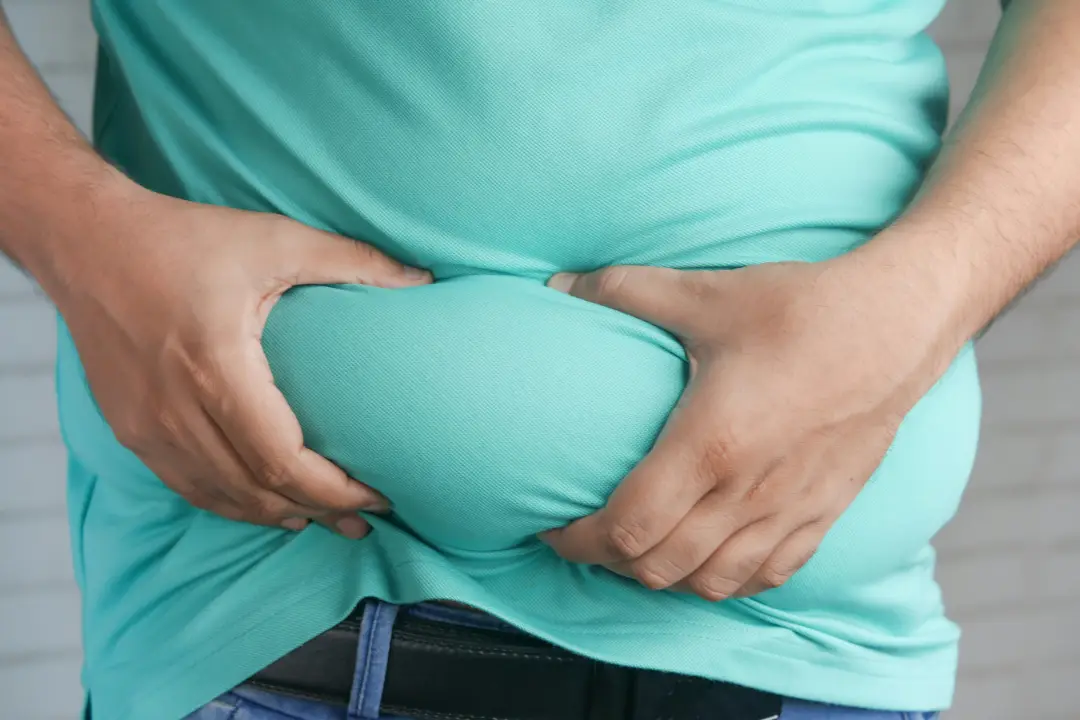
Triathletes are known for their extremes. The drive required to prepare for any race distance is beyond the norms of the average gym goer, while the intensity and volume needed to simply complete a half- or full-distance event alongside other life commitments like family and work takes near-superhuman levels of physical and mental dedication.
But the mindset required to rock up to the pool for a 5am swim or lace up the running shoes for a brick session after a long ride can also have a negative impact when it comes to body image – particularly around areas prone to storing fat like the belly or hips, thighs and bum.
Although you’ve built an engine that can motor along for hours across three different disciplines, subliminally, your brain can be a cruel taskmaster if this isn’t accompanied by washboard abs or bulging, sculpted quads when you look in the mirror.
There can also be a desire amongst athletes to chase a specific race weight to help them on hills and the run, often based purely on rounding down to the nearest 5 or 10kg on the scales, without considering whether hitting this often unattainable goal could have a detrimental impact on performance.
That said, studies have shown that fat mass and its distribution are associated with your event finish time. A 2015 review in the Journal of Sports Medicine found that, amongst male half-Ironman and Ironman athletes, body fat was the most important anthropometric characteristic (a group of body measurements and compositions like height, weight, and skin fold thickness) in determining race-day performance.
In 70.3 races, faster athletes had lower body fat than slower ones, while in full-distance events, the percentage of body fat was inversely related to overall race time and the split times of cycling and running in particular.
While the same correlation wasn’t seen in female athletes, a separate study published in 2022 found that there’s a link between where fat mass is distributed on the body and race times. It found a moderate correlation between the gynoid (pear-shaped) body, while it was low for android (apple-shaped) athletes.
The majority of females have a gynoid fat pattern, but as the study was undertaken on male athletes, more research needs to be conducted to determine if this has an impact on race times.
Reducing your fat mass, therefore, might not be a bad thing, but it’s a fine balance. So how do you do it in a safe, sustainable way that doesn’t harm your training or A-race ambitions?
1. Dial in a deficit

Creating a calorie deficit – taking in less calories than are used – is a sure-fire way to lose weight and potentially some belly fat as a result. But timing and technique is crucial for a sustainable shifting of weight that doesn’t impact performance.
Triathlon coach Simon Olney says that any calorie deficit block should be scheduled for the off-season or maintenance phase of a training block “when the volume and intensity is low”, with it especially not suitable for the last 10-12 weeks of a training plan.
“Whenever we aim for calorific deficit, that is going to interfere with the adaptation that our body makes to workouts, and that is going to have a negative impact on our energy levels and fuelling.
“If our training for the day is a 45-minute easy run, we could probably get away with being in a small calorie deficit because we’re not looking at a huge level of adaptation from the body.
“Once we get to 10-12 weeks out from race day, that’s when we need to make sure that we are hitting a target and giving the body the fuel that it needs”
He adds that you should target a deficit of between 100-300 calories per day – “if it’s less than 100, we’re within the margin of error, anything over 300 and you can’t maintain that long term”.
It doesn’t have to be every day to see results though: “’If you’re in a small calorific deficit five out of seven days, you’re going to lose weight, rather than doing a 500-to-700 calorie deficit for six days a week, and then have a cheat day – that’s just unsustainable.”
2. Stock up on sleep
Early alarm calls are a staple of a triathlete’s training schedules, but it’s important not to burn the candle at both ends if you’re up with the larks. Research published in 2025 found that there is a direct correlation between length of sleep and BMI, waist circumference and lean body mass, with those who get less than seven hours a night having higher values of each metric.
The scientists pointed to a reduction in the hormone leptin when sleep duration is insufficient, which has a knock-on effect of increasing the desire for energy intake.
It’s not just the duration that matters though, with quality of sleep important too. The same study found that those who self-diagnosed as having a sleep disorder also had a higher body fat percentage.
Although the likes of insomnia and sleep apnea often have deeper underlying causes, good sleep hygiene like regular schedules and screen-free wind-downs can help to improve your shut-eye.
3. Ramp up the running

A triathlon training block is guaranteed to include some time on your feet, but regularly pounding the pavement is doing much more than getting you ready for the final leg of your race.
An article published in the Journal of Physiological Anthropology found that those who clocked between 21.6 to 31.4km per week for at least six weeks before the study had significantly less body fat and visceral fat (the deep belly fat that surrounds your vital organs and is linked to cardiovascular diseases) than those who didn’t hit the World Health Organisation’s guidelines of 150 minutes of moderate or 75 minutes of vigorous physical activity per week.
The research also found that there was a positive correlation between the ages of participants and the differences in body fat and visceral fat, with older runners having increasingly lower levels than their non-running peers – significantly so when it came to visceral fat in men.
While this is likely due to a lifetime of exercising habits amongst the older runners in the study, it also shows that it’s never too late to start your running journey and get the health benefits of lacing up.
4. Time your carb intake
Carbohydrates are crucial for fuelling training and racing but get your timing wrong and you could unintentionally be creating fat stores around the belly.
“When we eat carbohydrate, it goes in the blood as glucose,” explains Helen Money, sports and exercise nutritionist at Tri Training Harder.
“If we don’t want to convert it into energy immediately, it gets stored as glycogen. But in two circumstances – either if our glycogen stores are full or if our blood glucose levels have been too high for too long – we then convert that glucose into fat via the liver into triglycerides, and that type of fat tends to be stored around the middle.”
Helen says that triathletes are unlikely to suffer from full glycogen stores, but could fall foul of having high blood glucose levels by eating large quantities of carbs in one sitting.
“What I see very commonly with triathletes or endurance athletes is they’re not eating enough before training, they become super hungry after training, so then eat lots of carbohydrates causing a spike in blood glucose levels.”
She recommends making sure that your daily carbohydrate intake is spread across all three meals, while post-workout refuelling should happen within a 30-minute window after a session, when the muscles take up carbs at a faster rate to replenish glycogen stores in the muscles.
5. Add in active travel
Fitting in your training around life can often resemble a game of Tetris. If you live close enough, swapping out the car or public transport for a bike is an easy way to turn otherwise dead time during your commute into valuable training volume, and it has the added benefits of being free, more environmentally friendly, and maybe even quicker if you live in a city.
But that pedal to and from the office has another plus when it comes to fat mass. A trial published in the International Journal of Obesity found that previously inactive overweight and obese participants who started to cycle to work had greater changes in fat mass than those who did moderate exercise that was prescribed in their leisure time.
Although the benefits of an active commute can be expected to be lower in an already active individual, starting and finishing your working day with a ride can clearly keep fat mass at bay. Plus, it does wonders to clear the cobwebs!
6. Hammer the HIIT

While your nutrition is the main way to reduce your fat mass, the type of workouts you do can also potentially play its part. A scientific meta-analysis published in 2024 found that when it came to lowering total body fat, BMI, and waist circumference, high-intensity interval training (HIIT) was the best form of exercise, while aerobic exercise was the most effective for reducing subcutaneous adipose tissue – the pinchable fat that’s located just below the skin.
High intensity meant short-to-long bouts in excess of 65% heart rate reserve or 75% maximum heart rate interspersed with recovery, with it also a time efficient way to train.
The researchers suggested that it also appears to increase the resting basal metabolic rate (how many calories you burn even when not exercising) and excess metabolism after exercise, which may be responsible for reductions in visceral fat.
7. Don’t skimp the S&C
Strength and conditioning work can be the first thing to drop off a training plan when time is tight, but nutrition coach Jamie Leighton says it’s important to retain some level of resistance training if targeting a calorie deficit.
“A calorie deficit and endurance training tend to lead to a little bit of a catabolic state – muscle will start to potentially deteriorate, or you might start losing muscle.” He adds that strength training will help to maintain that muscle mass, countering the body’s breakdown of muscle molecules for energy.
If you’re overweight or obese, resistance training can also help to shift visceral fat. The same paper that found the effectiveness of HIIT on total fat mass also discovered that resistance training has a significant effect on men and those with a body fat percentage under 40%, with the researchers believing that its effectiveness may be partially explained by improvements in insulin sensitivity.
8. Healthy swaps

Even if you don’t want to go down the calorie deficit route to shift belly fat, having a rough idea of the calories in the foods you consume can prevent you from putting on weight unnecessarily.
Olney says this is particularly insightful if there are alternatives to the same food that will help you stay sated for longer for equal or even fewer amounts of calories – preventing you from craving greater volumes of food and the excess calories that you don’t actually need.
“You might not realise just how many calories are in a relatively inoffensive item, while the supermarket own-brand version has half the calories, might be less processed and has less in the way of other additives.”
Leighton says at MyFitnessPal is a good app to check the calories in what you’re eating, with a handy barcode scanning feature part of its premium subscription.
9. Beware of going into the RED-S
Rather than looking at ways to cut belly fat, Helen Money suggests investigating why it’s there in the first place. “The amount of cortisol circulating in the body also encourages fat storage around the middle,” she explains.
The body creates cortisol during stressful moments, and glucose is released as a byproduct to deal with the quick bursts of energy required for those fight-or-flight responses. But when the stress is chronic, “our body expects something to happen, so it messages to store energy as fat to fight that fight that’s about to happen, but it never happens, so that also leads to that being stored around the middle.”
Although this can be caused by a number of factors, relative energy deficiency in sport (RED-S) – a syndrome caused by prolonged underfuelling of exercise – can cause chronic stress.
The volume of training required means triathletes are particularly susceptible to RED-S, with a way of minimising the risks by reducing volume or, counterintuitively, when it comes to losing belly fat, more food.
10. Don’t turn to jabs

It might be tempting to try GLP-1 weight-loss injections like Wegovy and Ozempic, but Leighton warns against their use, saying that any losses on the scales will be combined with drops in performance.
“I’ve worked with quite a few people who’ve used them. It vastly reduces appetite and while that leads to weight loss, from a performance perspective that causes problems; if you’ve got no appetite, it means that you’re unable to fuel the training that you’re doing. Essentially, you find yourself digging a deep hole of which you can’t get out.”
Olney adds that simply starting triathlon training is enough for most to lose weight without really trying. “It may not come off quite as fast as they want it to, but it will [come off] if you’re doing the volume and intensity that you will likely be doing as an athlete.
“I’d always encourage somebody starting out in the sport not to overthink this and focus on being consistent with their training, and hopefully their body will catch up. If they hit a bit of a plateau or their body doesn’t catch up, that’s when they can focus more on a calorific deficit.”


 Charlie Allenby