What it’s like to ring in Hogmany along Edinburgh’s historic roads, triathlon-style
Beginning 2026 as he means to go on, Iain Veitch chose the iconic Edinburgh New Year’s Day Sprint Triathlon as a way to blow away the cobwebs. Cue nipples like bullets, overtaking dinosaurs and cycling up and down an ancient volcano...

It’s New Year’s Day. It is literally freezing. I’m soaking wet, wearing a skimpy tri-suit and hurtling downhill at 65kmh. I absently wonder if my nipples or my fingers will fall off first. I question my life choices. I turn 45 this year and no one is making me do this. What am I playing at?
I have just started the bike leg of the Edinburgh New Year’s Day Sprint Triathlon. Now in its 30th edition, this triathlon has grown from a wacky idea into one of Scotland’s most loved annual sporting events and one of the longest-running triathlons in Scotland, if not the UK.
It has endured three decades of festive hangovers, the Covid years, and occasional extreme weather to deliver a truly unique New Year’s sporting tradition.
A race with heart and history
The 400m swim takes place in the Royal Commonwealth 50m pool. Having hosted two Commonwealth Games it’s an impressive setting for athletes and supporters and after the race briefing bagpipes are played to both welcome those able to attend and remember those who could not.
Racers then start one at a time in 5 second intervals based on their predicted swim time. Slowest first and fastest last. After each length they change lanes, finishing at the opposite side of the pool.

I am number 414 which means plenty of time to warm up and plenty of time for nerves to get a hold. I’m in the middle of training for an iron-distance event and it’s been about two years since my last sprint tri. I wonder if my old cart horse of a body can even get going before the race is over. Either way, it’s going to hurt.
My number is called, I’m given a 5s countdown to jump in. Then I’m off! I had given a conservative prediction for my swim in the hope I might be able to pass a few people and start some positive momentum early on.
Instead, I am quickly passed by what feels like every swimmer behind me. Bollocks. As usual, my swim ability (or lack of) annoys me no end.
Normally at this point, in a longer race, I’d allow myself a good 5 min of self-loathing, but there isn’t time for that here. I just try to focus on technique, breathing, and trying not to botch the lane changes after each length.
Due to the staggered start I’m not sure of my overall position after the swim but I know I have my work cut out. I haul myself out of the pool and charge towards the fire escape and T1.
I have been dreading this moment. The temperature is Baltic and the wind has picked up. Running out from the warm pool, the cold delivers a full-body slap, but now that I’m in race mode and have adrenaline on my side, it’s not as awful as I had expected. Even the barefoot run on freezing, rough, gritty tarmac is bearable.
Palaces and volcanos

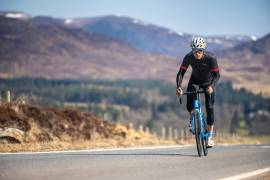
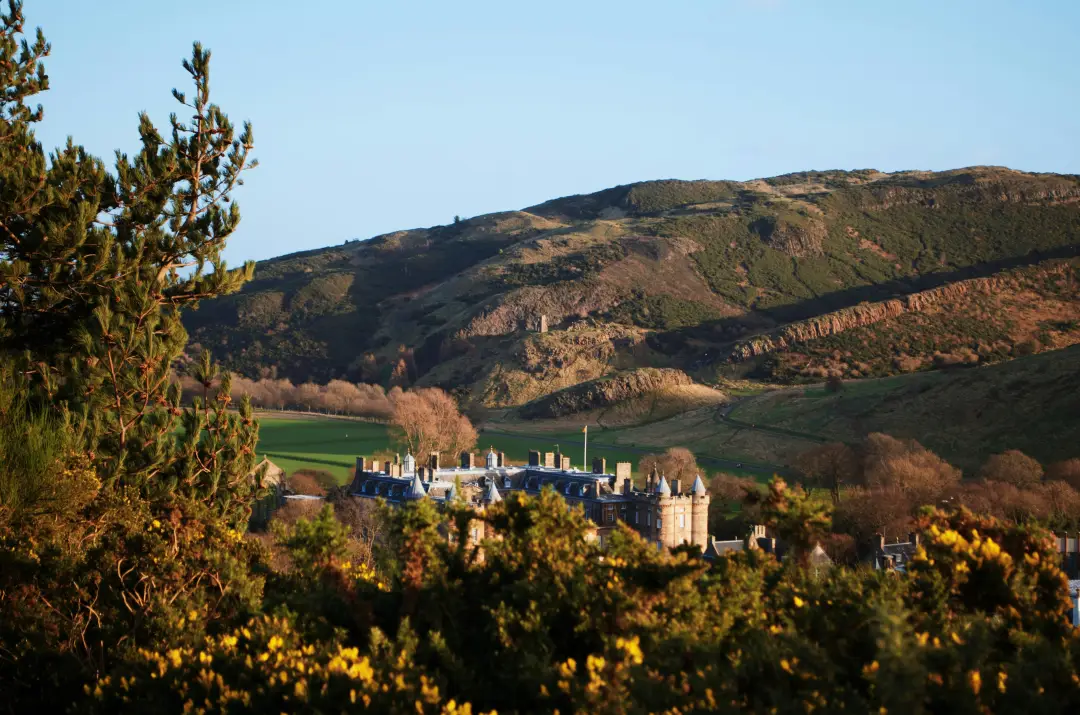
The closed road route goes down the hill to Holyrood Park and then takes in three clockwise loops of Arthur’s Seat on the Queens Drive. At 17.7km long it is short but tough bike leg, being almost all up or down with just a couple of short flat sections.
After the initial downhill, we quickly hit the main climb. This snakes over and round the back of Arthur’s Seat (a large extinct volcano that Edinburgh is situated on and around). It’s this unique location that really helps set this race apart.
One minute you pass Holyrood Palace, the next an extinct volcano vent, then huge craggy cliffs to one side and the whole Edinburgh skyline to the other.
I have raced around the globe in some fantastic locations, but I can’t think of one more visually striking than this. Edinburgh is a stunning backdrop.
On the climb, the pace slows enough for me to take stock of who is around and how far ahead the race leaders might be. The sheer number of people on course makes this hard, but I catch sight of some faster-looking athletes ahead and focus on trying to bridge the gap.
Something that I find odd is that my legs are too numb from the cold to gauge the effort properly. I must rely solely on the power meter and breathing to pace myself.
- What should your body position be when cycling uphill?
- Which muscles do I use when running and cycling up hills?
- Cycling: how to use hills to build a strong winter base

Cresting the hill and defrosting slightly, I start to really enjoy myself. People line the route most of the way up and range from dedicated supporters with cow bells to bemused partygoers still drunk or hungover from the night before. Also, navigating my way through the slower athletes on course adds to the fun.
At times, racing can be quite a solitary/serious affair. You might duke it out with just a handful of athletes around you and barely exchange a word.
Here, you are constantly surrounded by people pushing their limits, fighting the good fight, trying to straddle the red line of “I should have pushed harder” and “I’m cooked”.
There’s an added camaraderie to sharing the same space with more people going through that. As well as the usual shouts of “coming through” and “on the right”, athletes fast and slow holler and wheeze encouragement to each other as they go by.
As I tick off the last of three laps of the bike, I know I have passed a lot of people but I have no idea where I am in the overall standings.

There could be someone who started ahead of me who has ridden away, or there could still be athletes who passed me on the swim ahead.
Rather than being frustrating, it just adds a different dynamic to ‘normal’ racing. It also serves to take the spotlight away from only the fastest athletes and gives everyone on the course their moment.
Coming into transition, I can see that I am either in second place or slightly in the lead based on the bikes already racked. Despite that, there is no additional fanfare around my arrival.
Everyone; big, thin, old, young, fast, or slow, gets shouts of encouragement from the marshals and a blast on the microphone from the commentator. The pointy end of the race is a serious affair, but by no means the focus of the day. Instead, participation is.
An everyman/everywoman race

Over 20 years ago, this race was the first triathlon that I ever spectated at. I remember being hungover, watching the leaders coming across the finish line, and thinking, “I could do that”.
Hobbling across the finish line a year later, I realised I couldn’t! It did, however plant the seed of wanting to see if I could figure out this new sport. So began a journey into triathlon that has lasted almost a lifetime and one which I am grateful for.
As well as serving as a gateway drug to the sport for newbies, it has also provided a great test event for more serious athletes looking to see where their winter training has taken them or as a kick up the backside to shake off the festive indulgences.
Previous winners include the likes of Catriona Morrison (Multiple duathlon world champion), David McNamee (2 x Kona bronze medallist), and Fraser Cartmel (Ironman UK Champion).
Why do so many people pick this event as their first ever and why do high calibre athletes brave the cold in their off-season?
For many, it is great way to bookend the indulgences of the festive season and get the new year off to a healthy start. A physical challenge to begin the year with a sense of achievement rather than a hangover. It’s also just a lot of fun.
However grim the weather the volunteers from Edinburgh Triathletes, giving up their own New Year’s Day for the event, create an upbeat atmosphere that is contagious. It’s also one of the few non-international level races that have closed roads and serious numbers of spectators on course.
The short, multi-lap format and large numbers of people walking off the cobwebs from the night before mean there are literally hundreds cheering and shouting as you fly or crawl by.
The fact that some clearly have no idea what is going on, why they are shouting and what all these loons in lycra and pointy helmets are doing just adds to the fun.
Meeting a T-rex

In T2, it’s amazing how complicated a bike helmet buckle and putting running trainers on is when fingers are frozen but I eventually get out onto the run. The 6km route follows the same path as the bike for a single lap.
I keep a decent pace, but also try to enjoy the sights and sounds. Early on, I pass an unsteady chap wearing a partially deflated T-Rex costume and shout “nice outfit”. Without pause, he replies, “you too mate”.
He makes a great point. I’m the one running along in a skin-tight onesie, nipples like bullets, with a race timer that looks like an ankle tag and I can’t even blame being drunk.
Approaching the main climb, I receive high fives from two young lads whose parents shout “the leader’s just ahead!” I see number 406 just in front and realise they could be right.
He’s moving well, and after some questionable on-the-fly math, I decide that if I can slot in behind him, I should be in with a chance of the win (assuming he started ahead of me in the swim and there is no one else up ahead).
As we come down off Arthurs Seat and approach the finish line, the support is fantastic. Everyone gets a shout and some form of encouragement.
406 (called Scott Meldrum, I found out later) keeps up a very respectable pace, and we cross the line almost together.
I’m then immediately given a printout of my race splits by the timing company and then able to check my overall position on a live results screen at the finish. All very slick and professional.
Looking to the future
As the sport of triathlon grows, so does the importance of races that welcome newcomers while challenging the experienced. This New Year’s Day triathlon in Edinburgh has an enduring appeal, which lies in its ability to do exactly that. Acting as a fun, challenging event and a springboard into a lifetime of sport.
With organisers committed to maintaining its inclusive ethos and vibrant atmosphere, willing sponsors in the likes of Rockstar Games and the enduring support of Edinburgh City Council, there’s every hope that this race will continue to thrive for years to come, inspiring new generations of triathletes to start their year – and perhaps their own triathlon journeys – in Edinburgh.
Race winner Iain’s tips for a strong performance

Swim
Practice turning and changing lanes after each length in your own training pool. I probably lost about 45 seconds just making a mess of the turns and going under the lane rope. Make use of the warm-up facilities. There is an excellent 25m diving pool with lanes that athletes can use to warm up before they start.
Bike
I used my TT bike but a road bike with or without clip-on TT bars would be equally as quick. Over the 30 mins on course, I probably spent only 5 on the TT bars due to the constant up and down. Clothing: If in doubt, I would err on the side of keeping things fun and wrap up warm in a bike jacket and layers. Those extra seconds taken in transition to save your extremities from the cold will be time well spent.
Run
Nothing out of the ordinary required. Just keep an eye out for drunk dinosaurs with a quick wit!
General
For those daunted by the full race, relay options allow teams to share the effort. There is also a youth duathlon: a short run-bike-run on closed roads for 8-15 year-olds ensuring families and young athletes can also be part of the day.
Take part in the Edinburgh Sprint Triathlon

How to get there?
The race venue (Royal Commonwealth Pool) is in the heart of Edinburgh City and is easily reached by car. Edinburgh itself is accessible by air, rail, or road.
Accommodation
Due to the relatively late start time (12:30pm) getting there the night before is not essential but for those that want to be more organised, the event is open the evening before for registration.
Options for accommodation are numerous and cater to almost every budget. Due to Edinburgh’s popularity for Hogmanay (Scottish New Yew year), I would suggest booking well in advance as places can book up early.
When can I race?
The 2027 Edinburg Triathlon race will take place on 1st Jan.
Who is Iain Vietch?
Father of three wonderful boys, husband to a wonderfully tolerant wife and business owner, Iain identifies as a triathlete. He’s the course record holder of Braveheart Extreme triathlon, Starman Extreme triathlon, Roc England, Roc Wales and Roc Scotland extreme triathlons. Iain was also runner-up at last year’s Celtman triathlon.


 220 Triathlon Team
Journalists, reviewers, coaches and athletes
220 Triathlon Team
Journalists, reviewers, coaches and athletes