All-out speed or a cooler head? We pit the Scott Cadence Plus helmet against the Rudy Project Nytron
In this head-to-head test, we assess each and every aspect of two distinctive aero road helmets

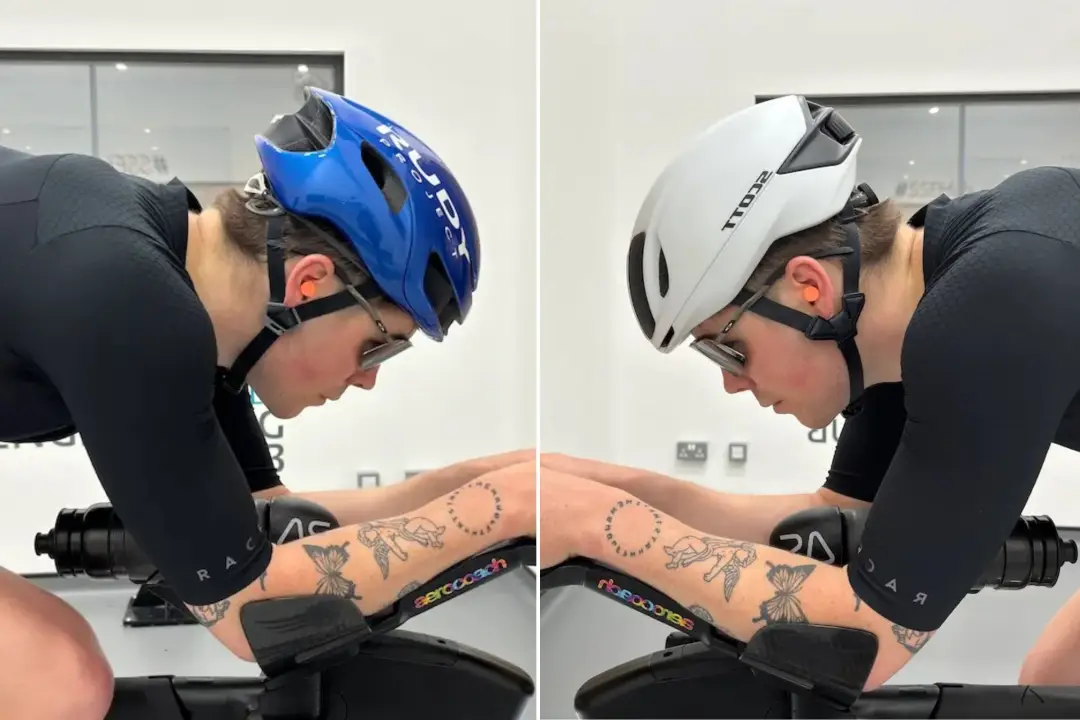
Although they are cooler than ever, when choosing from the best aero road helmets for triathlon racing, you still have to weigh up speed against ventilation.
Overall, there’s little correlation between helmet aerodynamics, cooling and weight.
But certain exceptions like the Scott Cadence Plus exhibit exceptional performance in our wind tunnel testing while being a little stuffy.
On the other hand, some of the cooler aero road helmets, such as the Rudy Project Nytron, aren’t quite as fast.
Because this speed vs cooling dilemma is something many triathletes are likely to grapple with, we’ve put the Scott Cadence Plus head to head against the Rudy Project Nytron to inform your decision.
Both helmets were tested in the wind tunnel and on the road by expert cycling kit reviewer Matt Baird.
Design and features

The Scott Cadence Plus has a smoother, less interrupted outer shell than the Nytron and has removable aero plugs. Internal channels are designed to funnel air over your head to cool you down.
By contrast, the Nytron’s still smooth shell is perforated by more vents – 15 versus the Cadence Plus’ 12.
As for safety features, the Scott Cadence Plus has the upper hand. It comes with a Multi-directional impact protection system (Mips) whereas the Rudy Project Nytron does not.
Mips is a low-friction layer integrated into the padding that allows for a slight rotation of the helmet relative to the head during an angled impact. This can help to reduce rotational forces on the brain, lowering the likelihood or severity of concussion.
The Cadence Plus also scored four out of five in the Virginia Tech bicycle helmet ratings. The independent body hasn’t tested the Rudy Project Nytron but two of the brand’s other helmets have a four-star score.
A rechargeable bike light that clips in to the back of the helmet is included in the price.
Instead of Mips, Rudy Project uses the WG11 testing protocol, which it and Kask seem a superior testing method to Mips. This internal standard was developed to measure the helmet’s performance against rotational impacts, providing an added layer of safety assurance.

The adjustability of the fit system is crucial for helmet comfort.
Matt preferred the Cadence Plus’ retention system, calling it “one of the best internal adjustment mechanisms around”. He found it secure and straightforward to adjust while also praising the quality of the padding.
He was less impressed by the durability of the plastic casing on the Nytron’s retention system. But the padding, straps and buckle seemed higher quality, and the internal adjustment dial and the tension ratchet felt solid and secure.
Scott Cadence Plus vs Rudy Project Nytron specs

Like other top-end bike helmets, they feature an in-mold construction, something that generally ensures a neater and more durable finish.
Matt rated the Scott’s build quality higher than the Rudy Project’s though.
In the Nytron’s favour are its lower price in pounds and weight.
| Scott Cadence Plus | Rudy Project Nytron | |
| Price | $229.99 / £229.99 | $324 / £189 |
| Primary focus | Aerodynamics with versatile ventilation | Aerodynamics and lightweight performance |
| Aerodynamic features | Aero plugs for vent closure | Wind tunnel-developed shape |
| Ventilation | Optimised internal channeling, 12 vents | 15 large vents with Air Frame tech |
| Weight | 280g (Medium) | 250g (Small-Medium) |
| Safety system | MIPS® Air Node | Rudy Project WG11 rotational impact test |
| Fit System | HALO 360 | RSR 10 Retention System |
| Construction | In-mold with polycarbonate shell | In-mold construction |
Performance and comfort

In our independent wind-tunnel testing at the Silverstone Sports Engineering Hub, the Scott Cadence Plus was one of the fastest aero helmets.
The Rudy Project Nytron also did well. It outpaced our baseline helmet by 31 seconds over 25mi / 40km at 19mph / 30km/h, and by and by 15.3 seconds at 25mph / 40km/h.
These results placed it fifth out of 11 at the slower speed and third at the faster pace.
Meanwhile the Scott Cadence Plus topped the overall rankings at both speeds by some margin.
On the road, Matt found the Cadence Plus the more comfortable helmet. This is probably explained by its plusher padding and higher spec adjustment system, strap and buckle.
Price and value

The Rudy Project Nytron is much more expensive than the Scott Cadence Plus in dollars, and a lot cheaper in pounds. So overall, it’s honours even on price.
They are still expensive relative to traditional road bike helmets. More research and development expense (like expensive wind-tunnel time) goes into the production of aero helmets, explaining their premium price.
In terms of dollars spent per watt saved, aero road helmets are right up there with upgrades like the best clip-on aerobars and best tri-suits.
So if you’re serious about saving seconds off your triathlon times – and potentially minutes over long triathlon distances – aero helmets are something you certainly should look at.
Verdict
All things being equal, the Scott Cadence Plus is the better choice for triathlon racing simply because it’s likely to be faster.
However, on hillier terrain the Rudy Project Nytron could have the upper hand. This is not so much because of its lighter weight, but because at slower climbing speeds you’ll benefit from a cooler helmet.
Clearly, this thinking holds even truer on hotter days. Depending on your level of heat adaptation and sweat rate, there’ll come a point when the risk of overheating in the Scott Cadence Plus outweighs its aero advantage over the Nytron.
Away higher temperatures and hills, better safety credentials, build quality and adjustment are aadditional arguments in favour of the Cadence Plus.
The way you can use the aero plugs to keep out the winter elements led Matt to call it a “unique package with multi-season and racing appeal”. He scored it 4.5 out of 5 and 86%.
How we tested
The key criteria Matt Baird evaluated were their aerodynamic performance, comfort, adjustability, weight, ventilation and value for money.
For more details, see how we rate and test products.


 Matt Baird
Editor of Cycling Plus magazine
Matt Baird
Editor of Cycling Plus magazine